
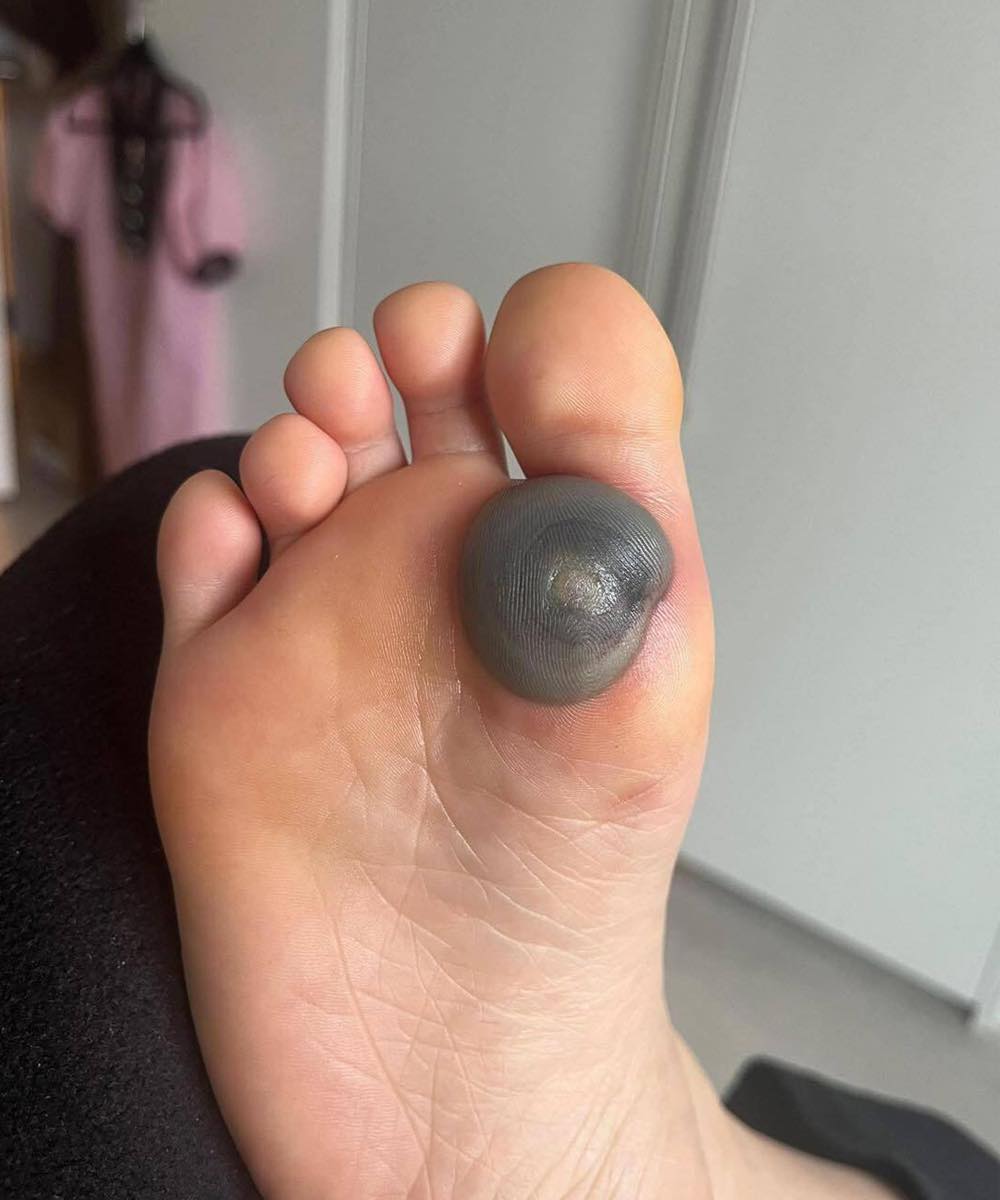
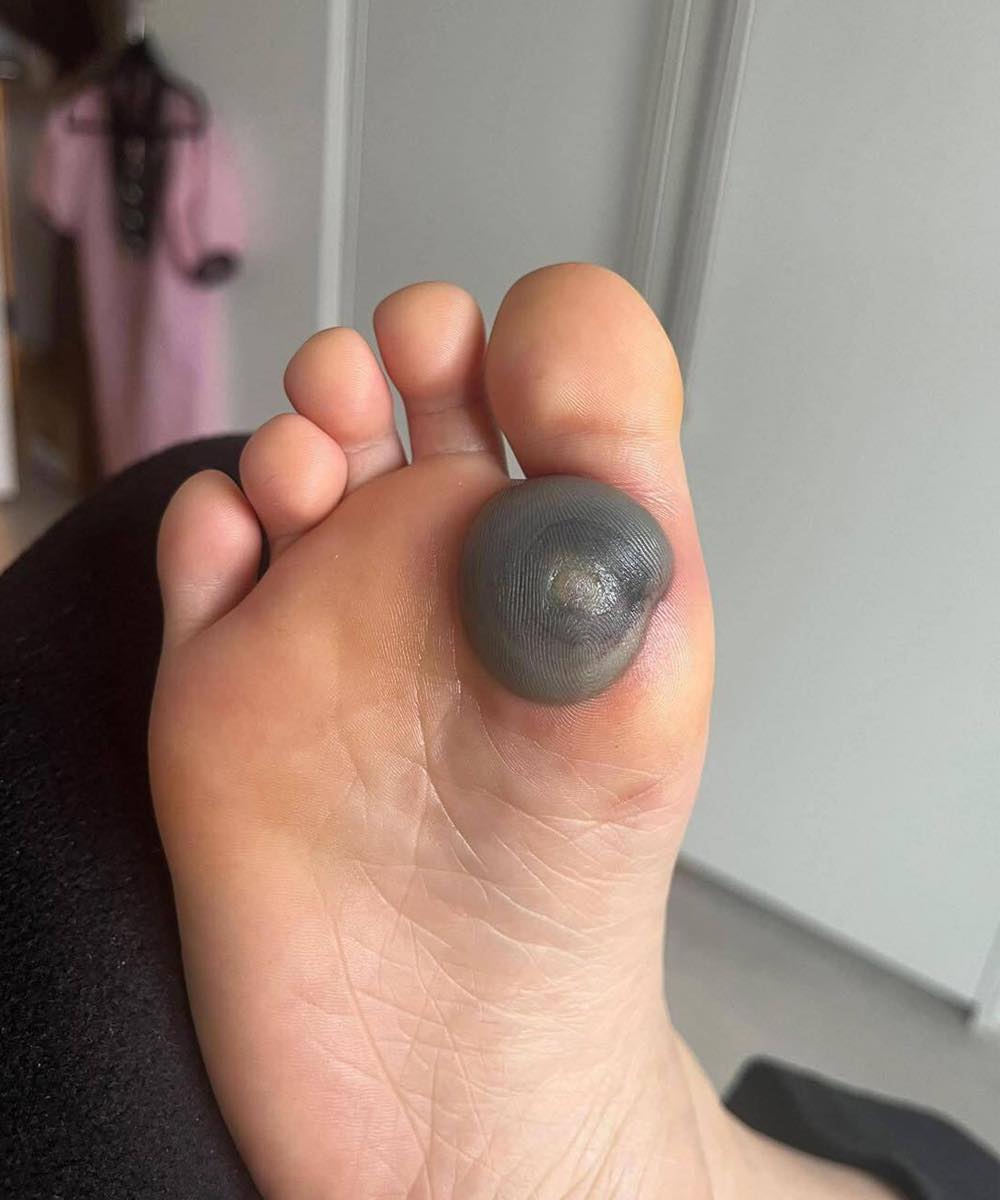
When a child wakes up suddenly unable to walk because of a painful, dark swelling on the bottom of the foot, it can be deeply unsettling for any parent. The shock is not only visual—the size, color, and raised appearance of the lesion—but also emotional, as children often struggle to explain what they are feeling or how it began.
Images like the one shown often lead parents to ask urgent questions: What is this? Why did it appear overnight? Is it dangerous? Does my child need emergency care?
This article provides a detailed medical explanation of what a large, dark, blister-like lesion on the sole of a child’s foot most commonly represents, how pain develops in this area, which conditions must be ruled out, and how parents should respond.
Understanding the Skin of the Sole: Why Foot Injuries Look Different
The bottom of the foot is not like skin elsewhere on the body. It is uniquely structured to absorb pressure, weight, and impact. The sole contains:
-
A thick outer skin layer
-
Dense connective tissue
-
A rich network of small blood vessels
-
Numerous sensory nerve endings
Because of this anatomy, even minor injuries can look severe and feel extremely painful. Fluid or blood trapped under thick plantar skin cannot spread easily, so pressure builds rapidly, causing swelling and intense discomfort.
This is why lesions on the sole often appear larger, darker, and more alarming than similar injuries on the arm or leg.
The Most Likely Diagnosis: A Blood Blister (Plantar Hematoma)
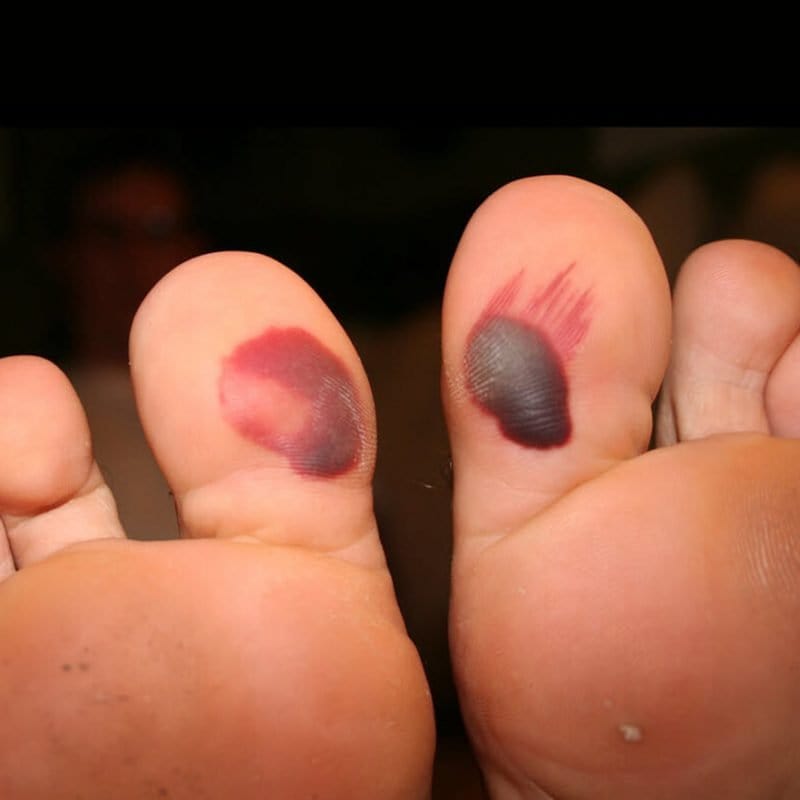
In the majority of cases, a sudden, dark, dome-shaped swelling on the sole of a child’s foot is a blood blister, also known medically as a subepidermal hematoma.
What Is a Blood Blister?
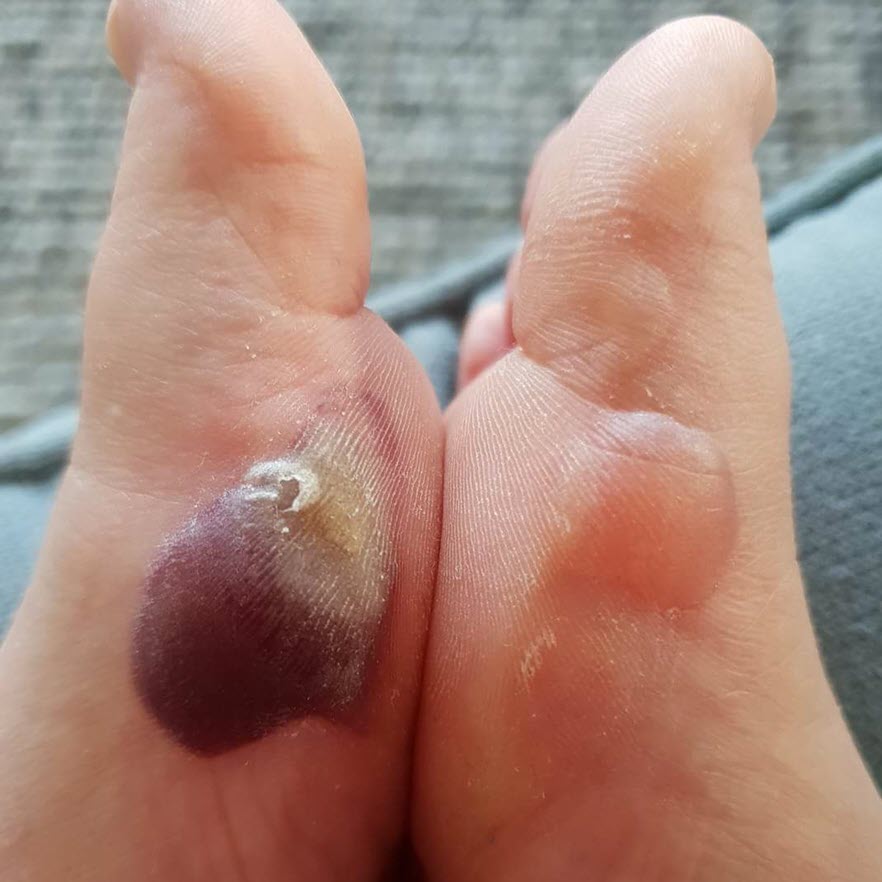
A blood blister forms when small blood vessels rupture, allowing blood to pool beneath the outer layer of skin. Unlike clear blisters filled with serum, blood blisters appear dark red, purple, brown, or almost black depending on how much blood is trapped and how deep it is.
On the foot, this typically happens due to:
-
Sudden pressure
-
Friction from footwear
-
Repetitive impact during play
-
Jumping, running, or stomping movements
Children often do not remember the triggering event, especially if it occurred during normal play.
Why Can a Blood Blister Appear Overnight?
Parents are often alarmed by how suddenly these lesions appear. However, the injury that causes a blood blister usually happens hours earlier, with swelling and discoloration becoming more visible as fluid and blood accumulate.
During sleep:
-
Blood flow changes
-
The foot remains still
-
Swelling becomes more pronounced
-
Pain receptors become more noticeable upon waking
This makes it seem as though the lesion “appeared overnight,” even though the process began earlier.
Why Is the Pain So Severe?
Pain from plantar blood blisters is often disproportionate to their cause. This is due to several factors:
-
High nerve density in the sole
-
Weight-bearing pressure, which compresses the blister
-
Limited space for swelling under thick skin
-
Increased tension as blood collects
When a child stands or tries to walk, the blister is compressed between body weight and the ground, sharply increasing pain.
Why the Color Looks So Dark
The dark gray or black appearance can be alarming, but it is usually due to:
-
Deoxygenated blood trapped under thick skin
-
Light refraction through dense plantar tissue
-
Blood aging under the skin
This does not mean tissue death or infection in most cases.
Important Conditions Doctors Consider (Differential Diagnosis)

While blood blisters are the most common explanation, clinicians always consider other possibilities to ensure nothing serious is missed.
1. Friction Blister With Internal Bleeding
Some blisters begin with clear fluid but develop internal bleeding after repeated pressure. These can become large and dark quickly.
2. Deep Bruising Beneath Thick Plantar Skin
A bruise on the sole can look raised and darker than bruises elsewhere due to tissue density and swelling.
3. Localized Infection (Uncommon but Serious)
Infections that cause blistering are usually accompanied by:
-
Fever
-
Increasing redness
-
Warmth
-
Spreading pain
-
Ill appearance
Infections rarely appear suddenly without other symptoms.
4. Plantar Wart With Trauma (Less Likely)
Plantar warts typically develop slowly. Sudden pain and swelling make this diagnosis less likely.
5. Allergic or Inflammatory Reactions (Rare)
Some inflammatory reactions can cause swelling but usually affect larger areas and both feet.
Why Sudden Onset Is Actually Reassuring
Conditions that worry parents most—such as tumors or chronic skin disorders—do not appear overnight. Rapid onset strongly favors:
-
Mechanical injury
-
Pressure-related damage
-
Acute blister formation
This timing is a key reassuring sign in medical evaluation.
Immediate Steps Parents Should Take
Do Not Attempt to Drain the Blister
Opening the blister at home:
-
Increases infection risk
-
Delays healing
-
Can worsen pain
Even medical professionals drain blood blisters only in specific circumstances and under sterile conditions.
Reduce Pressure and Friction
-
Encourage rest
-
Avoid walking barefoot
-
Use soft padding around the area
-
Choose loose socks
Manage Pain Gently
-
Elevation can reduce swelling
-
Cool compresses (not ice directly) may help
-
Avoid tight bandages
When Medical Evaluation Is Necessary
Parents should seek medical care if:
-
The child refuses to walk after 24–48 hours
-
Pain worsens instead of improving
-
Redness spreads
-
Fever develops
-
Fluid leaks or the blister ruptures
-
The lesion grows rapidly
A clinician can usually diagnose the condition through examination alone.
How Doctors Treat Large Blood Blisters
Treatment typically focuses on:
-
Protecting the blister
-
Reducing pressure
-
Monitoring healing
In rare cases, a clinician may:
-
Drain the blister under sterile conditions
-
Prescribe topical treatment if infection risk is present
-
Recommend temporary activity restriction
Most children recover without invasive treatment.
Healing Timeline and What to Expect
Over the next days to weeks:
-
Pain gradually decreases
-
Color fades from dark to lighter shades
-
The body reabsorbs trapped blood
-
Outer skin may peel naturally
Normal activity resumes once pain resolves.
Preventing Future Episodes
To reduce recurrence:
-
Ensure proper shoe fit
-
Avoid stiff soles
-
Use cushioned footwear
-
Check feet after active days
Children grow quickly, and shoes can become tight without parents noticing.
Emotional Impact on Parents and Children
Sudden foot pain can be frightening for children and distressing for parents. The inability to walk triggers fear of serious injury. Understanding that many of these cases are temporary and benign helps reduce anxiety.
Parents should trust their instincts—seeking reassurance is always appropriate.
Final Perspective
A large, dark, painful spot on a child’s foot that appears suddenly is most commonly a blood blister caused by pressure or minor trauma. Although it may look dramatic and cause significant discomfort, it is usually self-limited and resolves with proper care.
Monitoring symptoms, reducing pressure, and seeking medical advice when needed ensures safe recovery and peace of mind.