

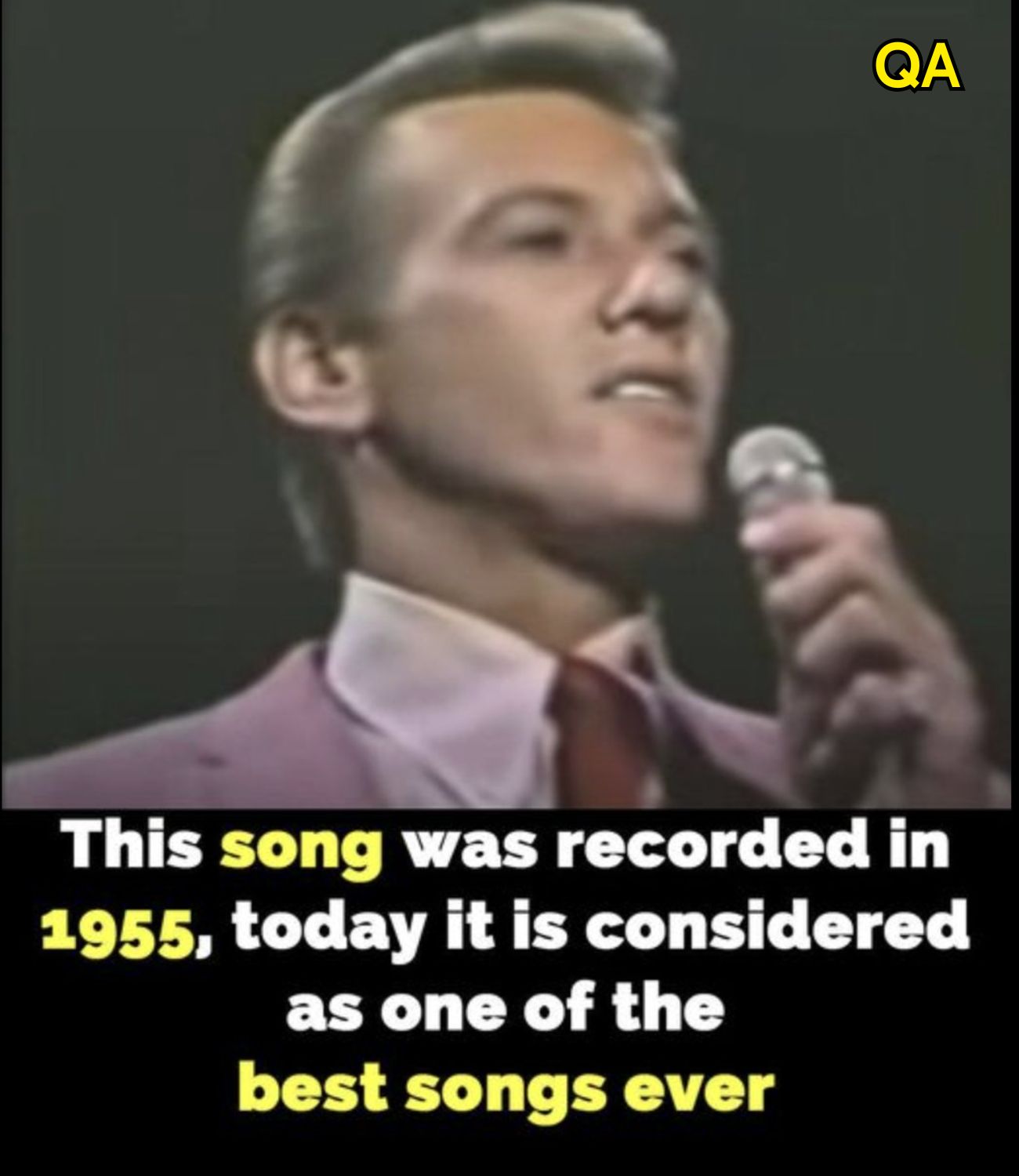
There are songs that belong to a particular moment in time — chart hits that flare brightly and then fade as the seasons change, as tastes shift, as the world moves on to the next thing. And then there are songs that refuse to age. Songs that seem to exist outside of time entirely, that find new listeners in every generation, that carry within their melody something so deeply human that no amount of passing years can diminish what they make a person feel. “Unchained Melody” is one of those rare, almost inexplicable compositions. Written in 1955, it has now spent seven decades doing what the greatest music does: reaching directly into the chest of whoever happens to be listening and refusing to let go.
To understand why “Unchained Melody” has endured in a way that almost no other popular song has, it helps to understand where it came from — and more importantly, what it was built from at the level of craft and intention.
The song was written by two men: Alex North, who composed the music, and Hy Zaret, who wrote the lyrics. North was already an established and respected figure in the world of film composition — a man with the rare ability to write music that served a story without ever becoming invisible, music that lingered in the mind long after the film itself had ended. Zaret was a lyricist with a gift for emotional economy, for finding the fewest possible words that could carry the greatest possible weight.
The song was composed as part of the soundtrack for a 1955 film called “Unchained” — a relatively modest prison drama that has long since faded from most people’s awareness. The irony is considerable: the film that gave the song its name has been largely forgotten by history, while the song itself has become one of the most recognized and beloved pieces of music ever created. This is not as unusual as it might seem. The history of popular music is filled with moments in which a composition escapes the context that originally contained it and finds a life of its own, growing larger and more resonant than anything its creators could have anticipated.
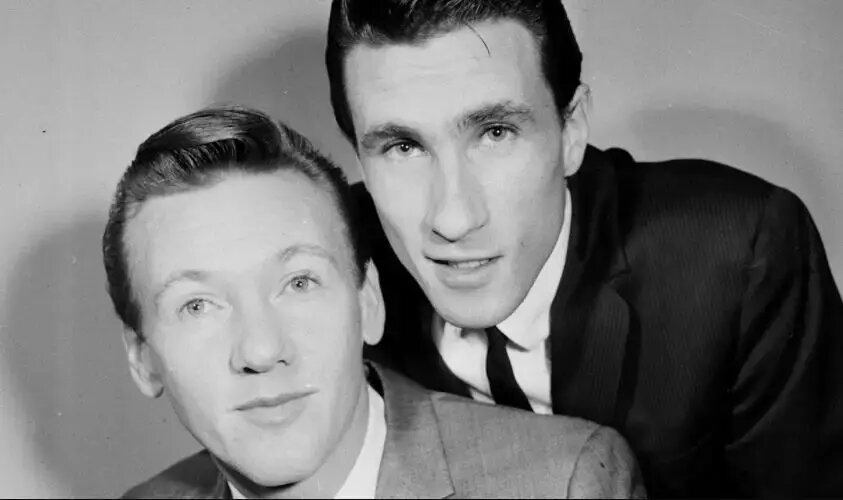
From the beginning, “Unchained Melody” was something different. The original recording was performed by Todd Duncan, a classically trained baritone who had made his name creating the role of Porgy in George Gershwin’s “Porgy and Bess.” Duncan brought to the song a quality of longing that felt almost architectural — structured, precise, and yet deeply felt. His version established the essential emotional grammar of the song: the sense of someone reaching across an impossible distance, calling out to another person with a desperation so pure that it stops being merely personal and becomes something universal.
That universality is the key to everything that followed. “Unchained Melody” is, at its surface, a love song. A person separated from the one they love, consumed by yearning, asking time itself to slow down and allow them to return. But the emotional territory the song occupies is so fundamental — the ache of absence, the passage of time, the fear of being forgotten, the stubborn persistence of love against all obstacles — that it has spoken to listeners across wildly different contexts, cultures, and life experiences. It has been the soundtrack to grief, to romantic longing, to the quiet contemplation of mortality, to the simple experience of missing someone who is no longer present. It fits all of these moments because it was built, almost accidentally, to contain all of them.
The proof of that reach is in the numbers. “Unchained Melody” has been covered more than 670 times, in languages ranging from English to Japanese to Spanish to Italian. That figure is not a record that has accumulated through cultural momentum alone — it is the result of generation after generation of musicians encountering the song and feeling compelled to make it their own, to run their own voice through its melody and see what it reveals. Very few compositions in the entire history of recorded music can claim anything close to that degree of sustained creative engagement.
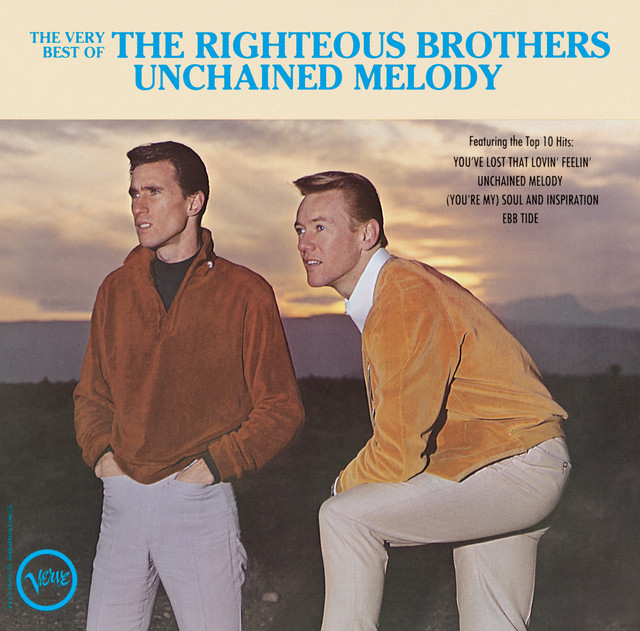
But of all the hundreds of versions that exist, two stand above the rest in terms of cultural impact and enduring recognition. The first is the recording made by The Righteous Brothers in 1965. The second is the series of live performances delivered by Elvis Presley in the final years of his life. Between them, these two interpretations transformed “Unchained Melody” from a beloved standard into something approaching a sacred text of popular music.
![Righteous Brothers - Unchained Melody [Live - Best Quality] (1965)](https://i.ytimg.com/vi/IYj2hex99gY/maxresdefault.jpg)
The Righteous Brothers — Bill Medley and Bobby Hatfield — were already known for a particular approach to music that producer Phil Spector had helped define: a sound that was enormous, emotionally overwhelming, almost operatic in its ambition. When they recorded “Unchained Melody” in 1965, they brought all of that intensity to bear on a song that was already built for it. Hatfield’s vocal performance in particular — his voice climbing into the upper register with a quality of barely contained anguish, holding notes that seem to exist at the outer edge of what a human voice can sustain — became one of the most celebrated moments in the history of popular recording.
What Hatfield did with the song was not simply technical. He found within the melody a quality of almost unbearable yearning and amplified it until it became something that listeners could feel physically — a vibration in the sternum, a tightening in the throat, the particular sensation of emotion pressing against the body from the inside. Decades after the recording was made, listeners continue to describe its effect in strikingly similar terms. One comment beneath a YouTube upload of the song, which has itself accumulated over 76 million views, captures something of this with simple directness: the feeling of chills, the impulse to weep, the acute awareness of loss. That a recording made sixty years ago can still produce this response in a viewer encountering it alone on a screen in the twenty-first century is remarkable. It speaks to the song’s construction, to Hatfield’s performance, and to something deeper — to the fact that certain emotional frequencies in music do not decay with time the way fashions do, because they are tuned to aspects of human experience that do not change.
The Righteous Brothers’ version received a second extraordinary wave of cultural exposure in 1990, when it was used in the closing scene of the film “Ghost.” That scene — intimate, sorrowful, and finally beautiful — introduced the song to an entirely new generation of listeners who had not been alive when the original recording was made. Many of them encountered it as something entirely new, with no prior associations, and found it just as devastating as audiences had found it in 1965. This is what genuine timelessness looks like: the ability to arrive fresh before an audience that knows nothing of its history and still produce the same effect it always has.
Elvis Presley’s relationship with “Unchained Melody” took a different form. Elvis did not release a studio recording of the song during his lifetime. Instead, the song became part of his live concert repertoire in the 1970s, performed during the Las Vegas shows and touring concerts that defined the final chapter of his career. These performances — filmed and later released — capture something that studio recordings rarely can: the sense of a performer and a song finding each other at exactly the right moment.
By the mid-1970s, Elvis was a changed man from the performer who had first electrified audiences in the 1950s. The years, the pressures, and the physical and emotional toll of a life lived at a pitch of extraordinary intensity had all left their marks. And yet, in the moments when he stood before an audience and sang “Unchained Melody,” something remarkable happened. The weight he carried — which was visible, which audiences could see and feel — transformed into something that the song could hold. His voice, always extraordinary in its range and expressiveness, seemed to find in the melody a space large enough to contain everything he was feeling. The result was performances of haunting emotional depth, recordings that feel less like entertainment and more like testimony.
For many listeners, Elvis’s live versions of “Unchained Melody” are among the most moving things he ever committed to record — not despite the imperfections and the evident struggle, but partly because of them. He brought to the song a quality of lived experience that gave it a different dimension than Hatfield’s pristine studio performance. Both are extraordinary. They are extraordinary in different ways, and together they demonstrate how capacious the song truly is — how much emotional territory it can accommodate without straining at the seams.
The legacy of “Unchained Melody” today is secure in a way that very few pieces of popular music from any era can claim. It appears in films, in television programs, in advertisements, at memorial services, at weddings, at moments of private grief and private joy. It has been sung by opera singers, by country artists, by rock performers, by schoolchildren in auditoriums. It has been played on instruments ranging from solo piano to full orchestras. In each new context, it proves again what it has always been: a composition with an emotional core so stable and so finely made that it can carry whatever weight is placed upon it.
Alex North and Hy Zaret wrote it in 1955 for a film that almost no one remembers. What they created, in the process, was something that no one who hears it is likely to forget. Seventy years on, with over 670 covers recorded and millions of listeners still finding it for what feels to them like the very first time, “Unchained Melody” continues to do what the greatest music has always done: remind us what it feels like to be fully, achingly, irreducibly human.