


Breast size has been surrounded by cultural myths for centuries — from ancient associations with fertility to modern ideas about femininity and health. But does your physical size in this area truly reflect what is happening with your hormones? As a board-certified endocrinologist who has counseled thousands of women on the connection between body composition and hormonal health, the goal here is to clarify what science actually says — no sensationalism, no judgment. Just facts that empower you to understand your own body more clearly and accurately.
What Actually Determines Breast Size

The most important thing to understand is that breast size is not a hormonal report card. It is shaped by a combination of factors that have very little to do with your current hormonal balance or overall health status.
Genetics play the most significant role. Your DNA, inherited from both parents, establishes the potential size range your body will work within. This is the foundation upon which everything else operates, and it is largely non-negotiable regardless of what else is happening in your body.
Hormones — primarily estrogen and progesterone — do drive breast tissue development during puberty, creating the initial growth that occurs during adolescence. However, these hormones establish a developmental framework rather than dictating the final outcome. Once that developmental window has passed, fluctuating hormone levels in adulthood have a relatively modest effect on overall size compared to the genetic blueprint already in place.
Body composition is the third major factor. Because breast tissue contains a significant proportion of fatty tissue alongside glandular tissue, changes in overall body weight and fat distribution can influence size and volume over time. Age, lifestyle, and metabolic changes all play into this dimension.
The critical insight that medical professionals want more women to understand is this: a woman with smaller breasts can have perfectly balanced, healthy hormones — just as a woman with larger breasts may be managing conditions like polycystic ovary syndrome or thyroid irregularities. Size is not a reliable signal of what is happening hormonally.
What Breast Size Can and Cannot Tell You
There are a few legitimate physical processes that can influence size in observable ways. During puberty, the hormonal surges of adolescence drive initial tissue development. During pregnancy, increased blood flow and the development of milk-producing structures cause temporary enlargement that typically reverses after breastfeeding ends. Significant changes in body weight — in either direction — can also produce noticeable changes in size because of the fatty tissue component involved.
What breast size genuinely cannot tell you is more extensive and more important. It cannot indicate your current levels of estrogen, progesterone, or thyroid hormones. It cannot predict your risk for breast cancer — tissue density, which is assessed through imaging and is entirely separate from size, is the clinically relevant factor in that context. And it cannot reflect overall health status in areas like cardiovascular function, metabolic health, or any other major body system.
Society has historically conflated size with health because size is visible and easy to observe, while the liver, thyroid, and ovarian function are not. But the visible and the meaningful are not the same thing, and this confusion has caused real harm to real women for generations.
The Myths That Persist and Why They Matter
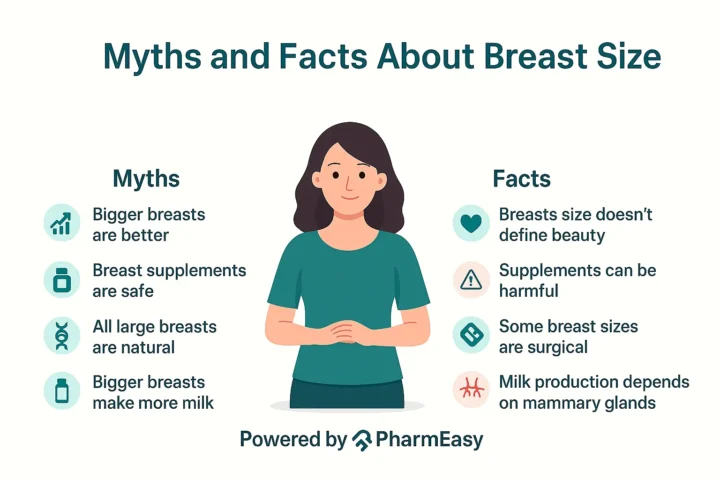
Several deeply embedded cultural myths continue to shape how women think and feel about this topic, and it is worth addressing them directly.
The first myth is that larger size indicates higher estrogen levels or greater hormonal vitality. This is not supported by evidence. Hormone levels are reflected in blood work, not in physical proportions.
The second myth is that smaller size indicates a hormonal deficiency or imbalance. Again, this is false. Countless women with smaller frames have hormone panels that fall perfectly within healthy reference ranges.
The third and perhaps most damaging myth is that size is a meaningful health indicator at all. Research has documented that a significant proportion of women report having concerns about legitimate hormonal symptoms — irregular cycles, fatigue, hair changes — dismissed in clinical settings while attention was redirected toward appearance-related observations. This represents a genuine failure of care that delays accurate diagnosis and appropriate treatment.
The cultural legacy of mid-twentieth century beauty and advertising culture, which falsely linked physical proportions to feminine health and vitality, continues to influence both social attitudes and, troublingly, some clinical interactions. Understanding that this connection was always a marketing construction rather than a medical reality is an important step toward more grounded self-assessment.
What Genuine Hormonal Health Actually Looks Like
If breast size is not a reliable indicator of hormonal health, what is? The answer lies in the signals your body sends through its actual functioning systems.
Menstrual cycle regularity is one of the most informative indicators available. Cycles that are consistent in length and character, with manageable symptoms, generally reflect a hormonal environment that is functioning well. Significant irregularities, very heavy flow, or prolonged absence of cycles are all worth discussing with a healthcare provider.
Energy levels and sleep quality are closely tied to thyroid function, adrenal health, and the balance of reproductive hormones. Persistent unexplained fatigue that does not resolve with adequate rest deserves investigation through proper blood testing rather than dismissal.
Hair and skin changes — including unusual hair thinning, changes in texture, or persistent skin issues — can sometimes reflect thyroid irregularities or other hormonal shifts that blood work can identify and address.
Mood stability and cognitive clarity also have hormonal dimensions. Significant fluctuations in mood across the menstrual cycle, or persistent brain fog and difficulty concentrating, can sometimes point toward hormonal factors worth evaluating.
All of these indicators are accessible through conversation with a healthcare provider and appropriate laboratory testing. None of them require any assessment of physical appearance.
A Patient’s Perspective

One patient described spending years convinced that her smaller frame meant her hormones were somehow deficient or broken. When she finally pursued comprehensive blood work, her hormonal levels were entirely within normal ranges. What the testing did reveal was an undiagnosed iron deficiency that had been causing her persistent fatigue and low energy. Once that was identified and treated, her symptoms resolved. The years of concern about her appearance had been a distraction from a genuinely manageable and unrelated condition.
Her experience is far from unique. Many women spend considerable emotional energy on concerns about physical appearance while the actual underlying issue — whether it involves iron levels, thyroid function, vitamin deficiencies, or hormonal imbalances — goes unaddressed because the wrong questions are being asked.
Moving Toward a More Accurate Understanding
Your body is not a billboard communicating your hormonal status through its shape. Breast tissue is functional tissue with a specific biological purpose, and its size is determined primarily by genetics and body composition — not by the quality or quantity of your hormones.
Your genuine hormonal health lives in your blood work, in the regularity and character of your cycles, in your energy, your sleep, your mood, and your overall sense of physical well-being. These are the signals worth paying attention to, and these are the conversations worth having with qualified healthcare providers who take your symptoms seriously.
If you are experiencing symptoms that concern you — irregular cycles, unexplained fatigue, significant hair changes, mood disturbances — advocate for appropriate testing. Ask for the blood work. Pursue the answers that are actually available through evidence-based medicine.
And extend yourself the grace of understanding that the shape of your body was never the measure of your health, your worth, or the quality of your internal biology. The most useful thing you can do for your hormonal health is to learn what it actually looks like — and that knowledge comes from science, not from a mirror.