
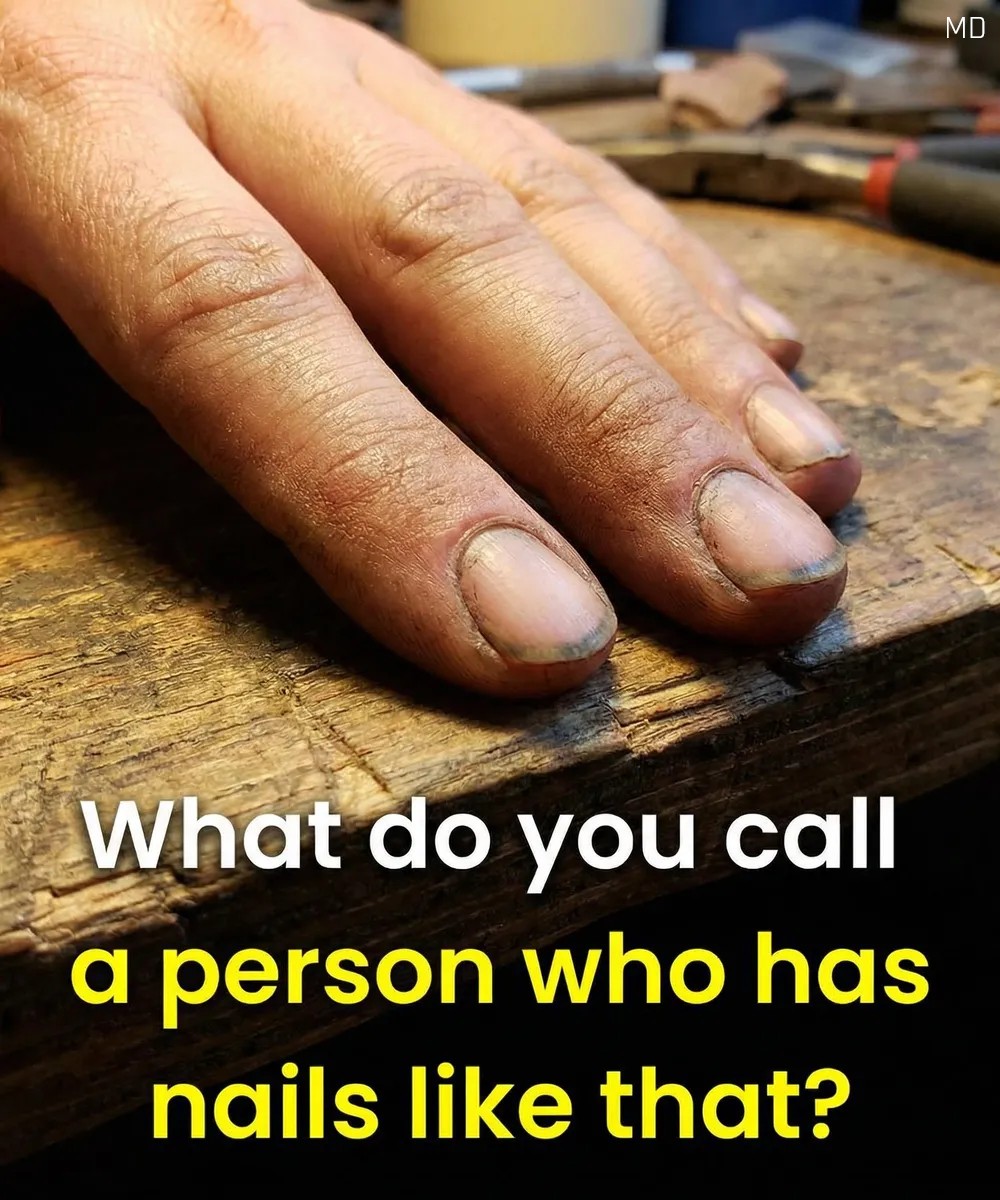
There is a moment that most of us have experienced at some point, whether consciously or not. You are sitting across from someone at a dinner table, standing next to a stranger in a checkout line, or meeting a new acquaintance for the first time. Your eyes drift downward, almost automatically, and you notice their hands. The nails are darkened. There is visible grime settled into the creases around the cuticles. Something embedded beneath the surface that soap and water have not fully reached.
And just like that, before a single word has been exchanged, a judgment forms.
It happens quickly and quietly, the way most first impressions do. The mind reaches for the nearest available explanation, connects a visual cue to a conclusion it has been taught to draw, and moves on. We rarely stop to question whether that conclusion is actually correct. We rarely ask ourselves what those hands have been doing, where they have been, or what kind of day the person attached to them has had.
But perhaps we should.
The Lesson We Were All Taught Early

It is worth acknowledging, from the start, that the association between clean hands and good hygiene is not without foundation. From the time we are children, the message is consistent and clear. Wash your hands before meals. Scrub beneath your fingernails. Keep yourself clean. These lessons exist for genuinely important reasons, and the science behind them is solid.
Fingernails, by their very structure, are remarkably effective at trapping what the rest of the hand might shed. The small space between the nail and the skin beneath it creates a sheltered environment where bacteria, fungi, and other microorganisms can collect and multiply. Studies in the field of public health have consistently shown that the area under fingernails harbors a disproportionately high concentration of harmful microorganisms compared to the surrounding skin. Proper handwashing technique — one that includes careful attention to the nails themselves — remains one of the most effective and accessible tools available for preventing the spread of illness.
In professional environments where hygiene is directly connected to safety, this matters enormously. Healthcare workers, food preparation professionals, and those who care for young children or elderly individuals are held to rigorous standards around hand cleanliness, and for very good reason. In those contexts, visible dirt beneath the nails is a legitimate concern that warrants attention.
In everyday social settings, too, clean nails are broadly understood as a marker of self-awareness and personal care. They signal that a person pays attention to their body, takes their presentation seriously, and respects the people around them. When someone has ready access to proper hygiene facilities and consistently chooses not to use them, unclean nails can reflect a degree of carelessness about both personal health and social consideration.
All of that is real. All of it deserves acknowledgment.
But the Story Rarely Ends There
!["Why are your nails dirty?" 😱 [professional nail technician explains]](https://i.ytimg.com/vi/4CK1snKE9eY/maxresdefault.jpg)
Here is the part that the instinctive judgment tends to skip over entirely.
Darkened nails, grease-stained fingers, and soil embedded so deeply beneath the surface that it resists removal are not always — or even often — signs of neglect. For a very large portion of the working population, they are simply the natural and unavoidable result of showing up and doing the job.
Think about the mechanic who has spent eight hours inside the belly of an engine, coaxing a damaged vehicle back to life. The grease that accumulates beneath a mechanic’s nails during a single shift is not a casual kind of dirt. It is a petroleum-based substance that bonds with the skin, seeps into microscopic grooves, and laughs at ordinary hand soap. Special degreasers and industrial cleaning solutions exist precisely because regular washing is insufficient. A mechanic who finishes a long day of honest work and heads to dinner before those products have done their job is not displaying a lack of hygiene. They are displaying evidence of a full day of skilled, necessary labor.
Think about the gardener who has spent the morning turning soil, planting seeds, dividing root systems, and coaxing life from the earth with their hands. Gardening, by its very nature, is an intimate activity. The hands go into the dirt. The dirt goes under the nails. It fills the lines of the palms and settles into the spaces between fingers. Even gardeners who wear gloves part of the time find that soil finds its way through eventually, and certain tasks simply require bare-handed contact to be done with the care and precision they demand. The dark staining that remains at the end of a morning in the garden is not evidence of a person who does not care about cleanliness. It is evidence of a person who cares deeply about growing things.
The same is true across an enormous range of trades and occupations. Farmers who work with livestock, mud, and agricultural materials throughout the day. Construction workers who handle concrete, lumber, adhesives, and raw materials from sunrise to late afternoon. Painters whose hands absorb pigment through the skin despite gloves and careful technique. Plumbers who work in environments where pristine cleanliness is structurally impossible. Electricians, welders, woodworkers, landscapers, auto body technicians, potters, sculptors, and printmakers — the list of professions where hand cleanliness simply cannot be maintained in the conventional sense during the workday is remarkably long.
For all of these individuals, the visible evidence of their work is not a moral failing. It is, if anything, the opposite. It is a physical record of productivity. A sign that something was built, repaired, planted, created, or maintained because that person showed up and used their hands to make it happen.
What We Reveal When We Judge
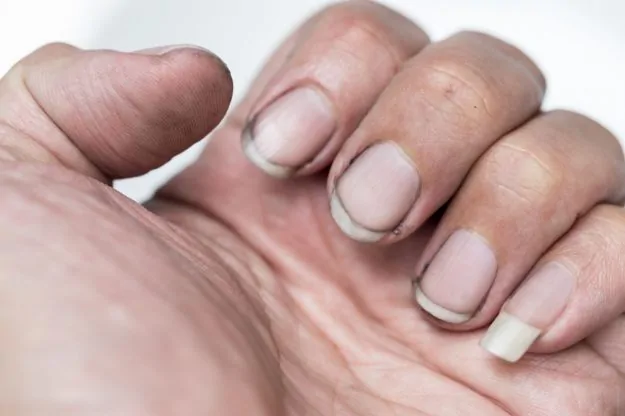
There is something worth sitting with here, because the reflexive judgment about dirty nails reveals something about the cultural assumptions many of us carry without realizing it.
In many professional and social environments, white-collar work has become the invisible standard against which other kinds of work are measured. The office worker who spends eight hours in front of a computer screen will likely go home with clean, unmarked hands. The tradesperson who spends those same eight hours doing physically demanding, technically skilled work that keeps society functioning will often go home with hands that tell a very different story.
When we instinctively read dirty nails as a sign of carelessness or low status, we are, in a quiet way, expressing a preference for one kind of work over another. We are suggesting that the work which leaves no visible trace is somehow more respectable than the work that leaves its mark on the body. That is a perspective worth examining honestly.
The electrician who wires a new building, the plumber who fixes the systems that carry clean water into homes, the mechanic who keeps vehicles running safely, the farmer who produces the food that ends up on every table — these are not people whose dirty hands should prompt a downward reassessment. If anything, the visible evidence of their labor might be understood as a kind of badge. A quiet demonstration that they have been somewhere, doing something, that required more than sitting still.
The Complexity of a First Impression
None of this is to suggest that context does not matter, because of course it does.
There are situations and settings where clean, well-maintained hands carry genuine practical and professional significance. A surgeon, a nurse, a chef, a childcare worker — each of these individuals operates in an environment where hand hygiene is directly connected to the safety and wellbeing of others. The standards that apply in those settings are meaningful and should be upheld.
And there are cases, separate from professional necessity, where persistently unclean personal hygiene does reflect something worth paying attention to. Sometimes visible neglect of basic self-care is connected to difficult circumstances — mental health challenges, lack of access to proper facilities, or periods of genuine hardship. In those cases, the right response is not judgment but concern, curiosity, and perhaps an offer of support.
The problem is not the observation. The problem is the automatic conclusion — the leap from what we see on the surface to a fixed character assessment that takes no account of the enormous variety of human lives and working conditions that might explain what we are looking at.
A Different Way of Seeing

What would change if we approached dirty hands with curiosity instead of judgment?
We might start to see the mechanic’s grease-darkened fingers as a testament to technical knowledge and patient problem-solving. The farmer’s soil-stained hands as evidence of connection to the land and commitment to the work of feeding people. The construction worker’s calloused, marked palms as proof of the physical intelligence that goes into building things that last.
We might recognize that the cleanliness of someone’s nails at the end of a working day tells us almost nothing meaningful about who they are as a person. It tells us only something about what they were doing with their hands while the rest of the world was busy doing something else.
The image of fingernails darkened by honest work deserves a second look. Not because hygiene does not matter — it absolutely does — but because the story behind what we see is almost always more layered, more interesting, and more human than a quick glance will ever reveal.
First impressions are fast. Understanding is slower. And more often than not, the slower look is the one that gets it right.