
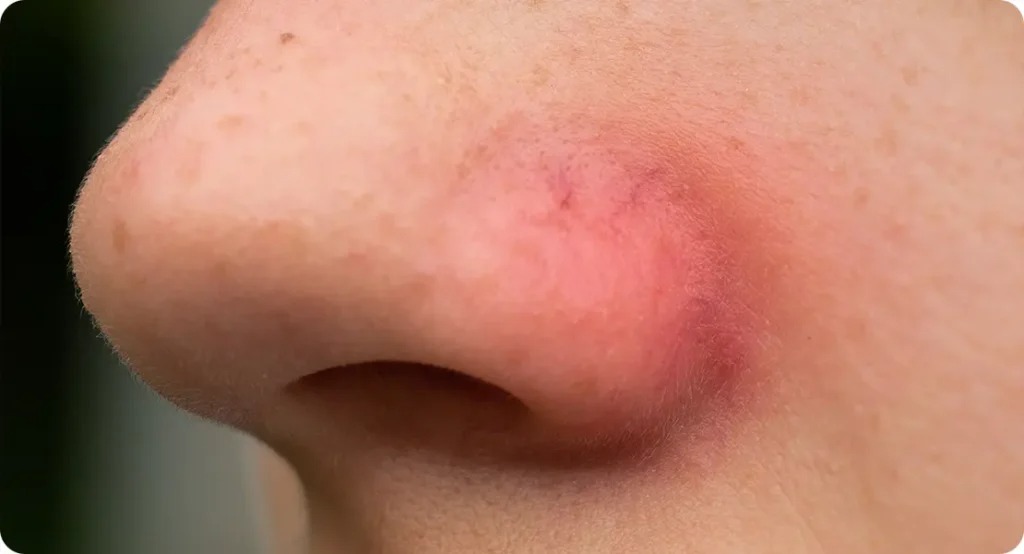
If the skin around your nostrils stays red, tender, or raw, you’re not alone. That area is thin, sensitive, and constantly exposed to friction, moisture, and irritants—so once it’s inflamed, it can be stubbornly slow to heal.
While this isn’t a substitute for medical care, there are safe, effective things you can do now to calm the skin and prevent it from getting worse.
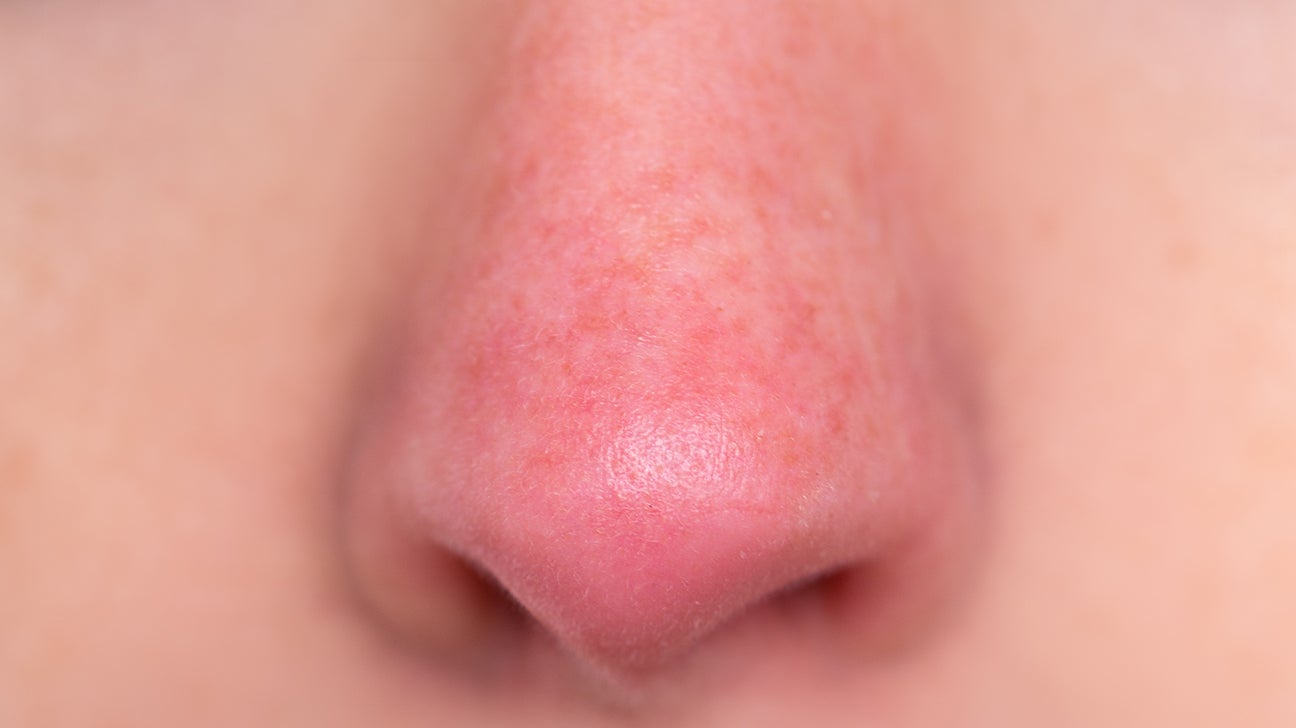
First: Is This Simple Irritation or Something More?
Most of the time, soreness around the nostrils is caused by irritant contact dermatitis—basically, the skin barrier has been damaged by:
-
frequent nose blowing or wiping
-
colds, allergies, or sinus issues
-
cold, dry air
-
masks rubbing the area
However, you should be more cautious if you notice:
-
yellow crusting, pus, or oozing
-
intense pain or swelling
-
redness spreading beyond the nostrils
-
fever or general illness
Those can signal infection and shouldn’t be ignored.
Clean Gently—Less Is More
Over-cleansing is one of the biggest mistakes here.
-
Use a fragrance-free, gentle cleanser (or just lukewarm water if it stings)
-
Wash with fingertips only—no washcloths, no scrubs
-
Avoid hot water
-
Pat dry gently; don’t rub
If washing hurts, you’re doing too much.

Moisture Is the Main Treatment
Healing won’t happen until the skin barrier is protected.
Best options:
-
Thick, bland moisturizers (ceramides, glycerin, hyaluronic acid)
-
Petroleum jelly (plain, unscented)
Apply multiple times a day, especially:
-
after washing
-
after blowing your nose
-
before bed
A thin layer is enough — think protective seal, not frosting.
Petroleum Jelly: Yes, It’s Okay
Plain petroleum jelly is one of the safest, most effective things you can use.
It:
-
locks in moisture
-
shields skin from friction
-
reduces stinging
Use clean hands or a cotton swab, and keep it external only (don’t pack it inside the nostrils).
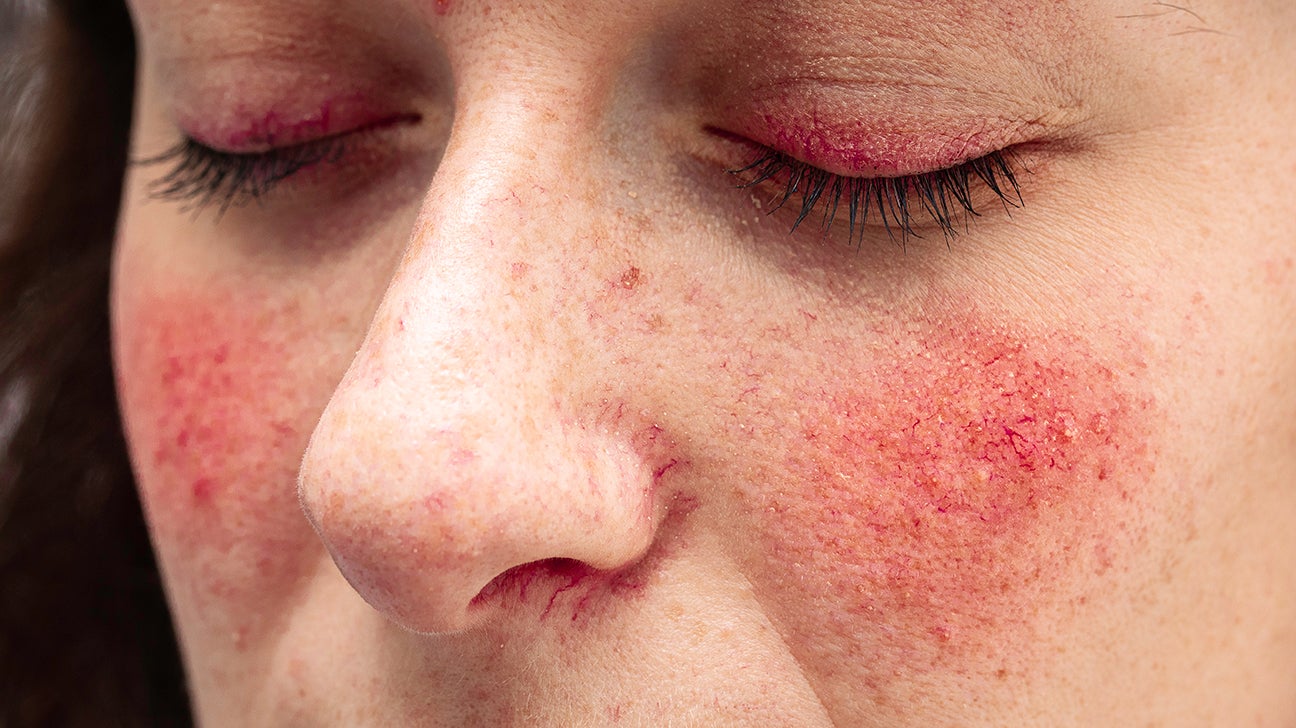
Ingredients That Calm (And Ones to Avoid)
Helpful ingredients:
-
colloidal oatmeal
-
aloe vera (simple formulas only)
-
panthenol (vitamin B5)
-
zinc oxide (especially if skin is raw)
Avoid for now:
-
fragrance or essential oils
-
alcohol
-
exfoliating acids or retinoids
-
menthol, eucalyptus, camphor
-
“natural” DIY remedies like lemon, vinegar, toothpaste, or baking soda
If it tingles or burns, stop.
Reduce the Triggers
Small changes help more than you’d expect:
-
Use lotion-infused tissues
-
Dab instead of wiping
-
If wearing a mask, choose soft fabric and wash it often
-
Run a humidifier if the air is dry
-
Manage allergies if possible (saline spray can help)
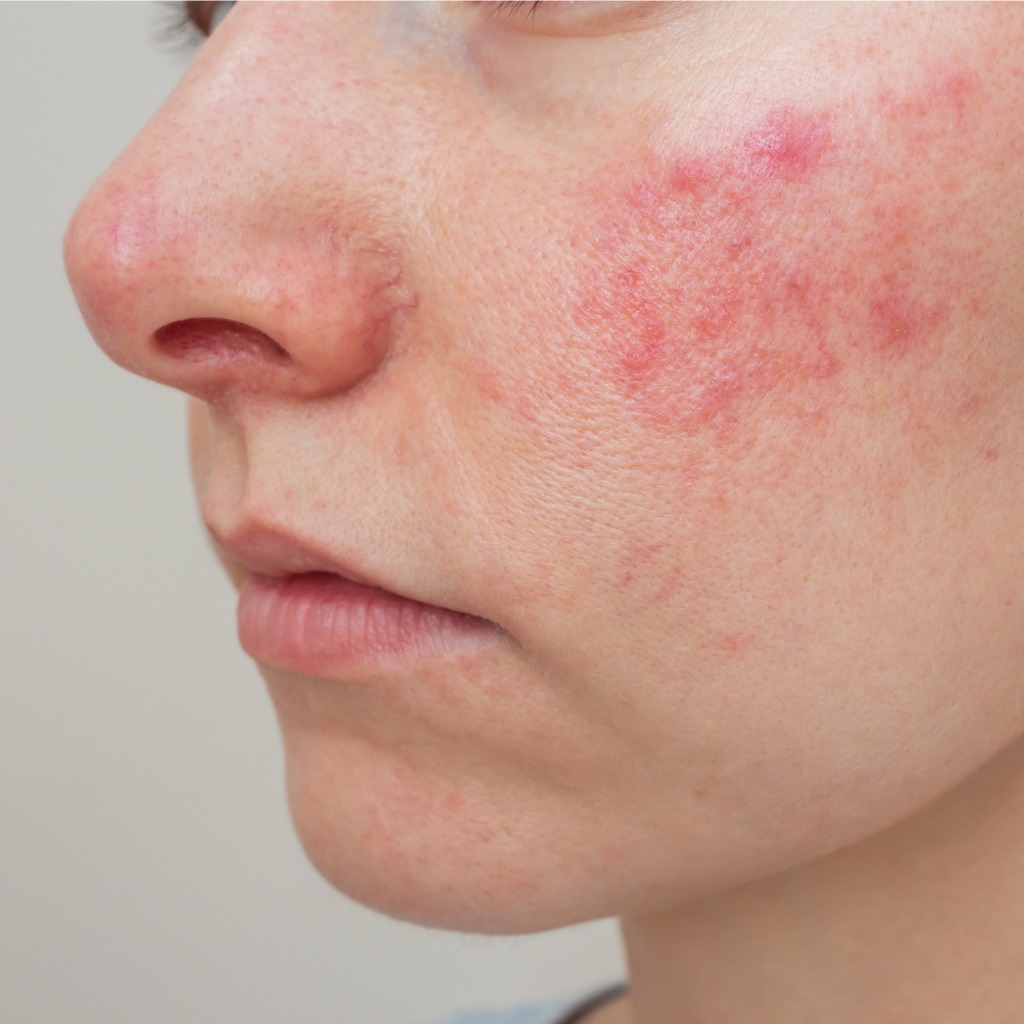
Can a Pharmacy Cream Help?
For short-term relief, 1% hydrocortisone cream can reduce redness and inflammation if this is simple irritant dermatitis.
Rules:
-
very thin layer
-
once daily
-
no more than 5–7 days
-
stop as soon as skin improves
Do not use longer without medical advice, especially on facial skin.
What Not to Do
-
Don’t pick peeling skin
-
Don’t scrub flakes off
-
Don’t “dry it out”
-
Don’t keep switching products
Consistency heals skin faster than experimentation.

When You Shouldn’t Wait
Try to get medical care sooner if:
-
there’s no improvement after a week
-
pain or redness worsens
-
you see pus, crusting, or cracks that won’t heal
-
the area keeps recurring
Conditions like eczema, perioral dermatitis, or bacterial infection need specific treatment.
Bottom Line
Right now, your goal is simple:
protect the skin barrier, reduce friction, and keep the area gently moisturized.
Most irritated nostrils improve once the skin is left alone and properly protected. And when you are able to get checked, you’ll be walking in with calmer skin—not a flare-up.