


The Bikram Sambat calendar is an official calendrical system used in Nepal, and it differs significantly from the widely used Gregorian calendar found in most parts of the world. While the Gregorian calendar follows the Anno Domini (A.D.) system, Bikram Sambat (often abbreviated as B.S.) operates on its own era count that is approximately 56–57 years ahead of the Gregorian timeline. This means that in the Gregorian year 2026, Nepal’s official calendar will be in the year 2082 B.S. in the Bikram Sambat system
Understanding the Bikram Sambat calendar offers insight into Nepal’s cultural identity, administrative practices, and how timekeeping structures shape daily life in a multi-calendar society.

What Is Bikram Sambat?
Bikram Sambat is a lunisolar calendar historically rooted in ancient South Asian timekeeping traditions. It was named after King Vikramaditya, a legendary ruler of ancient India, and traces its era back to approximately 57 BCE. The era count starts from that time and continues to the present day, which results in a year count ahead of the Gregorian system
Unlike purely solar calendars, a lunisolar calendar considers both the positions of the sun and the phases of the moon in determining months and seasons. In practice, this means the calendar adjusts periodic lunar cycles to align with the solar year, producing a system that is practical for agricultural, civic, and religious lifestyle, entertainment, education, legal documentation, public holidays, and civil record keeping. It remains a foundational element of civic infrastructure in the country
How Bikram Sambat Differs from the Gregorian Calendar
The main difference between Bikram Sambat and the Gregorian calendar lies in the year count and the start of the calendar year:
-
Year Difference: Bikram Sambat’s year number is about 56 years and 8 months ahead of the Gregorian calendar. Therefore, a Gregorian year of 2025–2026 corresponds approximately to 2082 B.S. in the Nepali system
-
New Year Start: The Nepali calendar begins its new year in mid-April (around 13–15 April in most years), whereas the Gregorian calendar begins its year on January 1
-
Month Structure: Bikram Sambat divides the year into 12 months, and the number of days in each month may vary from year to year based on astronomical calculation
This calendar remains deeply integrated across official documentation, public holidays, and national planning in Nepal
How the Bikram Sambat Year Is Calculated
To convert a date between the Gregorian calendar and Bikram Sambat, one must account for the year difference (approximately 56–57 years) and the calendar’s differing new year start point in mid-April. Generally:
-
A simple rule for conversion is: Bikram Sambat year = Gregorian year + 56 years + ~8 months.
-
The offset (56 or 57 years) changes depending on whether the date falls before or after the Nepali new year in mid-April
Because each Bikram Sambat month can have 29–32 days, precise conversions often use specialized calendars or algorithms
Months in the Bikram Sambat Calendar
The 12 months of the Bikram Sambat calendar are:
-
Baisakh – mid-April to mid-May
-
Jestha – mid-May to mid-June
-
Ashadh – mid-June to mid-July
-
Shrawan – mid-July to mid-August
-
Bhadra – mid-August to mid-September
-
Ashwin – mid-September to mid-October
-
Kartik – mid-October to mid-November
-
Mangsir – mid-November to mid-December
-
Poush – mid-December to mid-January
-
Magh – mid-January to mid-February
-
Falgun – mid-February to mid-March
-
Chaitra – mid-March to mid-April
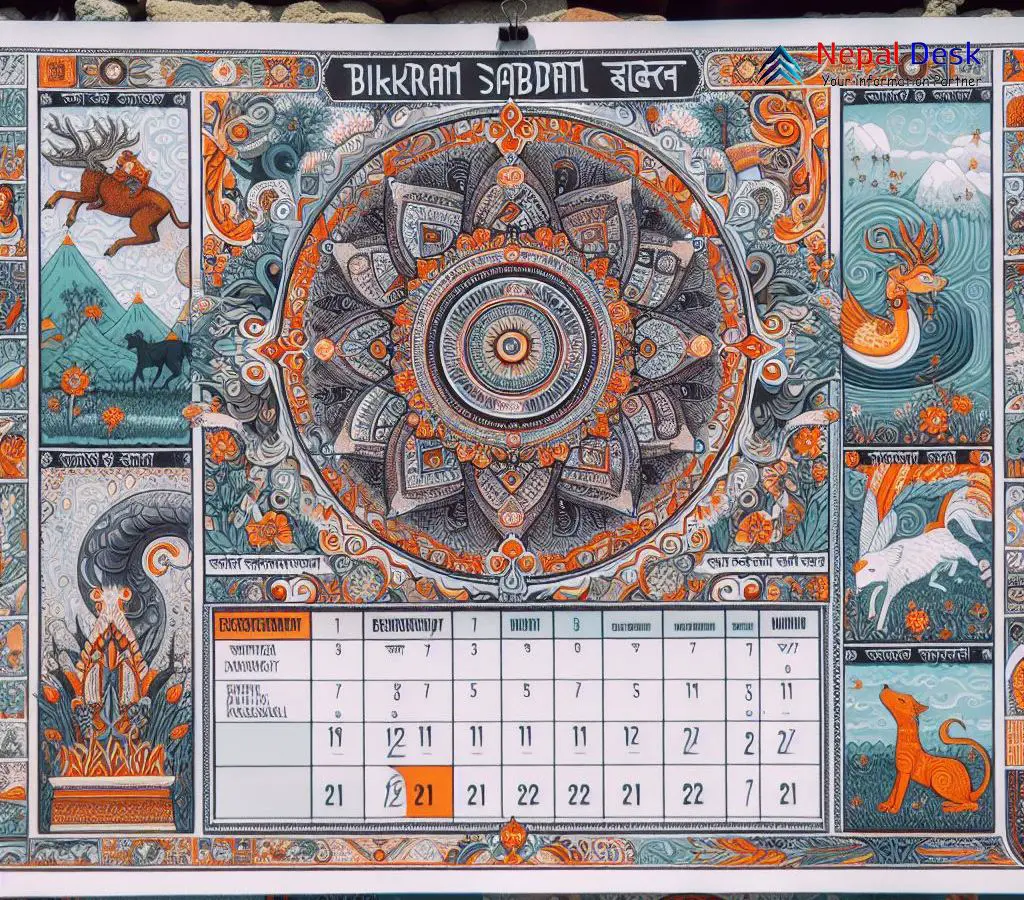
These month names are regularly used in Nepali calendars printed for civil and cultural use, alongside names and dates in the Gregorian calendar
Official Status of Bikram Sambat in Nepal
The Bikram Sambat calendar is recognized as the official calendar of Nepal and is widely used in government and administrative processes. Government forms, official deadlines, public sector event planning, and civil documentation frequently appear in both Bikram Sambat and Gregorian formats for clarity
In addition to Bikram Sambat, Nepal recognizes other calendar systems that hold cultural and historical importance. One of these is Nepal Sambat, a lunar calendar that has also been recognized for cultural use within the country. Efforts have been made to incorporate this calendar alongside Bikram Sambat and Gregorian dates in public documents and publications.

Cultural Importance of the Bikram Sambat Calendar
Beyond official use, the Bikram Sambat calendar plays a significant role in cultural life across Nepal:
-
Festivals and Holidays: Many major Nepali festivals, including the New Year celebration (Baisakh 1), Dashain, Tihar, and others, are dated according to the Bikram Sambat calendar
-
Education and Seasonal Activities: School calendars and agricultural planning often reference Bikram Sambat months, aligning academic years and farming cycles with national traditions
-
Media and Public Communication: Newspapers, websites, and broadcast media frequently display dates in both Bikram Sambat and Gregorian formats to serve domestic audiences.
Bikram Sambat and Digital Tools
To assist with date conversion and calendar use in digital contexts, various online converters and calendar tools are available. These tools help translate Gregorian dates into Bikram Sambat equivalents and vice versa, offering user-friendly interfaces for everyday use.
Developers also include Bikram Sambat support in mobile apps, desktop widgets, and software libraries to reflect Nepal’s blended use of calendrical systems in modern technology.
Conclusion
The Bikram Sambat calendar is an integral part of Nepal’s official and cultural life. As the official national calendar, it operates on a count that is approximately 56–57 years ahead of the Gregorian calendar, beginning its year in mid-April. Its usage spans government administration, education, festival planning, and public communication.
Understanding Bikram Sambat offers clearer insights into how Nepal organizes time differently from the global Gregorian standard, reflecting both historical continuity and modern civil practice.