
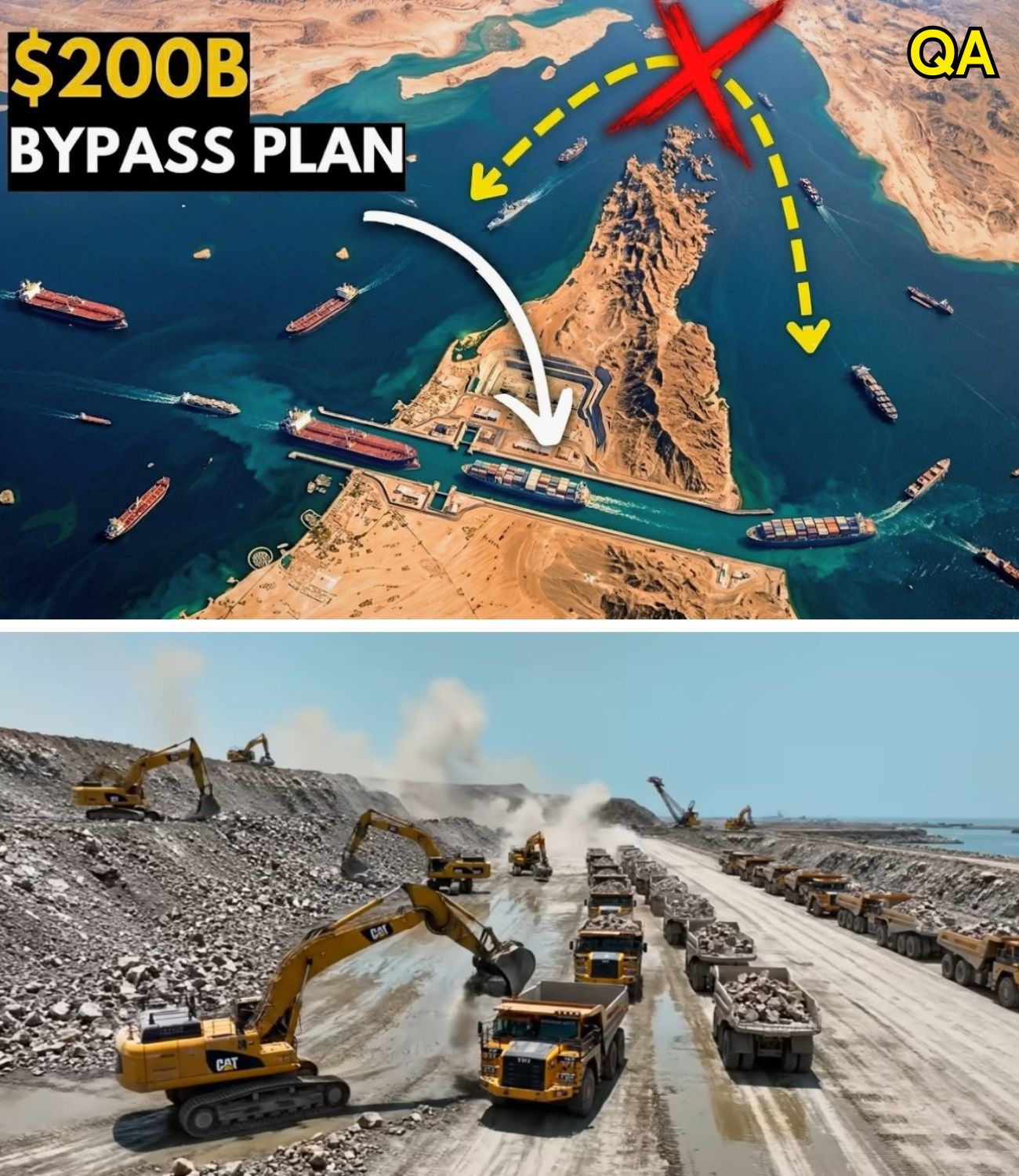
The idea of constructing a massive canal to bypass the Strait of Hormuz has captured global curiosity, especially during times of geopolitical tension and energy instability. As one of the most strategically important maritime chokepoints on Earth, the Strait of Hormuz handles roughly a fifth of the world’s oil supply, along with critical flows of liquefied natural gas and commercial goods. Any disruption in this narrow passage can ripple across global markets within hours, driving up oil prices and threatening supply chains. But could a man-made canal realistically replace it? This article explores the engineering feasibility, economic viability, geopolitical implications, and real-world comparisons to determine whether such a project could ever move beyond theory.

Why the Strait of Hormuz Matters So Much
The Strait of Hormuz sits between the Persian Gulf and the Gulf of Oman, forming a narrow maritime corridor that is only about 33 kilometers wide at its narrowest point. Despite its limited width, it serves as the primary export route for major oil-producing nations such as Saudi Arabia, Iraq, Kuwait, and the United Arab Emirates. Because of this concentration of energy flow, even minor disruptions—whether due to conflict, sanctions, or accidents—can create immediate volatility in global energy markets.
This dependence has led policymakers, engineers, and analysts to explore alternatives for decades. Among the most ambitious ideas is the construction of a canal that would bypass the strait entirely, offering a direct and secure route from the Persian Gulf to the open ocean. While the concept is appealing on paper, translating it into reality is far more complex.
Engineering Challenges: Why Geography Changes Everything
The most significant barrier to building a Hormuz bypass canal is geography. Unlike regions where successful canals have been constructed, the terrain surrounding the Strait of Hormuz is dominated by rugged mountain ranges, particularly the Hajar Mountains. These formations consist largely of hard limestone, fractured rock, and complex underground cavities, all of which make excavation extremely difficult.
To understand the scale of this challenge, it is helpful to compare it with the Panama Canal. Completed in 1914, the Panama Canal required massive excavation through jungle terrain and the creation of a lock system to raise and lower ships approximately 26 meters. Despite being built in a relatively more accessible environment, the project took over a decade and cost thousands of lives during construction.
A Hormuz bypass canal, by contrast, would likely require cutting through mountainous terrain with elevations reaching hundreds of meters. This would necessitate either extremely deep excavation or a complex series of locks far exceeding those used in Panama. Both options introduce significant technical risks, including slope instability, groundwater intrusion, and seismic sensitivity.
Another comparison can be made with the Suez Canal, which connects the Mediterranean Sea to the Red Sea. The Suez Canal benefits from flat desert terrain, allowing it to operate at sea level without locks. This dramatically simplifies operations and reduces transit time. Unfortunately, the geography near Hormuz makes a sea-level canal virtually impossible, meaning any realistic design would involve complicated elevation management systems.

Economic Realities: The Cost of Reshaping Geography
Even if the engineering challenges could be overcome, the economic cost of such a project would be staggering. Estimates for similar mega-projects often run into hundreds of billions of dollars, and a Hormuz bypass canal would likely exceed those figures due to its complexity.
Construction costs would include not only excavation but also infrastructure such as roads, power systems, desalination plants, worker housing, and long-term maintenance facilities. Additionally, the canal would require advanced security measures to protect it from potential threats, given its strategic importance.
For comparison, the expansion of the Panama Canal in the 21st century cost over $5 billion, and that project primarily involved upgrading existing infrastructure rather than building an entirely new canal from scratch. A Hormuz bypass would be a far more ambitious undertaking, with significantly higher financial risks.
The Nicaragua Canal provides another cautionary example. Despite strong initial interest and investment pledges, the project has faced repeated delays and remains largely unrealized. This demonstrates how even under favorable conditions, canal construction can struggle to attract sustained funding and political support.
Environmental and Operational Risks
Large-scale canal construction inevitably raises environmental concerns. Excavating through mountainous terrain could disrupt ecosystems, alter groundwater systems, and increase the risk of landslides. In coastal areas, dredging and construction activities could damage marine habitats and affect water quality.
Operational risks also need to be considered. Canals require constant maintenance to remain navigable, including dredging, structural repairs, and monitoring of water levels. In a region prone to extreme heat and occasional seismic activity, these challenges become even more pronounced.
Additionally, the use of lock systems introduces operational bottlenecks. Ships must wait for water levels to adjust, which can create delays and reduce overall efficiency. This is one reason why sea-level canals like the Suez are generally preferred when geography allows.

Existing Alternatives: Practical Solutions Already in Use
While the idea of a canal captures attention, many countries have already implemented more practical solutions to reduce reliance on the Strait of Hormuz. One of the most effective strategies is the development of pipeline infrastructure.
For example, Saudi Arabia operates pipelines that transport oil from the eastern part of the country to ports on the Red Sea, effectively bypassing the Strait. Similarly, the United Arab Emirates has invested in pipelines that connect inland oil fields to ports on the Gulf of Oman. These systems provide a reliable alternative without the need for massive excavation projects.
Technological advancements in shipping and logistics also play a role. Modern tankers are designed for efficiency, and global energy markets have become more diversified, reducing the impact of disruptions in any single location. Strategic petroleum reserves maintained by many countries further help buffer short-term supply shocks.
Geopolitical Considerations
Beyond engineering and economics, geopolitical factors play a crucial role in determining whether a Hormuz bypass canal could ever be built. Such a project would require cooperation among multiple nations, each with its own interests and priorities. Securing land rights, ensuring security, and managing international relations would be complex and potentially contentious.
Moreover, the existence of alternative routes—such as pipelines and diversified shipping lanes—reduces the urgency of building a canal. Governments are more likely to invest in flexible, scalable solutions rather than committing to a single, high-risk mega-project.
Lessons from Real-World Mega-Projects
Looking at historical examples provides valuable insight into what makes canal projects successful. The Panama Canal succeeded because it addressed a clear economic need, had strong international backing, and was built in a location where the engineering challenges, while significant, were manageable with available technology.
The Suez Canal succeeded because of its favorable geography and its ability to operate without locks, making it highly efficient for global shipping. In contrast, projects like the Nicaragua Canal illustrate the difficulties of turning ambitious ideas into reality, particularly when faced with financial, environmental, and political obstacles.

Final Verdict: Is a Hormuz Canal Feasible?
In theory, building a canal to bypass the Strait of Hormuz is not entirely impossible. Advances in engineering, materials science, and project management continue to expand what is technically achievable. However, feasibility is not determined by technical possibility alone.
When all factors are considered—geography, cost, environmental impact, operational complexity, and geopolitical dynamics—the likelihood of such a project becoming reality remains extremely low. The challenges are simply too great, and the benefits, while significant, can already be achieved through more practical means.
Conclusion
The concept of a Hormuz bypass canal highlights the importance of global trade routes and the ongoing search for ways to improve their resilience. While the idea is compelling and sparks valuable discussion, it ultimately belongs more to the realm of theoretical engineering than practical implementation.
Real-world examples like the Panama Canal and the Suez Canal demonstrate that successful canals depend heavily on geography, economics, and political alignment. Without these factors working in harmony, even the most ambitious المشاريع remain unrealized.
For now, the Strait of Hormuz will continue to play its critical role in global trade, while nations rely on pipelines, diversified routes, and technological innovation to manage the risks associated with this vital waterway.