
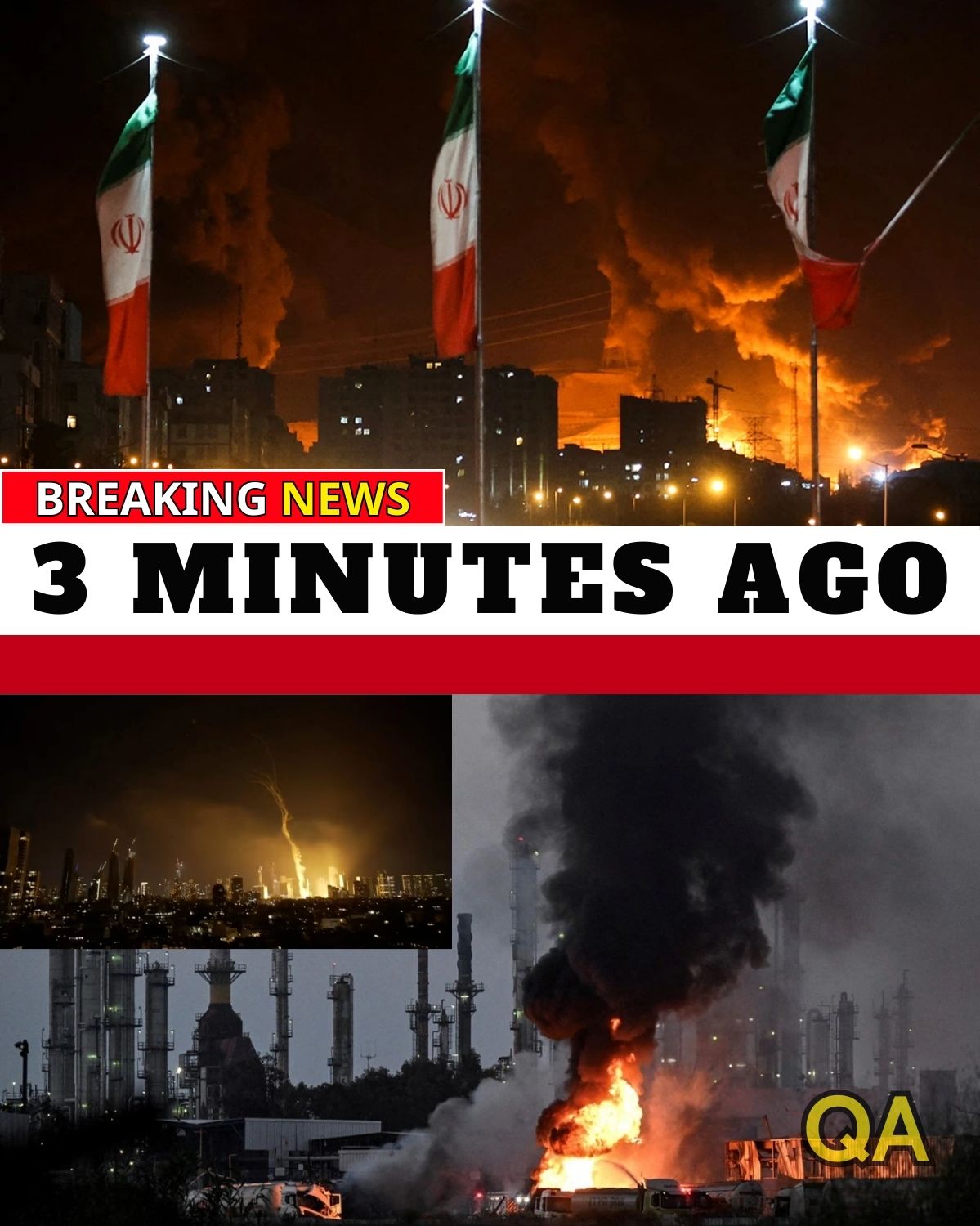
A dramatic story circulating online claims that Iran launched hundreds of missiles toward Tel Aviv in a massive overnight assault, overwhelming defenses and turning the sky into a battlefield. The narrative describes explosions, panic among civilians, and intense pressure on Israel’s air defense systems.
Because of its intense imagery and urgent tone, the story has quickly gained traction. However, when evaluating claims of this scale, especially involving potential large-scale war, it is critical to separate verified facts from exaggeration or misinformation.

Is There Evidence of a Massive Attack?
At the time of analysis, there is no confirmed report from major international news organizations that a large-scale Iranian missile barrage directly targeting Tel Aviv—on the scale described—has occurred exactly as presented in the viral story.
Events involving hundreds of missiles striking a major city would immediately dominate global headlines. Governments, military analysts, and media outlets worldwide would provide continuous coverage. The absence of such reporting strongly suggests that the story is either exaggerated, outdated, or misleading.
Real Tensions Between Iran and Israel
That said, the broader context behind the story is not entirely fictional. Tensions between Iran and Israel are very real and have escalated multiple times in recent years.
Both sides have engaged in indirect conflict, cyber operations, and occasional strikes through allied groups. There have also been instances where missiles and drones were launched in the region, contributing to ongoing instability.
However, these incidents are usually documented in detail by reliable sources, unlike the viral story, which lacks clear verification.
The Role of Israel’s Missile Defense Systems
The story mentions Israel’s advanced defense systems, including the well-known Iron Dome. This system is indeed designed to intercept short-range rockets and has proven highly effective in past conflicts.
Israel also uses additional layers of defense for longer-range threats. While no system is perfect, claims that defenses were overwhelmed by “hundreds of missiles” in a single wave would represent a major global event requiring widespread confirmation.
Without such confirmation, these details appear to be used to make the story sound more realistic rather than to report verified facts.

Signs of Exaggeration in the Narrative
The storytelling style of the viral content contains several red flags. It uses highly dramatic language, such as describing the sky “erupting into chaos” and presenting events in a cinematic sequence.
It also includes vague sourcing, referring broadly to “security analysts” or “reports” without naming specific organizations or providing verifiable data. This lack of precise attribution is common in misleading or sensationalized content.
Additionally, the scale described—hundreds of missiles, widespread impacts, and major urban damage—would be impossible to hide or underreport in today’s global media environment.
Why Stories Like This Spread Quickly
Stories involving war, especially between countries like Iran and Israel, naturally attract attention. When combined with vivid descriptions and fear-driven scenarios, they become highly shareable.
Social media platforms amplify this effect. Content that triggers strong emotional reactions—fear, shock, urgency—tends to spread faster than carefully verified information.
As a result, exaggerated or misleading narratives can quickly reach large audiences before being fact-checked.
What Is Likely True vs. Misleading
There is truth in the broader situation: regional tensions are high, and missile or drone exchanges have occurred in the past. Civilians in parts of Israel have experienced air-raid sirens and taken shelter during conflicts.
However, the specific claim of a massive, overwhelming missile barrage hitting Tel Aviv exactly as described in the viral story is not supported by credible, up-to-date evidence.
This suggests the story is likely a mix of real geopolitical tension combined with exaggerated or fictionalized details.
Conclusion
The viral story about a “night of fire” in Tel Aviv caused by a massive Iranian missile attack does not hold up under careful scrutiny. While it draws on real-world tensions between Iran and Israel, the scale and specifics described lack credible verification.
Readers should approach such content with caution, especially when it involves large-scale military events. In an age of rapid information sharing, the ability to distinguish between confirmed facts and viral exaggeration is more important than ever.