
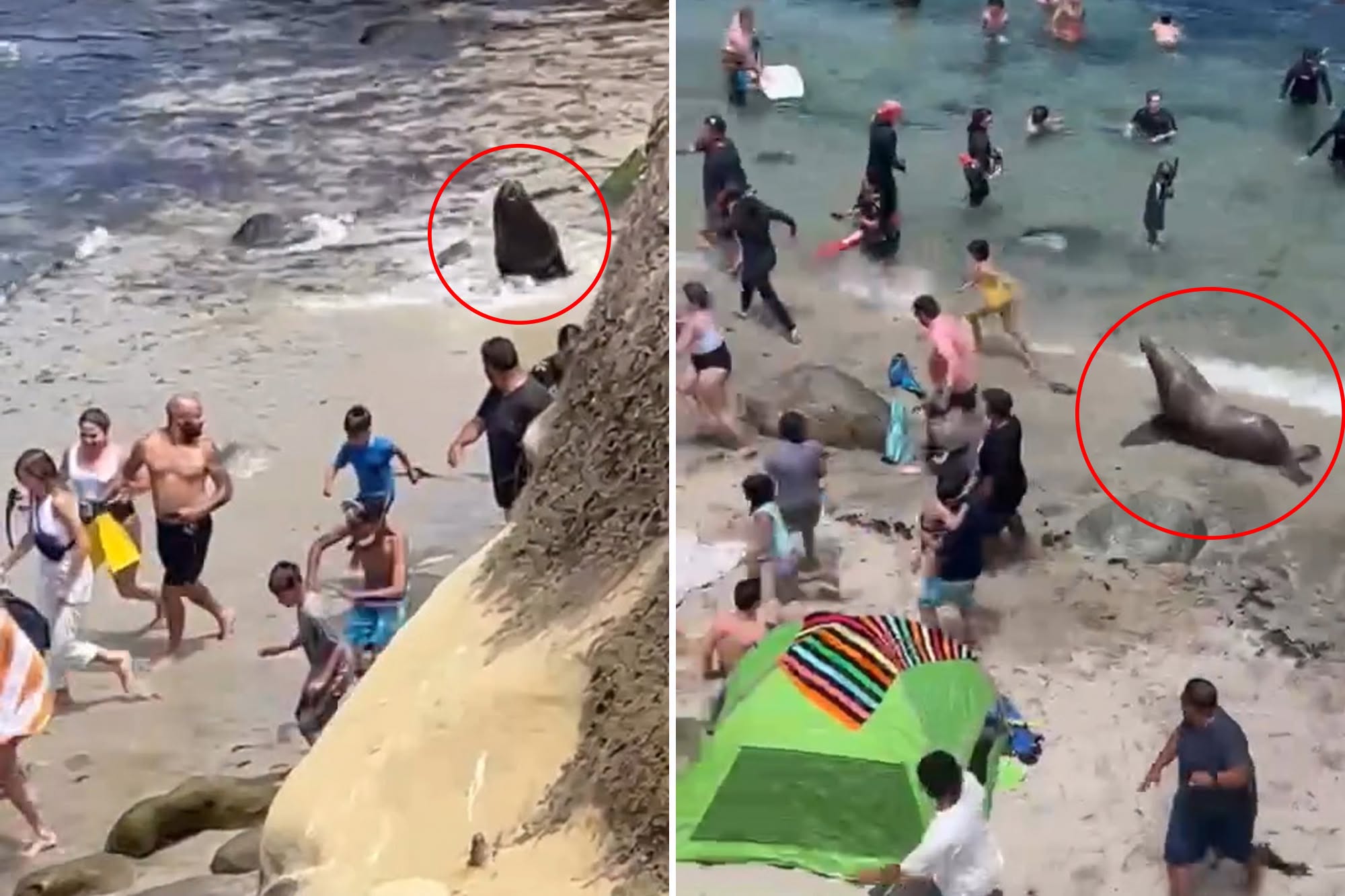
A relaxing day at the beach often brings images of sunshine, rolling waves, and playful wildlife in the distance. But every so often, nature reminds visitors that the coastline is also home to remarkable marine animals. Recently, beachgoers in California witnessed an unusual scene when several large sea lions occupied part of a popular beach, prompting visitors to calmly move away and give the animals plenty of space.
While videos of these encounters can appear dramatic, wildlife experts emphasize that such situations are usually the result of natural animal behavior rather than aggression. Understanding why sea lions come ashore and how people should respond helps create safer experiences for both humans and wildlife.
What Happened on the California Beach?
Visitors enjoying a popular California shoreline were surprised when a group of large sea lions moved across the sand, encouraging people nearby to step back and leave the area.
Videos shared online quickly attracted attention, with many viewers amazed by the size, speed, and confidence of the marine mammals. Park visitors and beachgoers generally responded by creating distance, allowing the animals to continue their natural behavior without interference.
Wildlife authorities often encourage this type of response whenever marine mammals are encountered on beaches.
Meet the California Sea Lion
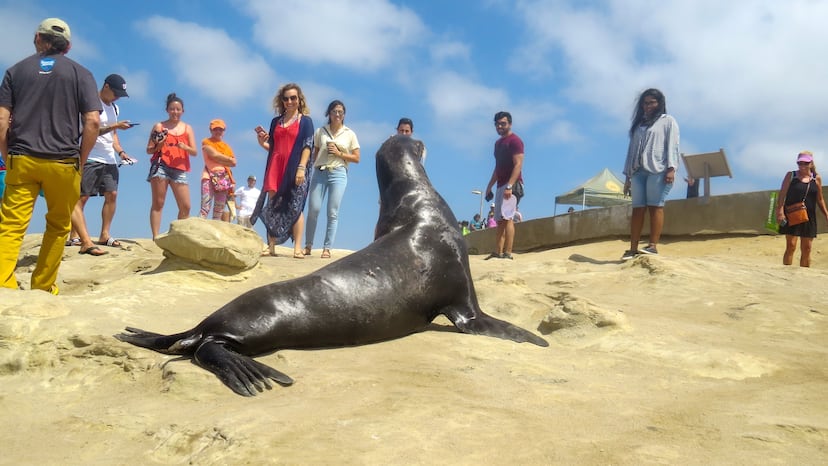
The California sea lion is one of the most recognizable marine mammals along the western coast of North America.
These intelligent animals are known for their:
- Excellent swimming abilities
- Strong social behavior
- Loud vocalizations
- Playful appearance in the water
- Ability to move surprisingly well on land
Unlike true seals, sea lions have external ear flaps and can rotate their rear flippers beneath their bodies, allowing them to walk across beaches more efficiently.
Why Do Sea Lions Come Onto Beaches?
Seeing sea lions resting on shore is perfectly normal.
They regularly haul out onto beaches, docks, rocky islands, and coastal structures for several reasons.
Resting
Sea lions spend many hours swimming and searching for food. Beaches provide safe places to relax and recover.
Warming Up
After spending extended periods in cool ocean water, resting on land helps regulate body temperature.
Molting
At certain times of the year, sea lions shed old fur and grow new coats. This natural process often involves spending more time ashore.
Social Behavior
Sea lions are highly social animals and often gather in groups called colonies or haul-outs.
Are Sea Lions Dangerous?
Sea lions are generally not interested in interacting with people.
However, they are large, powerful wild animals that deserve respect and space.
If they feel crowded or startled, they may vocalize loudly or move quickly to create more room around themselves.
Wildlife experts recommend observing sea lions from a safe distance and never attempting to touch, feed, or approach them.
Giving wildlife adequate space benefits both visitors and the animals.

Why Did Beachgoers Move Away?
When large marine mammals occupy part of a beach, the safest response is usually the simplest one: calmly move elsewhere.
This helps:
- Reduce stress for the animals.
- Prevent accidental close encounters.
- Allow wildlife to rest undisturbed.
- Support conservation efforts.
Many coastal parks temporarily close small sections of beaches when marine mammals are present, particularly during breeding or resting seasons.
How Big Can California Sea Lions Get?
Many people are surprised by their size.
Adult males may reach:
- Length: Up to about 8 feet (2.4 meters)
- Weight: Around 700 to 850 pounds (320–385 kilograms)
Females are considerably smaller but remain strong, agile swimmers.
Their impressive size often looks even larger when they gather together in groups on the shoreline.
What Do Sea Lions Eat?
Sea lions are skilled hunters.
Their diet commonly includes:
- Fish
- Squid
- Octopus
They use excellent underwater vision and sensitive whiskers to locate prey beneath the ocean’s surface.
Unlike some marine mammals, California sea lions usually hunt relatively close to shore, although they may travel considerable distances when food availability changes.
Why Are Sea Lion Sightings Becoming More Common?
Many people feel that sea lion encounters are increasing.
Scientists suggest several possible explanations.
Growing Populations
Conservation efforts have helped many marine mammal populations recover over recent decades.
Changing Food Availability
Ocean conditions naturally fluctuate throughout the year, influencing where sea lions search for food.
Increased Coastal Tourism
More visitors carrying smartphones mean wildlife encounters are recorded and shared online more frequently than ever before.
As a result, events that once attracted little attention can quickly become widely viewed.
How Should You React If You Encounter a Sea Lion?
Wildlife agencies recommend several simple guidelines.
Keep Your Distance
Observe from afar rather than approaching for photographs.
Never Feed Wildlife
Feeding changes natural behavior and may encourage unwanted interactions.
Keep Pets Away
Dogs should remain leashed and well away from resting marine mammals.
Follow Local Signs
Temporary closures and warning signs are designed to protect both visitors and wildlife.
Contact Authorities if Needed
If an animal appears injured, stranded, or unusually distressed, notify local marine wildlife authorities instead of attempting to help directly.
The Cultural Importance of Sea Lions
For centuries, coastal communities have shared the shoreline with sea lions.
These marine mammals appear in Indigenous traditions, coastal artwork, educational programs, and wildlife tourism.
Today they also serve as ambassadors for marine conservation, helping people appreciate the rich biodiversity of the Pacific coastline.
Watching sea lions in their natural environment often inspires greater interest in protecting oceans and coastal ecosystems.
A Scientific Perspective on Sea Lion Behavior
Marine biologists continue studying how sea lions adapt to changing ocean conditions.
Research examines topics such as:
- Migration patterns
- Breeding colonies
- Feeding habits
- Ocean temperature changes
- Human-wildlife interactions
Scientists note that resting on beaches is a normal part of sea lion behavior and does not necessarily indicate illness or unusual activity.
Understanding these natural patterns helps wildlife managers balance public recreation with conservation efforts.
Why Respecting Wildlife Matters
Wild animals thrive best when they can behave naturally without unnecessary disturbance.
Maintaining respectful distances allows sea lions to:
- Rest comfortably.
- Care for young.
- Conserve energy.
- Continue natural social interactions.
Visitors also enjoy safer, more memorable wildlife experiences by observing rather than interacting.
Small actions by beachgoers collectively contribute to healthier coastal ecosystems.
Conclusion
The recent appearance of large sea lions on a California beach offered a fascinating reminder that coastlines are shared spaces where wildlife and people occasionally cross paths. Although the sight of several massive marine mammals moving across the sand may seem surprising, experts explain that this behavior is typically part of their normal routine.
By understanding why sea lions come ashore and following simple wildlife safety guidelines, beach visitors can help protect these remarkable animals while enjoying unforgettable moments along the coast.
Human curiosity has always drawn us toward nature’s most impressive creatures. With knowledge, patience, and respect, these encounters can become valuable opportunities to appreciate the incredible wildlife that shares our world.
Sources
- National Oceanic and Atmospheric Administration (NOAA Fisheries)
- National Park Service (NPS)
- Marine Mammal Center
- Smithsonian Ocean
- International Union for Conservation of Nature (IUCN)
- New York Post – Report on the California sea lion beach incident