
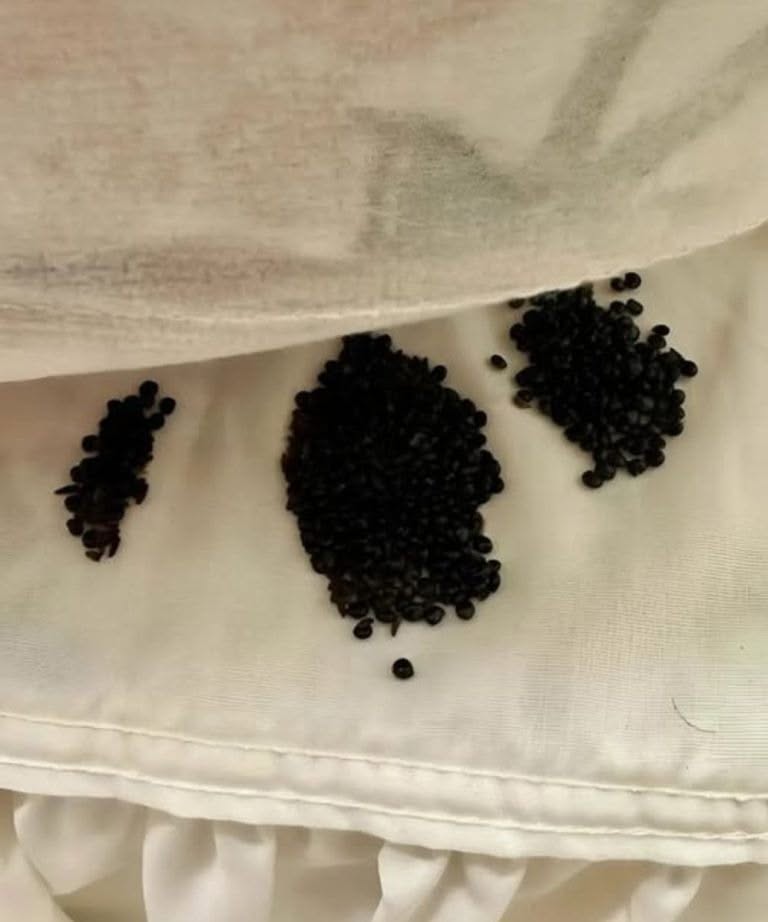
Discovering small black pellets under your mattress can be unsettling. It’s easy to imagine the worst, especially after reading alarming stories online about insects or household pests.
One of the most common misconceptions is that these tiny dark objects are insect eggs. In reality, insect eggs usually look very different. Most are white, cream-colored, or translucent and are often attached to surfaces rather than scattered loosely.
While finding unidentified debris under a mattress deserves attention, there is no need to panic. Careful observation and proper cleaning are usually the best first steps. This article explains what these pellets may be, how to inspect your home safely, and when it may be appropriate to seek professional pest control assistance.
Are They Insect Eggs?
In most cases, the answer is probably not.
Many common household insects lay eggs that are:
White or cream-colored
Very small
Soft or slightly translucent
Attached to cracks, crevices, or hidden surfaces
Because of these characteristics, dark, seed-like pellets are generally more consistent with droppings or debris than with insect eggs.
However, appearance alone cannot identify the source with certainty.

What Could the Black Pellets Be?
Several possibilities exist.
Cockroach Droppings
Cockroach droppings often resemble:
Ground coffee
Black pepper
Tiny dark pellets
Small cylindrical particles
The appearance varies depending on the species and size of the cockroach.
Droppings are commonly found near hiding places such as furniture, appliances, cabinets, and baseboards.
Rodent Droppings
Another possibility is rodent droppings.
Mouse droppings are often:
Dark brown or black
Oval-shaped
Firm
Approximately the size of a grain of rice
They are frequently discovered along walls, inside storage areas, beneath furniture, or near nesting locations.
Other Household Debris
Not every dark pellet indicates a pest problem.
Similar-looking material may simply be:
Dirt tracked indoors
Pieces of deteriorating foam
Wood fragments
Plant material
Old food particles
Accumulated dust mixed with fibers
A careful inspection helps distinguish between these possibilities.
Why Might You Find Them Under a Mattress?
The space beneath a mattress or bed frame offers several conditions that appeal to pests.
It is often:
Dark
Quiet
Undisturbed
Protected from daily activity
Close to walls
If other food or water sources exist elsewhere in the home, some pests may occasionally travel through these hidden spaces.
Finding pellets beneath a mattress does not necessarily mean insects or rodents are living inside the mattress itself.
How to Inspect the Area Safely
If you discover unfamiliar material, begin with a careful inspection.
Experts recommend:
Wearing disposable gloves.
Avoiding direct contact with the material.
Lifting the mattress carefully.
Examining the bed frame.
Checking nearby baseboards.
Looking underneath surrounding furniture.
Searching for additional evidence before drawing conclusions.
This method provides more information while minimizing unnecessary exposure to dust or contaminants.
Additional Signs to Watch For
Depending on the source, you may notice other clues.
For insects:
Shed skins
Egg cases
Small live insects
Musty odors
For rodents:
Gnaw marks
Nesting materials
Scratching sounds
Small openings near walls
Additional droppings
Finding multiple signs together may indicate a larger issue requiring professional evaluation.

Clean the Area Thoroughly
After inspecting the area, clean carefully.
General recommendations include:
Dispose of debris safely.
Vacuum thoroughly using an appropriate vacuum.
Wash nearby surfaces according to manufacturer recommendations.
Wash your hands after cleaning.
Launder bedding if necessary.
Keeping sleeping areas clean helps reduce conditions that attract household pests.
Preventing Future Pest Problems
Simple household habits can significantly reduce the likelihood of pest activity.
These include:
Vacuum regularly.
Store food in sealed containers.
Repair water leaks promptly.
Reduce clutter beneath beds.
Seal cracks around doors and windows.
Inspect second-hand furniture before bringing it indoors.
Good housekeeping supports both cleanliness and pest prevention.
When Should You Contact Pest Control?
Professional assistance may be appropriate if you notice:
Repeated accumulations of droppings.
Visible insects or rodents.
Evidence of nesting.
Damage to furniture.
Persistent unusual odors.
Increasing pest activity despite cleaning.
Licensed pest management professionals can identify the source accurately and recommend appropriate treatment.
Avoid Jumping to Conclusions
Images shared online can sometimes encourage people to identify household findings too quickly.
Many harmless materials resemble insect droppings or eggs.
Because appearance alone cannot provide a definitive diagnosis, experts recommend evaluating the surrounding environment before assuming a serious infestation.
When uncertainty remains, professional inspection is often the most reliable option.
Why Regular Home Inspections Matter
Routine household inspections can help identify small issues before they become larger ones.
Consider checking:
Under beds.
Behind furniture.
Inside closets.
Around baseboards.
Near plumbing.
Storage areas.
These simple inspections improve cleanliness while allowing early detection of maintenance concerns.

Conclusion
Finding small black pellets beneath a mattress can certainly be surprising, but they are not necessarily insect eggs. In many cases, they may be insect droppings, rodent droppings, or even ordinary household debris. A careful inspection, proper cleaning, and attention to additional signs provide a much clearer understanding than assumptions alone.
Good household hygiene, regular inspections, and prompt action when unusual findings appear remain the best strategies for maintaining a clean and healthy home. If evidence suggests an ongoing pest problem, consulting a licensed pest management professional can provide accurate identification and effective solutions.
Human curiosity often leads us to investigate unexpected discoveries around the home. By approaching them calmly and relying on evidence rather than speculation, we can make informed decisions that keep our living spaces safe and comfortable.
Sources
U.S. Environmental Protection Agency (EPA). Integrated Pest Management guidance.
Centers for Disease Control and Prevention (CDC). Rodent control and household sanitation.
National Pest Management Association (NPMA). Home pest identification resources.
University Extension Integrated Pest Management Programs. Household pest prevention and inspection guidance.
World Health Organization (WHO). Healthy housing and environmental hygiene resources.