


Whether you’re hiking through nature, working in the garden, or exploring a rural trail, encountering wildlife is often part of the experience. Among the animals that deserve respect are snakes. While most snakes prefer to avoid people, accidental encounters can happen when humans and snakes occupy the same space.
Stories about snake bites often appear online with dramatic headlines suggesting that one simple mistake always leads to disaster. In reality, medical experts emphasize a more balanced message: remaining calm, following evidence-based first aid, and seeking prompt medical care are the most important steps.
Understanding how snake bites occur, what symptoms may appear, and what modern medicine recommends can help people respond appropriately while avoiding dangerous myths.
How Common Are Snake Bites?
Snake bites occur in many parts of the world, particularly in regions where people live, farm, hike, or work outdoors.
According to the World Health Organization (WHO), snakebite envenoming is recognized as a neglected tropical disease in many countries. Most encounters happen accidentally when a person unknowingly steps near or reaches into an area where a snake is resting.
Fortunately, the vast majority of snakes are not dangerous to humans, and even among venomous species, not every bite results in venom being injected.
Why Snakes Enter Residential Areas
Snakes generally do not seek out people.
Instead, they may be attracted to environments that provide:
-
Shelter
-
Shade
-
Water
-
Food sources such as rodents
Gardens, woodpiles, compost heaps, rock walls, and tall grass can provide suitable habitats for both snakes and the small animals they hunt.
Keeping outdoor spaces tidy may reduce the likelihood of unexpected encounters.
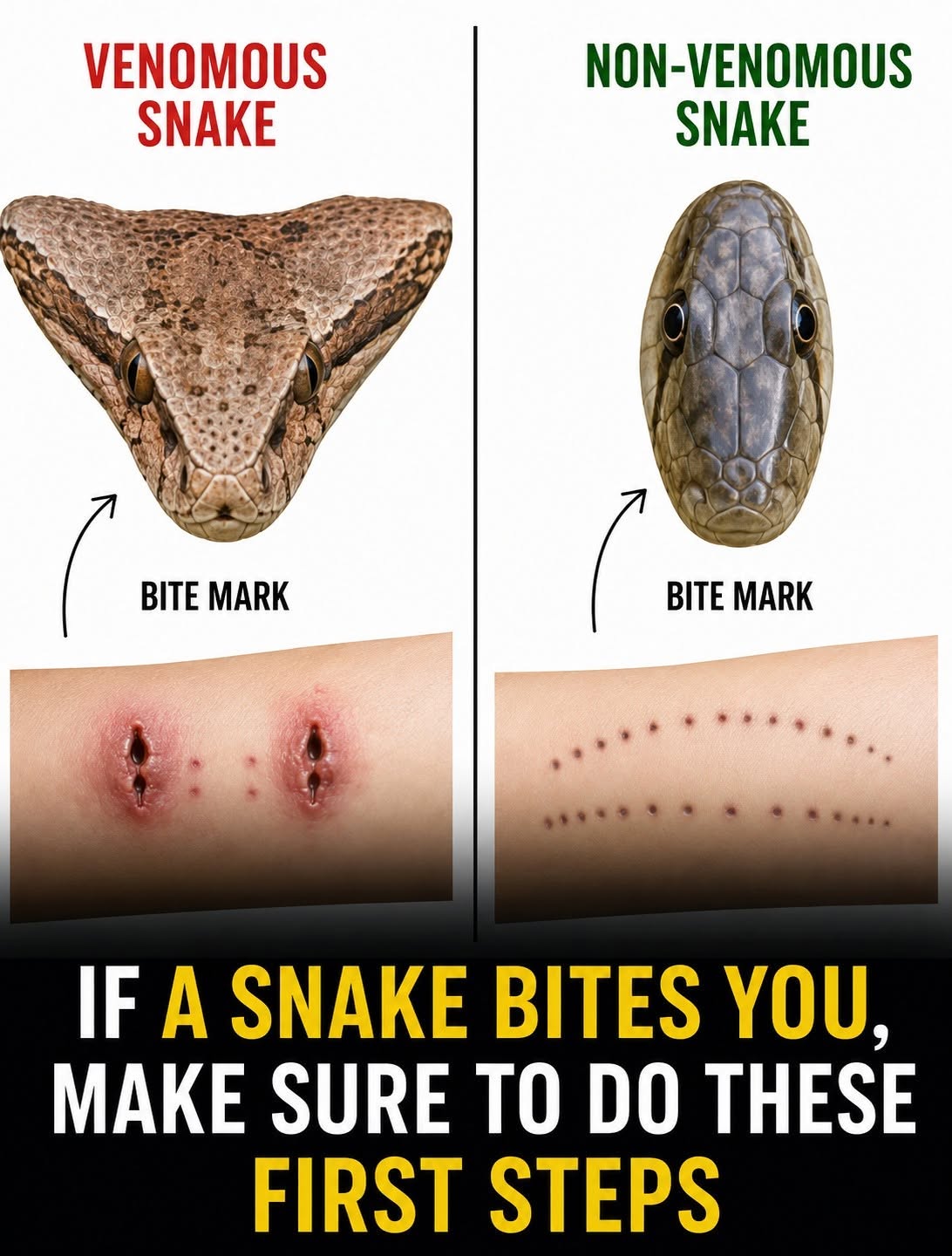
Understanding Venomous and Non-Venomous Bites
Medical professionals distinguish between bites that involve venom and those that do not.
Some venomous snakes may occasionally deliver what is known as a dry bite, in which little or no venom is injected.
Because it is impossible to determine the type of bite based solely on appearance, every suspected venomous snake bite should be treated as a medical emergency.
Only trained healthcare professionals can accurately assess the situation.
Possible Symptoms
Symptoms vary depending on the snake species, the amount of venom involved, and the individual’s health.
Some people experience only mild local effects, while others may develop more significant symptoms.
Possible signs include:
-
Pain or swelling near the bite
-
Nausea
-
Dizziness
-
Blurred vision
-
Weakness
-
Difficulty speaking or swallowing
-
Breathing problems
Not every symptom appears immediately, which is another reason prompt medical evaluation is important.
What To Do Immediately After a Snake Bite
Modern first aid recommendations focus on slowing the movement of venom through the lymphatic system while arranging emergency medical care.
Experts generally recommend:
-
Move away from the snake safely.
-
Call emergency medical services immediately.
-
Keep the affected person as calm as possible.
-
Minimize movement.
-
Immobilize the bitten limb using a splint if available.
-
Follow local medical guidance regarding pressure immobilization where appropriate.
Keeping the person still may help reduce the movement of venom before professional treatment is available.
Pressure Immobilization: When Is It Recommended?
Pressure immobilization bandaging is recommended in some countries, particularly Australia, for bites from certain venomous snakes.
The technique involves:
-
Applying a firm elastic bandage over the bite area.
-
Wrapping the entire limb.
-
Immobilizing the limb with a splint.
However, recommendations differ depending on the region and the types of snakes present.
For this reason, people should follow guidance provided by their local emergency medical authorities.
Common Snake Bite Myths
Many traditional remedies have been shown to be ineffective or potentially harmful.
Myth: Cut the Bite Open
Medical experts do not recommend cutting the wound.
This can increase tissue injury and infection risk without removing venom.
Myth: Suck Out the Venom
Research has shown that attempting to remove venom by mouth is ineffective.
Myth: Apply a Tourniquet
Tight tourniquets may reduce blood flow and increase tissue damage.
They are generally not recommended unless specifically directed by medical professionals in exceptional circumstances.
Myth: Try to Capture the Snake
Attempting to catch or handle a snake increases the risk of additional bites.
If it can be done safely, remembering the snake’s appearance from a distance may be helpful, but personal safety should always come first.
How Doctors Treat Snake Bites
Modern hospitals use several tools to evaluate snake bite patients.
Treatment may include:
-
Physical examination
-
Laboratory testing
-
Monitoring vital signs
-
Pain management
-
Supportive care
-
Antivenom when indicated
Antivenom is used only when medically appropriate and is administered under professional supervision.
Advances in emergency medicine have greatly improved outcomes for many snake bite patients.
Preventing Snake Bites
Simple precautions can reduce the likelihood of accidental encounters.
These include:
-
Wear sturdy boots when walking through tall grass.
-
Use gloves when moving firewood or rocks.
-
Keep yards free of excessive clutter.
-
Control rodent populations around homes.
-
Use a flashlight when walking outdoors at night.
-
Stay on established trails during hikes.
Awareness is often the best form of prevention.
The Ecological Importance of Snakes
Although many people fear snakes, they play an important role in ecosystems.
They help control populations of rodents and other small animals, contributing to ecological balance.
Most snakes avoid human contact whenever possible and will move away if given the opportunity.
Respecting wildlife benefits both people and nature.
Why Viral Headlines Can Be Misleading
Online articles sometimes use dramatic language suggesting that one mistake guarantees a particular outcome.
Medical science is more nuanced.
The outcome of a snake bite depends on many factors, including:
-
Snake species
-
Amount of venom
-
Bite location
-
Time to medical care
-
Overall health of the patient
Balanced reporting encourages preparation rather than panic.
Looking Ahead
Researchers continue improving snake bite diagnosis, antivenom production, and emergency treatment worldwide.
Organizations such as the World Health Organization are working with governments and healthcare providers to improve access to treatment and public education, particularly in regions where snake bites are more common.
Education remains one of the most effective tools for reducing injuries and improving outcomes.
Conclusion
Snake bites can be frightening, but modern medical knowledge provides clear guidance for responding safely. Remaining calm, limiting movement, seeking immediate medical care, and avoiding outdated first aid myths can make a meaningful difference.
Human curiosity has long been fascinated by snakes, inspiring myths, legends, and stories across cultures. Today, scientific research helps separate fact from fiction, allowing us to appreciate these remarkable animals while understanding how to stay safe when sharing the natural world with them.

Sources
-
World Health Organization (WHO) – Snakebite Envenoming
-
Centers for Disease Control and Prevention (CDC)
-
American Red Cross – First Aid Guidance
-
Mayo Clinic – Snake Bite First Aid
-
Australian Resuscitation Council – Guideline for Snake Bite Management
-
MedlinePlus – Snake Bites