


Every morning, people make countless choices about what to wear. For some, clothing is simply practical. For others, it is a way to express personality, creativity, or confidence.
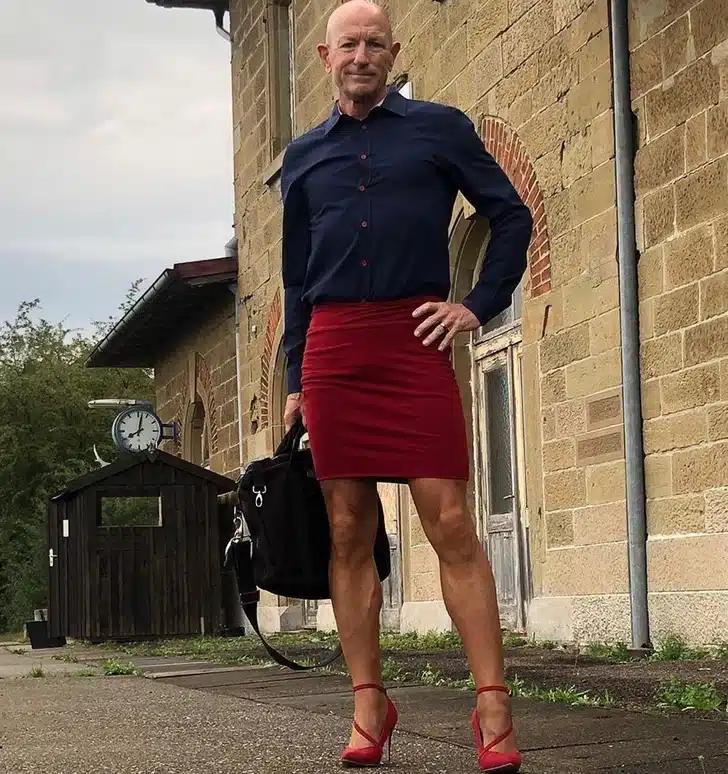
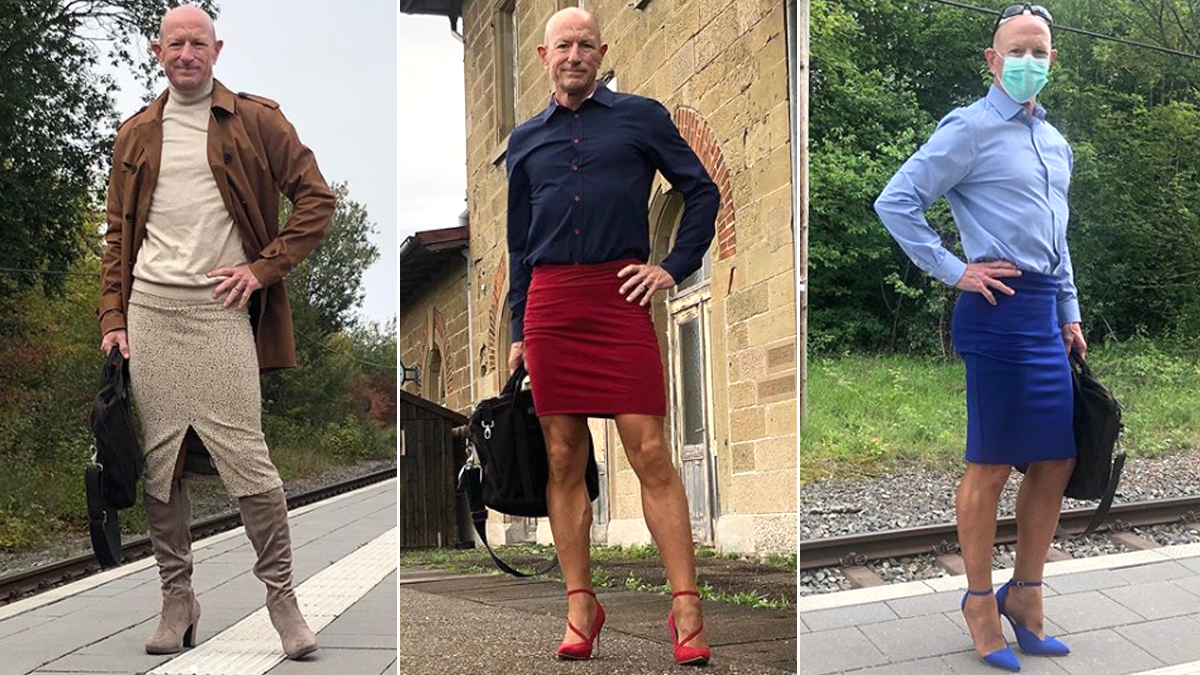
One individual who has attracted worldwide attention for his wardrobe is Mark Bryan, a robotics engineer living in Germany. His fashion choices have sparked conversations across social media because he regularly combines skirts and high heels with traditionally masculine clothing.
Rather than focusing on controversy, Bryan says his goal is to encourage people to think differently about clothing and the assumptions society often makes about it.
His story has become part of a broader discussion about fashion history, cultural traditions, and the evolving relationship between clothing and identity.
Who Is Mark Bryan?
Mark Bryan is a robotics engineer based in Germany who has built a large following online by sharing his distinctive style.
His outfits often include:
-
Button-down shirts
-
Jackets or blazers
-
Neckties
-
Pencil skirts
-
High-heeled shoes
Bryan has explained in interviews that he prefers skirts over dresses because they allow him to combine what he considers traditionally masculine clothing on the upper body with garments that are often marketed toward women.
He has also stated that he views clothing as a form of personal expression rather than something that should be limited by gender expectations.

Why His Style Draws Attention
Fashion has always reflected cultural expectations.
Because many modern Western societies associate skirts and high heels primarily with women’s fashion, Bryan’s wardrobe naturally attracts curiosity.
Much of the discussion surrounding his appearance centers not on the clothing itself but on long-standing social conventions.
His social media presence has encouraged conversations about how these conventions have changed throughout history.
Clothing Has Not Always Been Gendered
One of the most interesting aspects of fashion history is that many garments now associated with one gender originally had very different cultural meanings.
Examples include:
High Heels
High heels were originally worn by men centuries ago.
Historians note that Persian cavalry riders used elevated heels to help secure their feet in stirrups while riding horses.
Later, European aristocratic men adopted high heels as symbols of wealth and status.
Skirts and Robes
Throughout history, garments resembling skirts have been worn by men in many cultures.
Examples include:
-
Scottish kilts
-
Roman tunics
-
Greek chitons
-
Middle Eastern robes
-
South Asian dhotis
-
Southeast Asian sarongs
These garments demonstrate that clothing traditions vary widely across time and geography.
Fashion as Personal Expression
Sociologists often describe clothing as a form of nonverbal communication.
People may choose outfits to express:
-
Personality
-
Creativity
-
Professional identity
-
Cultural heritage
-
Comfort
-
Artistic taste
Because fashion carries symbolic meaning, it often changes alongside broader cultural trends.
Social Media and Fashion
Platforms such as Instagram have made it easier for individuals to share personal styles with global audiences.
This increased visibility has expanded conversations about:
-
Sustainable fashion
-
Inclusive design
-
Vintage clothing
-
Cultural influences
-
Individual creativity
Mark Bryan’s online presence reflects this broader movement toward showcasing diverse fashion choices.

Why Clothing Norms Change
Fashion historians explain that clothing expectations are never fixed.
They evolve in response to:
-
Culture
-
Economics
-
Technology
-
Art
-
Media
-
Social values
Items once considered unconventional sometimes become widely accepted over time.
History offers many examples of changing fashion norms across generations.
Public Reactions
Bryan’s style has received a variety of responses.
Some people admire his confidence and originality.
Others prefer more traditional clothing expectations.
These differing opinions illustrate how personal experiences, cultural backgrounds, and social traditions influence perceptions of fashion.
Respectful discussion allows people to explore these differences constructively.
Confidence and Authenticity
Psychologists have found that clothing can influence how individuals feel about themselves.
This concept, sometimes called “enclothed cognition,” suggests that clothing may affect confidence, mood, and behavior.
While everyone expresses themselves differently, wearing clothing that aligns with personal preferences can contribute to greater comfort and self-confidence.
The Role of Family Support
Bryan has publicly shared that his family supports his fashion choices.
Supportive relationships often play an important role in helping individuals feel comfortable expressing their interests and personalities.
Whether discussing hobbies, careers, or personal style, encouragement from family and friends can strengthen confidence and resilience.
Cultural Perspectives on Clothing
Around the world, clothing traditions vary enormously.
Garments considered formal in one country may be casual in another.
Likewise, colors, fabrics, and styles often carry different cultural meanings.
Understanding these differences reminds us that fashion is shaped by history and society rather than universal rules.
Fashion and Engineering
Some people are surprised that Bryan works as a robotics engineer while maintaining a highly visible fashion profile.
However, engineering and creativity frequently complement one another.
Both fields encourage:
-
Problem-solving
-
Innovation
-
Original thinking
-
Attention to detail
Many professionals successfully balance technical careers with artistic interests outside the workplace.
Lessons From Fashion History
Bryan’s story highlights several broader ideas.
Fashion evolves continuously.
Historical clothing traditions are more diverse than many people realize.
Personal style can reflect individuality while remaining respectful of others.
Most importantly, clothing itself does not determine a person’s character, abilities, or professional qualifications.
Conclusion
Mark Bryan’s fashion choices have encouraged conversations that extend well beyond clothing. His wardrobe invites people to explore the history of fashion, the diversity of cultural traditions, and the ways personal expression continues to evolve in modern society.
Human curiosity has always shaped fashion, inspiring new styles while rediscovering old traditions. Whether someone prefers classic attire or contemporary experimentation, clothing remains one of humanity’s oldest and most creative forms of self-expression. Understanding its rich history reminds us that fashion is constantly changing, reflecting both individual identity and the cultures in which we live.
Sources
-
The Metropolitan Museum of Art – History of Fashion
-
Victoria and Albert Museum (V&A) – Fashion Collections
-
Encyclopaedia Britannica – History of Clothing
-
Fashion Institute of Technology (FIT)
-
American Psychological Association – Research on Enclothed Cognition
-
Interviews and public posts shared by Mark Bryan