
Workplace safety procedures are designed to reduce risk, yet serious accidents can still occur, particularly in environments involving heavy equipment or overhead materials.
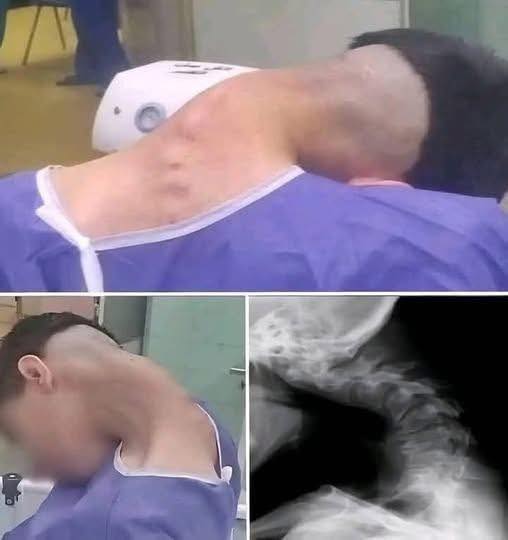
A published medical case report described an 18-year-old industrial worker who experienced a severe head and neck injury after being struck by a heavy metallic object. Although healthcare professionals provided emergency treatment, the injuries proved unsurvivable. Beyond the tragedy itself, the case drew medical attention because of an unusually complex pattern of cervical spine injuries that challenged existing classification systems.
Rather than focusing on graphic details, this case offers important lessons about workplace prevention, emergency response, and the continual advancement of medical knowledge.
Understanding the Reported Case
According to a case report published in the Journal of Orthopaedic Case Reports in 2022, the young worker sustained significant trauma after a heavy object fell from above during industrial work.
Medical imaging revealed an uncommon combination of injuries affecting both the skull and the cervical spine.
The authors noted that the injury pattern did not fit neatly within widely used systems for classifying cervical spine trauma, making the case academically significant for orthopedic and neurosurgical specialists.
Case reports such as this help physicians document rare situations that may improve future understanding and patient care.
Why Workplace Head Protection Matter
Industries involving suspended loads, cranes, construction materials, or heavy machinery require multiple layers of safety.
Common protective measures include:
- Safety helmets appropriate for the work environment.
- Properly secured overhead loads.
- Routine equipment inspections.
- Clearly marked hazard zones.
- Employee safety training.
- Communication between equipment operators and ground personnel.
No single measure eliminates risk, but combining several safety practices significantly reduces the likelihood of serious incidents.
How Energy Travels Through the Body During Trauma
Medical researchers explained that a high-energy impact to the head can transmit force through the neck.
The cervical spine consists of seven vertebrae supported by:
- Ligaments
- Muscles
- Intervertebral discs
- Nerves
- Blood vessels
Depending on the direction and magnitude of force, injuries may involve different combinations of bones and supporting structures.
Every accident produces unique mechanical forces, which is why injury patterns can vary considerably.
Why This Injury Was Considered Unusual
Orthopedic surgeons often classify spinal injuries using standardized systems that help guide diagnosis, communication, and treatment planning.
In this reported case, however, the observed fracture and dislocation pattern did not correspond to existing classification categories.
The authors suggested that exceptionally high mechanical forces created an injury configuration rarely encountered in clinical practice.
Publishing unusual cases allows researchers to expand medical understanding over time.
The Value of Medical Case Reports
Individual case reports play an important role in medicine.
They help clinicians:
- Document rare conditions.
- Share diagnostic challenges.
- Improve recognition of unusual injuries.
- Generate ideas for future research.
- Refine medical education.
Although a single case does not change clinical guidelines by itself, it contributes valuable information to the broader scientific community.
Preventing Workplace Accidents
Occupational safety experts emphasize that prevention begins long before work starts.
Important strategies include:
Hazard Assessment
Identifying potential risks before beginning a task.
Equipment Maintenance
Inspecting machinery, lifting devices, and protective equipment regularly.
Employee Training
Ensuring workers understand safe operating procedures and emergency protocols.
Personal Protective Equipment
Providing and correctly using helmets, eye protection, footwear, and other required gear.
Clear Communication
Maintaining effective communication among supervisors, equipment operators, and workers.
Why Young Workers May Face Additional Risks
Individuals entering the workforce may have less practical experience with industrial environments.
Employers can help reduce risk by providing:
- Thorough orientation.
- Hands-on supervision.
- Ongoing safety education.
- Opportunities to ask questions.
- Regular refresher training.
Developing a strong safety culture benefits employees of every experience level.

The Importance of Safety Culture
Safety is not limited to written policies.
Organizations with strong safety cultures encourage workers to:
- Report hazards promptly.
- Pause work if conditions become unsafe.
- Participate in safety discussions.
- Learn from near misses.
- Support one another in following procedures.
When safety becomes part of everyday decision-making, accident risks can often be reduced.
Frequently Asked Questions
What is the cervical spine?
The cervical spine is the upper portion of the spinal column located in the neck. It supports the head while protecting the spinal cord.
Why are medical classification systems important?
Classification systems help healthcare professionals describe injuries consistently, guide treatment decisions, and compare research findings.
Why publish rare medical cases?
Rare cases expand scientific knowledge and may improve recognition and management of similar injuries in the future.
Can workplace accidents always be prevented?
While not every accident can be eliminated, comprehensive safety programs, training, and proper equipment significantly reduce many workplace risks.
Conclusion
The published medical case of a young industrial worker illustrates both the unpredictable nature of high-energy workplace accidents and the ongoing evolution of medical knowledge. Although the injury described was exceptionally rare, its documentation provides valuable information for physicians studying complex spinal trauma.
Perhaps the most important lesson extends beyond medicine. Safe workplaces depend on careful planning, continuous training, properly maintained equipment, and a culture that prioritizes prevention every day. By learning from documented incidents and strengthening occupational safety practices, employers and workers alike can help reduce risks and protect lives.
Scientific case reports often begin with tragedy, but their lasting purpose is education. Each carefully documented case contributes another piece to the broader understanding that helps improve safety standards, medical practice, and future patient care.
Sources
- Journal of Orthopaedic Case Reports – Case report describing a rare cervical spine injury pattern (2022).
- Occupational Safety and Health Administration – Workplace safety guidance.
- International Labour Organization – Occupational safety and health resources.
- National Institute for Occupational Safety and Health – Workplace injury prevention resources.
- Original inspiration: Tbdig Divaxo summary based on a published orthopedic case report.