

What Are the Tiny White Worms in Strawberries?
Finding tiny white, worm-like larvae in strawberries after soaking them in salt water can be unsettling. Videos showing this phenomenon have circulated widely on social media, often leading people to question whether strawberries are safe to eat. While the discovery may be unpleasant, it is important to separate a natural agricultural issue from a food-safety emergency.
In many cases, these small larvae are associated with fruit flies, especially the spotted wing drosophila, a pest that can lay eggs in soft, ripening fruit. Their presence does not automatically mean that strawberries are dangerous, contaminated, or unsuitable for eating. Food safety depends on several factors, including the fruit’s freshness, condition, storage history, and whether it shows signs of spoilage such as mold, leaking juices, or an unusual odor.
This guide explains what the tiny white larvae may be, why salt water can make them more noticeable, how to wash strawberries properly, and when it is best to discard fruit.
What Are the Tiny White Larvae Found in Strawberries?
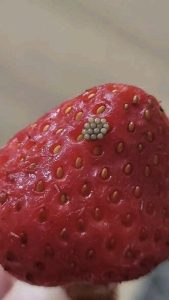
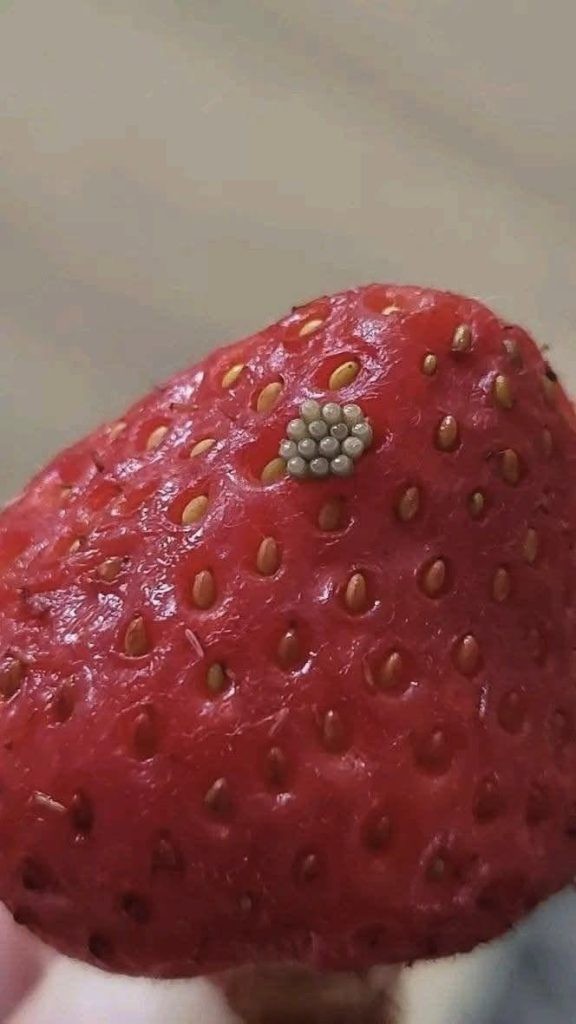
The tiny pale larvae sometimes found inside strawberries are often fruit fly larvae. One species frequently discussed in connection with berries is the spotted wing drosophila, scientifically known as Drosophila suzukii. Unlike many common fruit flies that mainly target damaged or overripe fruit, female spotted wing drosophila can lay eggs in soft-skinned fruit while it is still ripening.
Strawberries are among the fruits that may be affected, along with raspberries, blackberries, blueberries, cherries, grapes, and some stone fruits. After eggs hatch, the larvae feed within the fruit. They are usually very small, pale white to cream-colored, and may be difficult to spot without cutting open the berry or using a soaking method that encourages movement.
The spotted wing drosophila is an agricultural pest rather than a human parasite. It can reduce the quality and marketability of fruit crops, which is why growers, agricultural researchers, and extension services monitor it closely. Its presence in a berry is understandably undesirable from a consumer perspective, but it does not mean the insect is living in or infecting a person.
Why Does Salt Water Make Larvae Come Out of Strawberries?
Salt-water soaking has become a popular home experiment online. In some cases, placing strawberries in a salt-water solution may cause larvae near the surface to move out of the fruit or become easier to see. The change in their environment can irritate or stress small insects and larvae, prompting movement.
However, this method should not be treated as a guaranteed test of whether strawberries contain larvae. Not every berry that appears clear after soaking is necessarily free of insect eggs or larvae, and not every small moving object observed in water proves that the fruit was heavily infested. The results can vary according to the berry’s ripeness, the insect species involved, the concentration of salt, soaking time, and whether any larvae are present near the fruit’s surface.
Salt water also is not a replacement for normal food-safety practices. It does not reliably eliminate every microorganism that may be present on produce, and it is not proven to remove pesticide residues completely. A long soak may also affect a strawberry’s texture and flavor, making the berries softer or saltier than intended.
Are Fruit Fly Larvae in Strawberries Dangerous to People?
Accidentally consuming a small fruit fly larva in fresh fruit is generally not considered a major health concern for most healthy people. These larvae are not known to be parasites that establish infections in humans. Insects and insect fragments can occur in agricultural foods despite routine growing, harvesting, sorting, and packing practices.
That said, no one should interpret this as a reason to ignore spoiled produce. A berry containing larvae may also be softer or more damaged than other berries, and damaged fruit can deteriorate more quickly. The primary issue is often quality rather than the larva itself. Fresh strawberries should be firm for their variety, brightly colored, and free from visible mold, major bruising, sliminess, leaking liquid, or fermentation-like smells.
People with severe food allergies, compromised immune systems, or specific medical concerns may wish to be especially careful about eating produce that appears damaged or spoiled. For individual medical guidance, it is best to speak with a qualified healthcare professional. Anyone who develops persistent vomiting, a high fever, severe stomach pain, signs of dehydration, or other concerning symptoms after eating food should seek medical advice promptly. These symptoms can have many causes and should not automatically be attributed to an insect larva.
Do You Need to Throw Away Strawberries If You Find Larvae?
Not always. A small number of larvae does not automatically mean that an entire container of strawberries must be discarded. Consumers can inspect the berries individually and make a practical decision based on freshness and visible condition.
It is reasonable to discard berries that are:
- Moldy, fuzzy, slimy, or leaking liquid
- Extremely soft, crushed, or decomposing
- Giving off a sour, fermented, or unpleasant odor
- Heavily damaged or visibly affected by insects
- Stored improperly for an extended period
If the remaining strawberries are fresh, clean-looking, and free from spoilage, many people choose to rinse them under running water and eat them. Others may prefer to discard the affected berries for comfort or quality reasons. Both choices are understandable. Food safety guidance focuses especially on avoiding spoiled produce and handling fresh fruits correctly.
Is Vinegar Better Than Salt Water for Washing Strawberries?
Vinegar washes are frequently recommended in lifestyle content as a way to clean berries, but there is limited evidence that household vinegar soaking is superior to clean running water for routine consumer washing. The United States Food and Drug Administration advises washing fresh produce under running water before eating, cutting, or cooking it. The agency does not recommend using soap, detergent, bleach, or commercial produce washes for fruits and vegetables.
Washing strawberries under cool, clean running water can help remove dirt and reduce some surface contaminants. Gently rubbing or turning the berries under the water is useful, although strawberries should be handled carefully to avoid bruising. Because berries are delicate, aggressive scrubbing is unnecessary and can damage them.
Vinegar or salt water should not be considered a way to sterilize strawberries. Neither method guarantees the removal of all bacteria, insect eggs, larvae, or residues. The most reliable household approach is to buy fruit from reputable retailers, keep it refrigerated, inspect it before use, rinse it under running water shortly before eating, and discard fruit that has spoiled.
How to Wash Strawberries Safely
Proper washing and handling can help preserve strawberry quality while reducing exposure to dirt and surface contaminants. The following steps align with widely used produce-handling recommendations:
- Wash your hands with soap and water before handling fresh fruit.
- Check the strawberries and remove any that are moldy, badly bruised, or leaking.
- Keep the green caps on while rinsing when possible. Removing them first can allow water to enter the berry and affect texture.
- Rinse the strawberries gently under clean, cool running water.
- Do not use household soap, dish detergent, bleach, or disinfectants on food.
- Pat berries dry with a clean paper towel or allow them to drain before serving.
- Remove the leafy tops after washing if desired.
Washing berries immediately before eating is usually preferable to washing an entire package before storage. Excess moisture can promote faster spoilage, especially if berries are returned to the refrigerator while wet.
Best Ways to Store Strawberries at Home
Strawberries are highly perishable. Their soft texture, high water content, and delicate skin mean they can deteriorate quickly, particularly when they are warm, wet, or packed tightly with damaged fruit. Prompt refrigeration is one of the most important ways to protect quality.
Store strawberries in the refrigerator, ideally in their original ventilated container or in a shallow container lined with a clean paper towel. The paper towel can absorb excess moisture. Avoid sealing damp berries in an airtight container, as trapped moisture may encourage mold growth.
Before refrigerating, inspect the package and remove any moldy or crushed berries. Mold can spread quickly among soft fruits. It is also sensible to avoid washing strawberries until just before use. If berries have already been washed, dry them thoroughly and eat them soon.
For longer storage, strawberries can be frozen. Wash and dry them, remove the tops if preferred, place them in a single layer on a tray until frozen, then transfer them to a freezer-safe container. Frozen strawberries are useful for smoothies, sauces, baking, and other cooked preparations, although they will become softer after thawing.
Why Insects Can Be Part of Fresh Produce Farming
Fresh fruit is grown outdoors or in agricultural environments where insects are naturally present. Farmers use a variety of practices to manage pests, including field monitoring, sanitation, protective netting, trapping, biological controls, and carefully regulated pest-management strategies. Yet no farming system can completely eliminate every insect from every piece of produce.
The spotted wing drosophila has been a particular challenge for berry growers in several countries because it can reproduce rapidly and target ripening fruit. Researchers and agricultural agencies continue to study better monitoring methods and integrated pest management approaches. These efforts support crop quality while aiming to reduce unnecessary environmental impacts.
For consumers, the key point is that an occasional insect-related finding does not automatically indicate negligence by a grower, retailer, or food producer. It reflects the reality that fruits come from biological growing systems. Quality controls reduce problems, but they cannot make fresh produce completely uniform or entirely free of every natural imperfection.
Social Media Claims About “Worms” in Strawberries
Viral videos can be useful for drawing attention to food-handling questions, but they may also make common agricultural issues appear more alarming than they are. Seeing larvae emerge from a berry in close-up can create a strong reaction, particularly when the video suggests that every strawberry is infested or that accidental consumption is inherently dangerous.
These broad claims are not supported by food-safety guidance. The likelihood of finding larvae varies by growing region, season, fruit condition, pest pressure, and production practices. Strawberries should be inspected and washed, but there is no evidence-based reason for most people to stop eating them solely because of online videos.
Strawberries remain a nutritious fruit that provides vitamin C, fiber, water, and plant compounds associated with a balanced diet. As with all fresh produce, the sensible approach is to purchase good-quality fruit, refrigerate it promptly, wash it correctly, and discard pieces that show clear signs of spoilage.
The Bottom Line on Tiny White Worms in Strawberries
Tiny white larvae in strawberries may be fruit fly larvae, including those linked to spotted wing drosophila. They are unpleasant to find, but they are not generally considered human parasites or a reason for panic. Salt-water soaking can sometimes make larvae easier to notice, yet it is not a foolproof test and does not replace standard produce-washing practices.
If strawberries are fresh and free from mold, unpleasant odors, and serious damage, finding an occasional larva does not necessarily mean the full package is unsafe. Rinse strawberries gently under clean running water before eating, refrigerate them promptly, and remove any berries that are spoiled. These practical steps offer a balanced way to enjoy fresh strawberries while recognizing the realities of growing food outdoors.
Sources
- U.S. Food and Drug Administration: Tips for Cleaning Fruits and Vegetables
- U.S. Food and Drug Administration: Safe Handling of Raw Produce
- USDA Animal and Plant Health Inspection Service: Spotted Wing Drosophila
- University of California Integrated Pest Management: Spotted Wing Drosophila
- Centers for Disease Control and Prevention: Food Safety
Disclaimer: This content is intended for entertainment purposes only and is not based on real events.