


Long before audiences knew his name, Woody Harrelson was simply a young man trying to understand where he came from and where he wanted to go.
His childhood was shaped by circumstances he did not choose. His father, Charles Harrelson, was absent for much of his early life and later became widely known after being convicted of murder-for-hire offenses. That family history inevitably became part of Woody’s story, but it was never the whole story.
Years later, Woody would become one of Hollywood’s most recognizable actors, moving effortlessly between comedy, drama, television, and film.
His journey was not a simple story of escaping a difficult childhood. It was a much more complicated process of building an identity separate from the choices made by the generation before him.
A Childhood Far From Hollywood
Woody Harrelson was born in Midland, Texas, in 1961 and grew up primarily in Lebanon, Ohio.
His early years were not defined by the glamour associated with his later career.
His parents separated when he was young, and his father spent much of Woody’s childhood away from the family. Charles Harrelson later became notorious for his criminal activities and was eventually convicted in a high-profile case.
For a child, having a parent whose name is associated with serious wrongdoing can create complicated emotions.
There can be questions that are difficult to answer.
Why did this happen?
What does it mean for the family?
And perhaps most importantly, does a parent’s behavior say anything about the person their child will eventually become?
Woody’s life would provide a compelling answer to that final question.
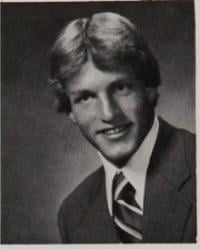
Learning to Stand on His Own
Growing up without the stability many children take for granted can influence how someone approaches adulthood.
Woody has spoken over the years about his upbringing and the difficulties associated with his family circumstances.
Rather than allowing those circumstances to become the definition of his identity, however, he eventually began building a life that was distinctly his own.
He attended Hanover College in Indiana, where he studied English and theater.
It was there that acting began to develop from an interest into a serious ambition.
Theater offered him something important.
It gave him a way to communicate.
It gave him a creative outlet.
And perhaps most significantly, it gave him an identity that was independent of his family history.
Moving to New York
After college, Harrelson moved to New York to pursue acting.
Like countless aspiring performers before him, he entered a competitive world where talent alone did not guarantee success.
Auditions could lead nowhere.
Financial uncertainty was common.
And every opportunity had to be earned.
The process required patience and persistence.
For someone without an established Hollywood family name working in his favor, the path was especially dependent on determination.
Then came the opportunity that would change everything.
The Role That Introduced Him to Millions
In 1985, Harrelson joined the cast of the television sitcom Cheers as Woody Boyd.
The character was very different from the serious image that might later define some of Harrelson’s film work.
Woody Boyd was friendly, innocent, humorous, and immediately memorable.
The role fit Harrelson’s natural comedic abilities and quickly made him a favorite among viewers.
Cheers was already one of television’s most successful sitcoms, so joining its cast gave Harrelson an enormous platform.
His performance earned him widespread recognition and eventually an Emmy Award for Outstanding Supporting Actor in a Comedy Series.
For the young actor who had once been trying to establish himself in New York, it was a remarkable transformation.
Suddenly, millions of people knew his face.
Fame Did Not Erase His Past
Success can change someone’s circumstances without automatically changing their memories.
Harrelson’s growing fame did not erase the complicated history surrounding his father.
In fact, public interest in his family background sometimes made that history even more visible.
This created an unusual situation.
Woody was becoming famous because of his own talent, while journalists and audiences also remained interested in the story of the man who had been his father.
Separating personal identity from family reputation can be difficult for anyone.
For a public figure, it can be even more challenging.
Yet Harrelson continued developing a career that increasingly stood on its own.
From Sitcom Star to Serious Actor
One of the most interesting parts of Harrelson’s career is how dramatically it expanded after Cheers.
Rather than remaining associated exclusively with television comedy, he began taking on increasingly challenging film roles.
In 1991, he appeared in Doc Hollywood.
A year later came White Men Can’t Jump, which demonstrated his ability to carry a major film while working alongside Wesley Snipes.
Then came one of the defining performances of his early film career.
In Natural Born Killers, Harrelson took on a much darker fictional character, demonstrating that the actor audiences had come to know from sitcom television possessed a much wider dramatic range.
His career was no longer confined to one genre.
A Performer Who Refused to Stay in One Category
Harrelson continued moving between different types of roles.
He appeared in films such as The People vs. Larry Flynt, The Thin Red Line, No Country for Old Men, Zombieland, and The Hunger Games series.
Each project introduced audiences to a different side of him.
He could be funny.
He could be intense.
He could be understated.
He could play characters who were morally complicated or emotionally vulnerable.
That versatility became one of his defining strengths.
Instead of allowing audiences to place him permanently in the category of “sitcom actor,” Harrelson repeatedly challenged expectations.

The Importance of Personal Choices
Harrelson’s life has also included periods when his own decisions attracted public attention.
Like many celebrities, he has experienced moments that became part of the public conversation.
But his story is particularly interesting because of the contrast between his family background and the person he eventually became.
His father’s criminal history could easily have become the dominant narrative.
Instead, Woody built a professional identity based on his own choices.
That distinction matters.
Children do not inherit responsibility for the decisions of their parents.
A family history can influence a person’s experiences, but it does not automatically determine their character or future.
Finding Meaning Beyond Fame
As Harrelson’s career matured, his interests expanded beyond acting.
He became known for environmental advocacy and support for various social and ecological causes.
These interests revealed another dimension of his personality that had little connection to the carefree television character who first made him famous.
This evolution is important because public figures are often remembered through one defining role.
For Harrelson, that might have been Woody Boyd from Cheers.
But his life and career demonstrate how incomplete that kind of label can be.
He became a film actor, environmental advocate, husband, father, and a person whose interests extended far beyond entertainment.
Why His Story Continues to Resonate
The most compelling part of Harrelson’s journey may not be his fame.
It is the question of identity.
How much of who we become is determined by where we come from?
How much control do we have over the story attached to our family?
And can someone create a meaningful future even when their childhood contains circumstances they would never have chosen?
Harrelson’s career suggests that the answer can be yes.
His father’s actions became part of his biography, but they did not become his destiny.
His achievements came from his own education, choices, relationships, persistence, and talent.
That distinction is particularly meaningful for anyone who has grown up in difficult circumstances.
The Difference Between Background and Destiny
Everyone begins life with circumstances beyond their control.
Some people grow up with financial advantages.
Others face uncertainty.
Some have supportive families.
Others experience complicated relationships.
None of those starting points completely determines where a person will eventually go.
The path may be harder for some than for others, but personal choices still matter.
Harrelson’s journey illustrates this distinction in an unusually visible way.
He could not rewrite his childhood.
He could not change the decisions his father made.
But he could decide what kind of person he wanted to become.
And he could build a career that belonged to him.
A Career Still Evolving
More than three decades after becoming famous on Cheers, Harrelson remains a recognizable presence in international cinema.
His career has included major commercial productions, independent films, television projects, and critically recognized performances.
That longevity is itself an achievement.
Many actors become closely associated with one successful role and struggle to move beyond it.
Harrelson managed to do the opposite.
He repeatedly reinvented himself.
The comedian became a dramatic actor.
The television performer became a major film star.
And the young man carrying a complicated family history became known around the world for work that was unmistakably his own.

The Human Story Behind the Famous Name
It is tempting to describe Woody Harrelson’s life as a simple transformation from hardship to fame.
Real life is rarely that straightforward.
Difficult childhood experiences do not simply disappear when someone becomes successful.
Fame does not automatically resolve old questions.
And a successful career does not mean a person has overcome every challenge they have ever faced.
What makes Harrelson’s story meaningful is not that he escaped his past completely.
It is that he continued moving forward despite it.
He created something of his own.
He developed his talents.
He built relationships and a family.
He explored causes that mattered to him.
And he established a professional identity that became far more powerful than the circumstances of his birth.
Final Reflection
Woody Harrelson’s story ultimately raises a question that extends far beyond Hollywood.
Are we defined by our circumstances, or by the choices we make afterward?
A difficult childhood can leave an imprint.
A complicated family history can follow someone for years.
But neither necessarily determines the person they become.
Harrelson’s career offers a reminder that identity is something we continue building throughout our lives.
The past may always be part of the story.
It simply does not have to be the ending.
From a childhood shaped by family uncertainty to a career spanning television, film, theater, and advocacy, Woody Harrelson created a life that could not be reduced to his father’s reputation.
Perhaps that is the most enduring lesson in his journey: we may inherit a history, but we still have the opportunity to write our own chapter.