



For most people, change happens gradually.
A new hairstyle appears one year. A different wardrobe follows another. Perhaps a new hobby becomes part of everyday life. Over time, these small choices can create a version of ourselves that looks very different from the person we once were.
For Kerstin Tristan, the transformation was far more visible.
In 2015, the German mother and grandmother decided to try something she had once strongly disliked: tattoos. What began as an experiment eventually became a major form of personal expression, transforming her appearance and turning her into a social media personality known for her colorful body art.
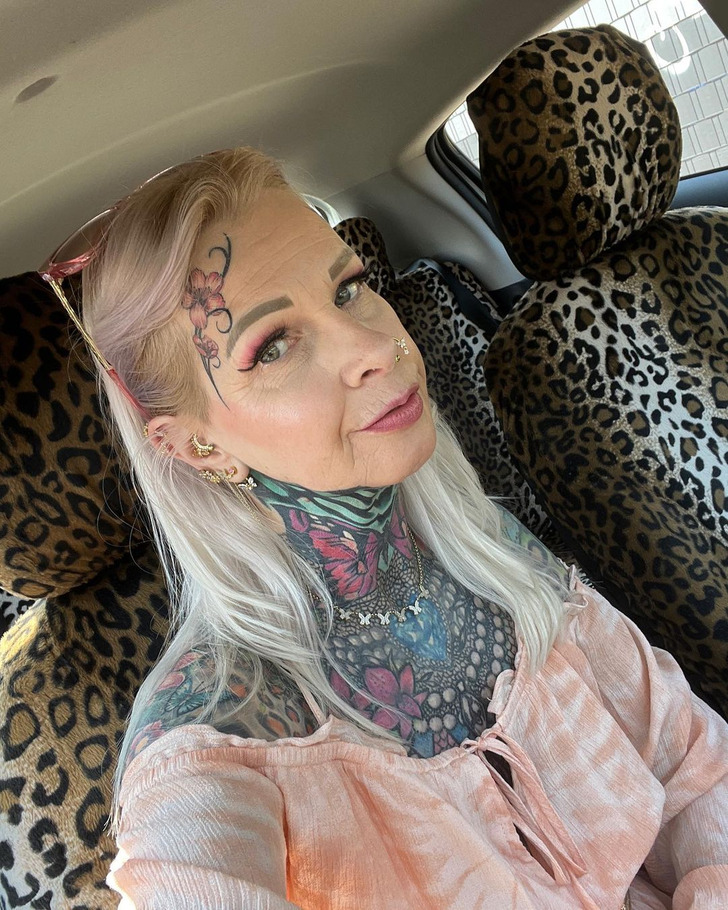
Today, Tristan is known online for a tattoo collection covering much of her body, featuring flowers, animals, patterns, and portraits.
Her story is not simply about tattoos.
It is about changing one’s mind, challenging assumptions about age, and discovering a form of creativity later in life.
Who Is Kerstin Tristan?
Kerstin Tristan is a German social media personality and tattoo enthusiast who gained attention after documenting her transformation online.
According to published reports, she began seriously exploring tattoos in 2015, despite previously having little interest in body art.
That first experience changed her perspective.
Rather than viewing tattoos as something she would never consider, she began seeing them as a form of artistic expression.
Over the following years, she continued adding new designs and eventually developed an appearance dramatically different from the one she had before beginning her tattoo journey.
Her story attracted attention partly because of the contrast between her earlier appearance and her current look.
But another reason people found her story interesting was her age.
Tristan demonstrated that personal style does not necessarily have an expiration date.
The Decision That Changed Her Style
The turning point came in 2015.
Tristan reportedly decided that she wanted to try something different and get her first tattoo. Her decision was not necessarily part of a lifelong plan.
It began with curiosity.
That detail makes her story particularly relatable.
Many major changes in life begin with a relatively small decision.
Someone tries a new hobby.
Someone travels somewhere unfamiliar.
Someone changes careers.
Someone finally decides to pursue an interest they had postponed for years.
For Tristan, that small experiment eventually became a defining part of her personal identity.
She continued returning to tattoo artists and gradually expanded her collection.
From One Tattoo to an Entire Body of Art
The transformation did not happen overnight.
Over several years, Tristan accumulated a large collection of tattoos featuring different colors, themes, and artistic styles.
Among the designs associated with her appearance are flowers, leopard patterns, portraits, and other decorative elements.
Instead of following a single visual theme, her tattoos create something closer to a large, evolving canvas.
That is part of what makes her appearance distinctive.
Each tattoo represents a separate artistic decision, while the collection as a whole creates a completely different visual identity.
According to reports, she has spent tens of thousands of euros on her tattoos over the years.
The exact amount reported by different publications has varied, but there is little doubt that the transformation represented a significant personal investment.
Why Her Tattoos Attracted So Much Attention
Tattoos have become increasingly common in many parts of the world, but extensive body art can still attract strong reactions.
Some people see tattoos primarily as fashion.
Others see them as permanent art.
For some, they represent important memories or personal experiences.
Others simply enjoy the visual design.
Tristan’s story attracted attention because her collection was so extensive and because she embraced it openly through social media.
Her Instagram account, associated with the name Tattoo Butterfly Flower, has been used to share photographs of her appearance and various stages of her transformation.
The before-and-after images are particularly striking because they demonstrate how dramatically personal style can change over a relatively short period.
The Cultural History of Tattoos
Although tattoos may appear modern to some people, the practice has an extremely long history.
Archaeological discoveries have demonstrated that tattooing existed in ancient societies across different regions of the world.
The reasons for tattooing have varied considerably.
In some cultures, tattoos were connected with identity, community, spiritual traditions, or social status.
In others, they became associated with travel, military service, artistic expression, or personal milestones.
Today, tattoo culture is highly diverse.
A small symbol on someone’s wrist and a large collection of colorful artwork may have completely different meanings.
This variety makes it difficult to define tattooing through one simple explanation.
For one person, it may be fashion.
For another, it may be storytelling.
For someone else, it may simply be an enjoyable form of art.
Tattoos and Personal Identity
One of the most interesting aspects of Tristan’s story is the relationship between appearance and identity.
People constantly communicate information about themselves through clothing, hairstyles, accessories, and other choices.
Tattoos take that process a step further because they can become permanent parts of a person’s appearance.
This can make the decision feel more significant.
A tattoo may represent a favorite flower, an important memory, an artistic preference, or simply a design that someone finds beautiful.
Tristan’s extensive collection appears to function primarily as a form of visual self-expression.
She has described her tattooed appearance using the imagery of a beautiful meadow filled with flowers.
That description reveals something important about her perspective.
She does not appear to see her tattoos simply as decorations.
She sees them as part of the way she presents herself to the world.
Does Age Really Matter When It Comes to Style?
Perhaps the most interesting question raised by Tristan’s transformation has little to do with tattoos.
It is about age.
Society often assigns expectations to people as they grow older.
Certain clothes are considered “appropriate.”
Certain hobbies are considered more suitable.
Certain forms of self-expression may be associated with younger generations.
But personal identity does not automatically disappear with age.
People continue discovering new interests throughout adulthood.
They change careers, learn instruments, travel, study new subjects, start businesses, and develop completely different personal styles.
Tristan’s story fits into this broader idea.
She did not begin her tattoo journey as a teenager.
She made the decision as an adult and continued exploring the style because she enjoyed it.
That is a useful reminder that creativity does not belong exclusively to one generation.

Social Media Changed the Story
Without social media, Tristan’s transformation might have remained a personal choice known mainly to friends and family.
Platforms such as Instagram and TikTok changed that.
Social media allows individuals to document personal transformations and share them with audiences around the world.
A single photograph can introduce someone’s unusual style to thousands of people.
A series of before-and-after images can become a visual record of change.
In Tristan’s case, social media became part of her identity as a public figure.
People could see not only the finished appearance but also the concept behind her tattoos.
This demonstrates how modern technology has changed the relationship between personal expression and public attention.
A style that might once have attracted attention only in someone’s local community can now become internationally recognizable.
Why People React Differently to Tattoos
Tattoos can generate very different reactions.
Some viewers immediately appreciate the artwork.
Others may prefer a more natural appearance.
Some people are fascinated by the creativity involved, while others remain uncomfortable with permanent body modification.
These differences are normal.
Personal appearance is deeply connected to individual taste and cultural background.
One person’s beautiful artwork may not appeal to another person at all.
The important point is that disagreement about style does not necessarily need to become judgment about the person.
Tristan’s story has attracted both admiration and criticism online, but her response has generally been to continue embracing the appearance she enjoys.
The Importance of Making Personal Choices Thoughtfully
While Tristan’s story celebrates self-expression, tattoos are also permanent decisions that deserve careful consideration.
Professional tattooing involves placing pigment beneath the skin, and the process can carry health considerations.
The American Academy of Dermatology recommends choosing a qualified tattoo artist who follows appropriate hygiene and safety practices. It also advises people to understand potential skin reactions and other complications before getting tattooed. (aad.org)
People considering tattoos should therefore think about both artistic preferences and practical considerations.
Choosing a reputable professional, using sterile equipment, following aftercare instructions, and considering possible allergies or skin reactions are all important parts of responsible tattooing.
Self-expression and safety can exist together.
Why Her Story Resonates With So Many People
The fascination with Kerstin Tristan is not necessarily about whether everyone should get tattoos.
Most people will never choose to cover large portions of their bodies with artwork.
The more universal part of her story is the willingness to try something new.
At one point, tattoos were not part of Tristan’s identity.
Then she became curious.
She tried one.
She discovered that she enjoyed the experience and the artistic possibilities.
Eventually, the hobby became a major part of her life.
That sequence is familiar to many people.
A new interest can appear unexpectedly and sometimes become more meaningful than we initially imagined.
Beauty, Confidence, and Self-Expression
Beauty standards have changed dramatically across generations.
Styles that were considered unusual in one decade can become mainstream in another.
Tattoos are a good example.
In many societies, visible tattoos were once strongly associated with particular professions or subcultures. Today, tattooed artists, athletes, entrepreneurs, teachers, and professionals are increasingly common.
This does not mean everyone has to appreciate tattoos.
It simply shows that ideas about appearance are constantly evolving.
Tristan’s confidence in her chosen appearance is therefore part of a larger cultural movement toward individual expression.
She has created a visual identity that feels authentic to her.
Final Thoughts: You Are Allowed to Evolve
Perhaps the most memorable part of Kerstin Tristan’s story is not the number of tattoos she has.
It is the fact that she changed her mind.
She once disliked tattoos.
Then, in 2015, she decided to try one.
That single decision eventually led to a transformation that became a major part of her public identity.
Her story reminds us that people are not required to remain exactly as they were years ago.
Interests change.
Styles change.
Priorities change.
Sometimes we discover new parts of ourselves precisely because we are willing to step outside an old idea of who we are supposed to be.
Not everyone will want tattoos, and not everyone will understand Tristan’s choices.
That is perfectly fine.
Personal expression has never required universal approval.
What matters is making thoughtful decisions and feeling comfortable with the person those choices help you become.
Kerstin Tristan’s colorful transformation offers a striking example of that idea.
Her tattoos may be what people notice first.
But beneath the artwork is a much more universal story: it is never too late to discover something new about yourself.
Sources
American Academy of Dermatology Association. Skin reactions to tattoos. (aad.org)
En Newsner. “Grandma reveals what she looked like before full body tattoos.” (en.newsner.com)
Daily Mail. Coverage of Kerstin Tristan’s tattoo transformation and social media presence. (dailymail.co.uk)
Bright Side. Feature on Kerstin Tristan’s transformation and approach to body art. (brightside.me)