

Finding Hidden Faces: The Engaging Game that Sharpens Your Mind and Vision
In today’s world, where digital screens often dominate our attention, finding activities that both entertain and stimulate the mind can be a refreshing change. The intriguing challenge of finding hidden faces in images strikes a unique balance between fun and mental exercise. This pastime draws people of all ages, from curious children to adults seeking a mental break, thanks to its blend of optical illusion, observation, and satisfaction that comes with every discovery. In this article, we will delve into why this activity is so compelling, the science behind its psychological effects, strategies to enhance your skills, and the broader cultural phenomenon it has created.
The Psychology and Science Behind Hidden Face Puzzles
Spotting hidden faces in images is not just a game but a practical application of complex cognitive processes. Human brains are naturally wired for pattern recognition, a phenomenon known as “pareidolia,” where we see familiar objects and faces in random visual patterns. This tendency likely evolved as a survival mechanism, helping early humans rapidly detect faces in their environment.
Experts in cognitive psychology explain that searching for hidden faces in intricate artworks or nature scenes challenges both the visual and perceptual systems. According to researchers, these visual puzzles stimulate the occipital lobe (the visual processing center of the brain) and activate areas associated with attention, memory, and problem-solving. As a result, regularly engaging in such activities may boost visual acuity, attention to detail, and even creative thinking.
Benefits of Playing Hidden Face Games
1. Enhanced Visual Perception
With increasingly complex images designed to conceal human faces amidst foliage, architecture, or abstract shapes, players must sharpen their visual discrimination skills. Repeated exposure to such challenges trains the eyes and brain to pick out subtle variations and distinctions, which experts note helps with tasks requiring attention to detail in daily life.
2. Improved Focus and Concentration
Hidden face games demand a high level of sustained attention. As gamers scan for familiar facial contours camouflaged by distracting patterns, working memory and concentration abilities are put to the test. Researchers at the Mayo Clinic and similar institutions highlight the positive impact that focus-intensive puzzles have on overall cognitive function, including academic and workplace performance.
3. Cognitive Flexibility and Adaptation
Each new image presents a distinct challenge, often involving different artistic styles, environmental backdrops, or innovative disguises. Adapting to these changing rules improves cognitive flexibility—the ability to switch between mental tasks and perspectives—an essential trait for problem-solving and creativity.
4. Stress Relief and Mindfulness
Immersing oneself in the search for hidden faces can act as a mindfulness exercise, according to mental wellness experts. Focusing on the present moment, free from external worries, allows players to enter a relaxed, meditative state. Many report that the feeling of accomplishment after finding a face translates into a boost in mood and reduced stress levels.
5. Accessible Fun for All Ages
One of the reasons this game appeals widely is its accessibility. There are no language or age barriers—both children and adults can participate with equal enjoyment. It can be a solitary activity or a group endeavor, making it ideal for family gatherings, classroom activities, or team-building sessions.
How to Play: A Step-by-Step Guide
While the premise is simple, mastering the game of finding hidden faces requires strategy and patience. Here’s how you can get started:
Select the Right Image
Begin by choosing an image crafted to hide multiple faces. These may range from classic paintings and surreal landscapes to psychedelic digital art. Online platforms and puzzle books abound with collections suited to all levels of difficulty.
Careful Observation
Scan the entire picture slowly, allowing your eyes to absorb the details. Artists often use shading, overlapping shapes, or cleverly placed lines to disguise facial features. Focus on areas where colors or shapes contrast, as these are frequent hiding spots.
Employ Pattern Recognition Skills
Humans excel at recognizing faces with just minimal cues—a pair of eyes, a nose, or the curve of a mouth. Train your mind to look for these configurations in unexpected arrangements. Sometimes, turning the image upside down or viewing it from a distance can reveal concealed faces that aren’t apparent at first glance.
Mark Your Discoveries
In digital versions, you can click or tap to indicate your findings. For printouts, lightly circle or annotate discovered faces. Recording your finds not only keeps track of your progress but also adds to the game’s sense of accomplishment.
Challenge Yourself and Others
For an extra layer of fun, invite friends or family to participate, racing against a timer or seeing who can spot the most faces. Comparing strategies and insights can help foster social connection and spark competitive spirit.
Strategies and Tips to Excel at Finding Hidden Faces
Divide and Conquer
Break down the image into manageable sections. Focus on scanning one area at a time rather than jumping around. This systematic approach ensures that no part goes unexamined.
Take Thoughtful Breaks
If you find yourself growing frustrated or hitting a mental block, step away briefly. Upon returning, your mind is often refreshed, and previously elusive faces may seem to pop out.
Practice Regularly
Like any mental skill, your proficiency will improve with experience. Engaging regularly with a variety of images hones your observational powers and deepens your appreciation for the creative ways artists hide faces within artwork.
Utilize Different Perspectives
Don’t be afraid to rotate the image or view it from different angles—even from afar. This shift in viewpoint can make concealed features more obvious, as evidenced by research on visual illusions.
The Fascination of Optical Illusions: A Case Study
Optical illusions hold a special place in visual puzzles. They exploit the limitations or quirks of the human visual system, prompting us to see things that may not exist or to overlook obvious shapes—like faces—hidden in plain sight. For example, the following famous illusion challenges players to spot not just a human figure but also two hidden Greek gods cleverly embedded within the branches of a tree.

Such images are designed to entertain and also to trick the mind. Present them to friends or family and observe the diverse interpretations—some may instantly spot the hidden faces, while others require hints or a fresh perspective. This encourages social interaction and sparks discussion about perception and intelligence.
Think you’re observant? Set yourself a short challenge: try to find all three hidden faces—one human and two Greek gods—within fifteen seconds. Although playful, such challenges mimic elements of formal IQ tests, assessing pattern recognition and mental flexibility in a relaxed context.
Still struggling? Optical illusions often require a change in approach. Flipping the image can rearrange the visual cues, making previously obscured faces easier to identify.
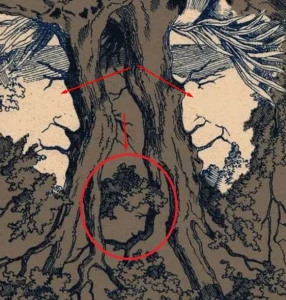
When the image is rotated, the relationships between the tree branches and facial features become more apparent. This demonstrates not only the creativity behind these puzzles but also the adaptability of the human mind when confronted with a new perspective.
The Joy and Value of Discovery
The exhilaration experienced upon finally spotting a hidden face is both rewarding and satisfying. Every discovery feels like solving a micro-mystery, blending feelings of accomplishment with playful curiosity. These games also foster patience and persistence, as success often comes after moments of struggle or uncertainty.
More than just solo entertainment, hidden face puzzles encourage sharing and discussion. Online communities dedicated to optical illusions abound, where people exchange images, offer hints, and celebrate findings together. This social element enhances the joy experienced, transforming the act of finding faces into a shared journey.
From a broader societal perspective, the growing popularity of visual puzzles underlines the enduring appeal of activities that blend entertainment with cognitive development. Teachers incorporate these puzzles into classrooms to promote observation and reasoning, while therapists sometimes recommend them to support memory and attention in older adults.
Games that Train the Mind
Searching for hidden faces shares common ground with other visual puzzles, such as “spot the difference” challenges and intricate mazes. Each requires careful scrutiny, focus, and sometimes lateral thinking—skills valuable in many real-life situations, from driving and navigation to data analysis and creative design.
These engaging activities transform ordinary moments into exercises in curiosity and discovery. Every newfound face becomes a celebration of clever design and personal achievement.
Building Connections Through Play
Sharing the experience with others—whether at home, in the classroom, or through online platforms—turns a solitary challenge into a communal event. It leads to laughter, friendly competition, and memorable stories. That triumphant “Aha!” moment is often made sweeter when friends celebrate with you or challenge you to look again and spot what you missed.
In the end, the true value of finding hidden faces in images lies in its unique combination of play, learning, and social connection. It cultivates curiosity, intelligence, and patience while providing endless moments of delight and discovery.
Conclusion: The Enduring Appeal of Visual Discovery Games
Finding hidden faces in images is more than a whimsical pastime—it is a scientifically validated, psychologically stimulating exercise that brings people together. It requires and rewards patience, sharpens the mind, and offers moments of joy amidst life’s fast pace. Whether you’re a casual gamer or a devoted puzzle enthusiast, there is always more to discover and appreciate in this simple, yet profoundly engaging, activity.
Sources
Disclaimer: This content is intended for entertainment purposes only and is not based on real events.