
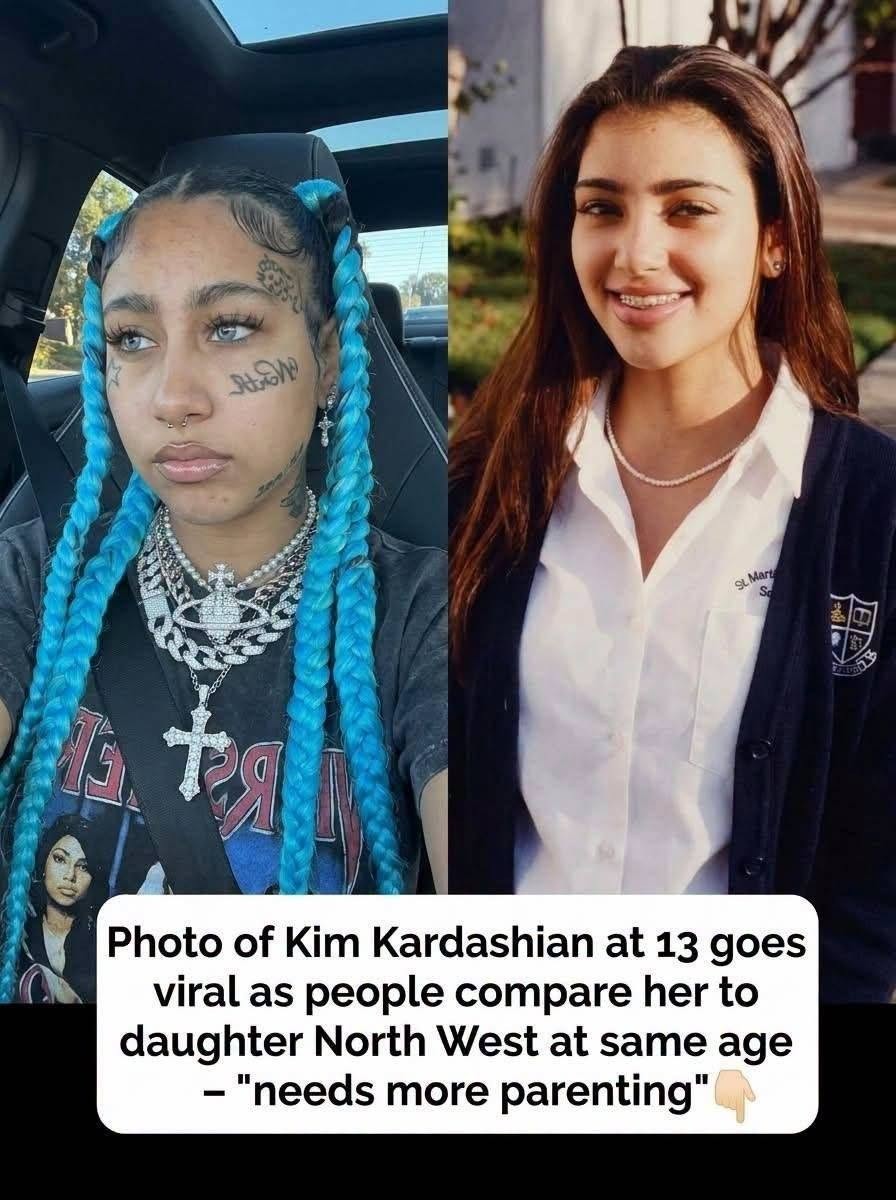
The Viral Photo: Kim Kardashian and North West at 13 – A Reflection on Parenting in the Digital Age

Introduction: A Photograph That Sparked Debate
When an image went viral showing Kim Kardashian at age 13 side-by-side with her daughter North West at the same age, it quickly evolved from a discussion about family resemblance to a much broader conversation. The photo captured more than two faces; it illustrated how celebrity parenting, generational shifts, and the ongoing dialogue about children’s autonomy have become focal points in society. Instead of a simple comparison, the photo became a lens through which we examine complex issues: control, rebellion, mental health, and what it means to parent in the global celebrity spotlight.
The Changing Faces of Adolescence
The side-by-side presentation of Kim Kardashian’s teenage years and North West’s current image highlights how much society and youth culture have changed. Kim’s adolescent photos often reflect the style and norms of the late 1990s and early 2000s: understated makeup, conservative fashion choices, and a private upbringing far outside the glare North faces. North West, on the other hand, appears with bold makeup, a grill, and her involvement in music videos with horror-themed aesthetics.
This contrast ignited heated debates across social media and news outlets. For some, North’s self-expression is “artistic,” a sign of creativity and individuality. For others, it’s labeled as troubling or excessive for a young teenager. The reactions reveal a deep divide about the expectations for youth in the public eye—and what childhood should look like in an era dominated by digital exposure and celebrity influence.
Parental Roles: Permissive or Progressive?
Kim Kardashian, already a subject of intense public scrutiny, finds herself judged not just for her own actions but for her parenting philosophy, as revealed by North’s evolving self-image. Critics accuse Kim of being excessively permissive, suggesting she is less a parent and more a best friend who allows her daughter unlimited freedom. Supporters argue she’s exercising brave, modern parenting by enabling North’s exploration of identity, while still maintaining boundaries.
The debate underscores a shift in parental roles. Where previous generations tended to restrict adolescent expression, today’s parents often face pressure to balance guidance with encouragement of individuality. Kim’s responses in various interviews suggest she advocates for “guardrails” rather than strict limitations, letting North experiment artistically but maintaining rules at home regarding media access, school routines, and safety.
The Celebrity Child Experience: Identity and Public Perception
North West is growing up in front of millions, her every choice documented and dissected. Children of celebrities often face unique challenges: their personal milestones become global events, their failures and triumphs turned into headlines. This exposure can foster both opportunity and anxiety.
Psychologists and child development experts emphasize that self-expression is an important—and sometimes essential—part of adolescence. Dr. Lisa Damour, a clinical psychologist specializing in adolescent mental health, notes that “experimentation with different styles, interests, and personas is how many teens develop their sense of self.” For children in the public eye, however, the pressure to conform or rebel can be amplified by external judgments.
The Kardashian family, accustomed to navigating fame, appears to approach North’s choices from a place of understanding. Kim has repeatedly stated she wants her daughter to feel safe exploring her interests, whether through music, fashion, or media, while reminding North of the responsibilities that come with a global platform.
Societal Attitudes Toward Youth Self-Expression
Public reaction to North West’s image reflects larger cultural questions about teens’ rights to expression. Some analysts invoke histories of youth rebellion—from punk rock in the 1980s to today’s digital influencers—as evidence that every generation faces tension between tradition and innovation.
In recent years, platforms such as Instagram, TikTok, and YouTube have empowered teens to share their art, ideas, and life stories. However, these opportunities come with risks, including exposure to criticism, bullying, and pressure to attain perfection. Experts advise parents and caregivers to supervise digital activities, ensure privacy, and foster open communication, especially in families with high visibility.
Research from the American Academy of Pediatrics finds that, with guidance, social media can actually be a positive tool for connection and self-expression. But the stakes are higher for children like North, whose visibility magnifies every decision.
Global Perspective: Navigating Fame and Family
The issues raised by the Kim and North photo are not unique to the United States. Children of global celebrities—from European royals to Asian entertainment stars—experience similar struggles. International news outlets have covered the Kardashian-West family for years, often noting parallels with other famous families navigating parenting, privacy, and the evolving meaning of childhood.
Comparative studies of celebrity children in different cultures show that while media exposure may differ, the underlying challenges remain: maintaining autonomy, protecting mental health, and negotiating public expectation. Families in Europe, for example, tend to restrict media access and emphasize schooling, while some Asian families encourage early artistic pursuits but limit social media activity. The Kardashian-West model is more American: acceptance of public attention with deliberate parental oversight.
The Digital Age: Opportunities and Risks
Today’s teenagers face unprecedented opportunities to share their voices and connect with peers around the world. For children like North West, digital platforms can amplify artistic projects and career ambitions at an early age. Yet the risks—cyberbullying, exploitation, loss of privacy—require ongoing vigilance from parents.
Kim Kardashian has spoken about setting digital boundaries at home, including screen time limits and social media “breaks.” Such strategies are supported by experts as effective ways to minimize online stress and keep the family’s mental health protected. The overall goal, analysts suggest, is not to halt creative exploration but to provide a framework where children can thrive safely.
Mental Health Considerations
With public scrutiny comes stress. Mental health professionals caution against assuming all acts of adolescence are cries for help, but acknowledge that constant exposure can increase anxiety and self-doubt. North West’s unique circumstances underscore the importance of having adults—both family members and counselors—who monitor wellbeing and encourage resilience.
The American Psychological Association recommends open dialogue, privacy protection, and regular check-ins for children in high-profile situations. Kim Kardashian’s efforts to keep some aspects of family life “offline” reflect these recommendations. North is allowed creative expression, but within boundaries designed to protect her psychological health.
Expert Views
Leading experts in child development consistently emphasize the value of allowing teenagers autonomy while providing appropriate supervision. Dr. Jean Twenge, a psychologist specializing in generational research, observes, “Teens need space to express themselves, but also need guidance to navigate the complexities of social media and public attention.”
Family therapists recommend a partnership approach: parents facilitate exploration and support, but maintain a structure for safety and responsibility. Kim’s public statements about parenting North seem to reflect this philosophy, highlighting her desire for North to “be herself,” within reasonable boundaries.
Societal and Media Reactions
The viral photo fostered debate on television, online platforms, and in classrooms, raising questions about how families navigate changing norms. The discussion ranges from those who worry about the effects of fame on childhood to those who see North’s bold choices as a symbol of contemporary youth empowerment.
International media, including outlets such as BBC and Reuters, have analyzed the Kardashian family as emblematic of modern trends in parenting and celebrity. Meanwhile, social scientists argue that the ongoing debate itself is useful; society must constantly renegotiate expectations around family, privacy, and adolescence as technology and culture evolve.
Conclusion: Redefining Childhood in the Spotlight
The side-by-side image of Kim Kardashian and North West at age 13 is less about comparing appearances and more about contrasting eras, parenting styles, and societal values. As North continues to define herself amidst unprecedented public scrutiny, the conversation around her image challenges us to ask broader questions about self-expression, digital safety, mental health, and the rights of the child in the age of fame.
Ultimately, experts agree that healthy development depends on support, supervision, and empathy. The Kardashian-West family’s approach—allowing creativity while maintaining boundaries—offers a model for navigating the unique pressures of raising children in the digital era. As this ongoing story unfolds, it highlights the need for continued conversation, adaptability, and compassion among families everywhere.
Sources
Disclaimer: This content is intended for entertainment purposes only and is not based on real events.