
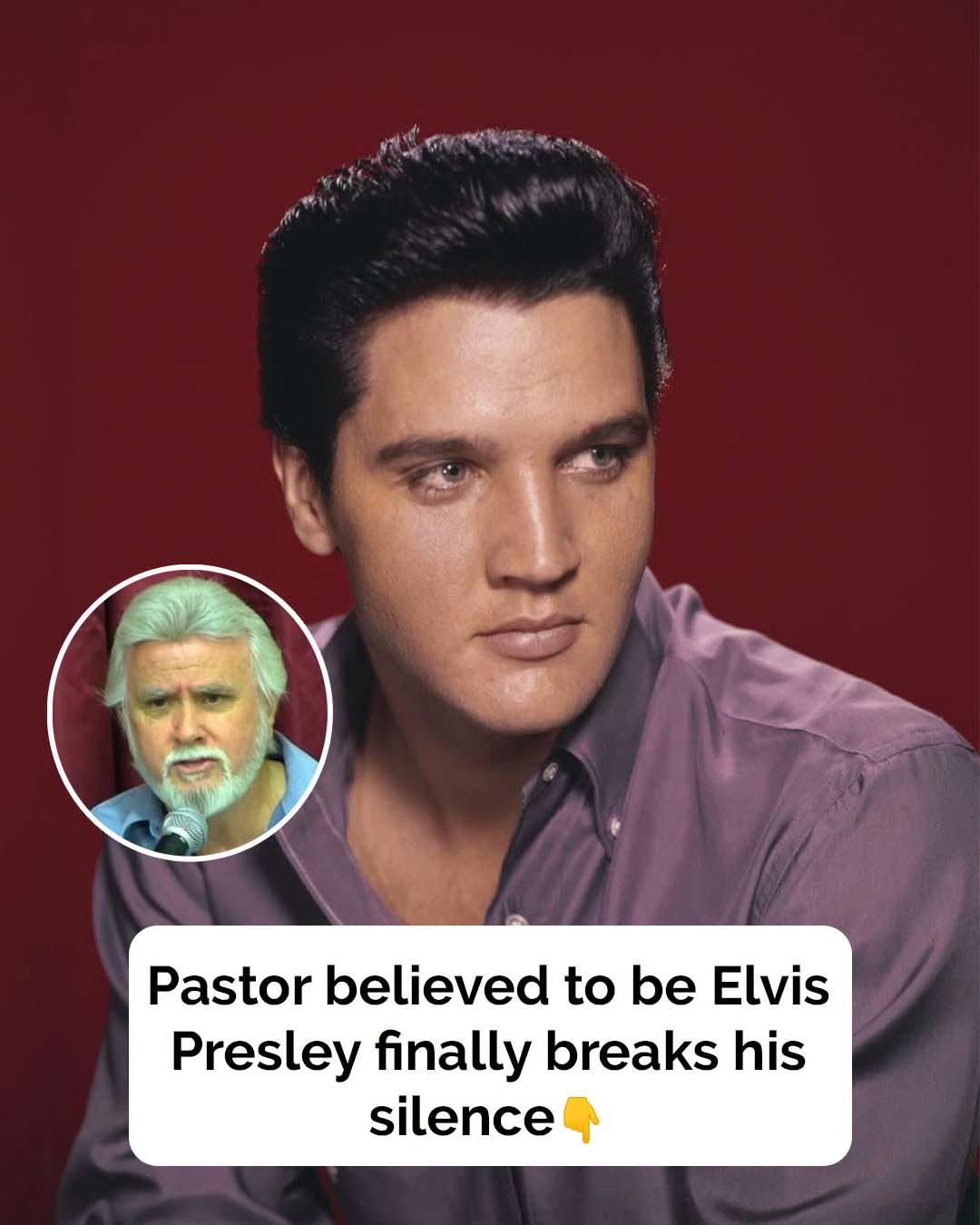
Since Elvis Presley tragically died in 1977, hardcore fans have been convinced the king of rock and roll staged his death to live outside the spotlight.
The Enduring Mystery of Elvis Presley’s Death
On August 16, 1977, news outlets worldwide announced that Elvis Aaron Presley, the undisputed “King of Rock and Roll,” had passed away from cardiac arrest at just 42 years old. Presley’s death at his Graceland mansion in Memphis, Tennessee, marked the end of a musical era, sending shockwaves through the global entertainment community. His influence on rock, pop culture, and musical performance remains profound, with generations discovering his songs anew.
Yet, shortly after the news broke, a subset of fans and skeptics began questioning the official narrative. Despite nearly five decades having passed, these theories continue to capture public imagination. Some claim that Presley’s death was staged, allowing him to step away from overwhelming fame, threats, or personal struggles, and live a life away from the constant glare of celebrity. Such beliefs often arise with figures of significant cultural impact, where grief and myth intertwine to create enduring legends.
Origins and Evolution of the Elvis Death Conspiracy
Conspiracy theories regarding the staging of Elvis Presley’s death originated almost immediately after 1977. Some believers suggested that Presley orchestrated his disappearance to escape the pressures of fame or the alleged threats from organized crime. Over the years, stories have abounded: Presley was said to have been seen as an extra in films like “Home Alone” (1990), touring amusement parks in disguise, or tending to the grounds of Graceland incognito.
These alleged sightings typically involve reports of a man resembling an older Elvis seen at various locations, often described as displaying similar mannerisms, speech patterns, or even vocal styles. Similar phenomena have occurred around other deceased celebrities of major cultural stature, suggesting a broader psychological and cultural context that drives such theories.
Enter Bob Joyce: A New Focus for Elvis Theories
In more recent years, attention of Elvis conspiracy theorists has focused on Bob Joyce, a preacher in Benton, Arkansas. Now in his early 70s, Joyce bears a noted resemblance to an older Elvis Presley. His deep baritone singing voice and southern charm further fuel speculation. Videos of Joyce, particularly performances of gospel hymns like “How Great Thou Art”—a song recorded by Elvis in 1967—have garnered hundreds of thousands of views on YouTube and inspired intense debate in the comment sections.
Fans and theorists frequently share statements such as, “This is truly Elvis. No one else could sing this favorite hymn of mine like Elvis,” or, “His voice will never change. We love you and hope you tell us one day the story of your life.” Other comments suggest, “Sir, I believe you are him. That rhythm and tone of voice is none other than Elvis.” These convictions illustrate not just a fascination with celebrity, but the deep emotional attachments many hold for the late superstar.
Bob Joyce Responds: Setting the Record Straight
Bob Joyce, who leads the Household of Faith Church, has repeatedly and publicly denied being Elvis Presley. He maintains that he is simply a dedicated preacher and singer serving his congregation and community in Arkansas. “No, I’m not Elvis. Lots of people ask me that…I got started and I was trying to tell everybody, ‘No, I’m not Elvis,’” Joyce has stated often. He further notes a significant age discrepancy: Presley, if alive, would be 89 in 2024, while Joyce is almost 20 years younger.
Joyce acknowledges the persistence of these beliefs among a fraction of his followers, but insists the majority are there for spiritual reasons, appreciative of his ministry. “Most of these folks know I am not Elvis but to them it doesn’t matter. They are only so grateful that God is blessing them and reviewing their lives.” Joyce has pointed to the power of music and the human search for hope and comfort as possible reasons behind the obsession.
He has also expressed empathy for Presley, noting, “Perhaps God is using Elvis’ voice to minister to broken hearts and broken lives…If Elvis were alive, I would say to him, my friend and brother, we are of kindred spirits.”
Online Communities and the Spread of Elvis Conspiracy Theories
The advent of the internet and social media has accelerated the spread of conspiracy theories, including those about Elvis. Video sharing platforms such as YouTube have become hubs where comparisons can be drawn and theories exchanged in real time among global audiences. Every new video of Bob Joyce, particularly those that showcase his vocal talents, is met with hundreds of comments debating or affirming the theory.
The phenomenon is not unique to Elvis; the internet era has seen increased proliferation of speculative narratives about public figures. These often blend genuine curiosity, nostalgia, and sometimes pseudoscientific analysis—such as alleged “voice-matching” or facial recognition—to create an illusion of evidence. Digital echo chambers can further cement beliefs, as like-minded individuals share and validate each other’s convictions, even in the face of countervailing proof.
This is evident in the comments on Bob Joyce’s social media and YouTube channels, where some users claim insider knowledge about his true identity, while others joke about the reliability of internet-based rumors, reflecting a range of engagement from credulity to skepticism.
Bob Joyce’s Official Statements and Social Media Presence
To address ongoing impersonations, misinformation, and persistent rumors, Bob Joyce and his representatives have issued official statements on his website and social channels. The Household of Faith Church’s site cautions visitors: “People have pretended to be Bob Joyce on multiple occasions. He does not send private messages through any online account. The only Facebook account for Pastor Bob Joyce is: facebook.com/bob.joyce.75/. All other Bob Joyce accounts on Facebook or anywhere else online are not him.”
The message further notes that Joyce does not maintain accounts on Instagram or TikTok, urging fans and followers to exercise discernment regarding information circulating online. This step aims to stem the tide of impersonations and to protect both Joyce’s privacy and the integrity of his ministry.
Why Do Conspiracy Theories Persist?
Conspiracy theories surrounding Elvis Presley’s death, and the speculation linking him with Bob Joyce, reflect broader sociological and psychological phenomena. Experts argue that such narratives often gain traction in periods of uncertainty or among individuals seeking meaning in tragedy. Professor Michael Barkun, a political scientist specializing in conspiracy theories, has commented that these stories proliferate due to a deep need for certainty, closure, or an enduring connection with lost figures of personal significance.
Moreover, in the context of celebrity culture, the blurring of public and private personas can intensify fans’ willingness to believe that revered figures did not truly die or that they have maintained secret lives. In the case of Elvis Presley, whose persona was meticulously cultivated both musically and through Hollywood films, the space for myth-making remains fertile.
This is further enabled by technological advances allowing for comparison of photos, videos, and audio clips. Audio engineers and forensic experts have weighed in, noting that while similarities in voice and appearance exist between Joyce and Presley, no scientifically valid evidence supports the claim that they are the same person. Official death records, multiple eyewitness accounts at Presley’s funeral, and the lack of verified evidence for his survival all corroborate the accepted historical account.
Societal and International Reactions
The persistence of the Elvis faked-death theory regularly gains media attention, especially when tied to figures like Bob Joyce. The story exemplifies the enduring power of celebrity and collective myth-making in society. Mainstream media has occasionally covered the story, often highlighting the patience and good humor with which Joyce addresses the speculation. Internationally, the case is cited as an example of how certain myths achieve lasting cultural status, similar to theories regarding other major cultural icons.
While some media outlets treat the theory as harmless fun, others underscore the importance of critical thinking and the responsibility of online users to verify information. Sociologists have pointed to the phenomenon as illustrative of larger trends in the digital age, where the distinction between truth, speculation, and entertainment can blur, leading to both fascination and misinformation.
Conclusion: The Enduring Legacy of Elvis and the Power of Myth
The notion that Elvis Presley faked his own death and assumed a new identity continues to intrigue a segment of the global population. Figures like Bob Joyce become lightning rods for speculation, amplified by social media and the passion of dedicated fan communities. However, the available evidence, including official death records, multiple public statements, and expert analysis, firmly supports that Elvis Presley died in 1977 at Graceland.
The fascination with the story reflects larger human impulses toward myth-making, the search for meaning, and the deep personal attachments fans have for cultural icons. As with other enduring conspiracy theories, the Elvis narrative is likely to persist, fostered by nostalgia, new media, and the indelible mark that the King of Rock and Roll left on world culture. Ultimately, those who cherish Presley’s memory can find comfort in the enduring power of his music and the ongoing inspiration his life provides.
Sources
Disclaimer: This content is intended for entertainment purposes only and is not based on real events.