

Which Animal Do You See First? Elephant, Giraffe, or Something Else?
Visual perception quizzes have become a staple in online entertainment, attracting millions of curious users who are eager to discover what their first impressions might reveal about their personalities. One particularly popular quiz asks the simple question: Which animal do you see first—an elephant, a giraffe, or perhaps a creature from the sea? This question has sparked widespread fascination across social media, inspiring playful debates and fueling discussions on both psychology and entertainment. But can the first animal you spot in an image truly reflect who you are? To understand the allure and limitations of such quizzes, it is essential to explore the scientific context, cultural factors, expert insights, and international reactions to visual personality tests.
The Allure of Seeing Animals First: Why These Quizzes Captivate
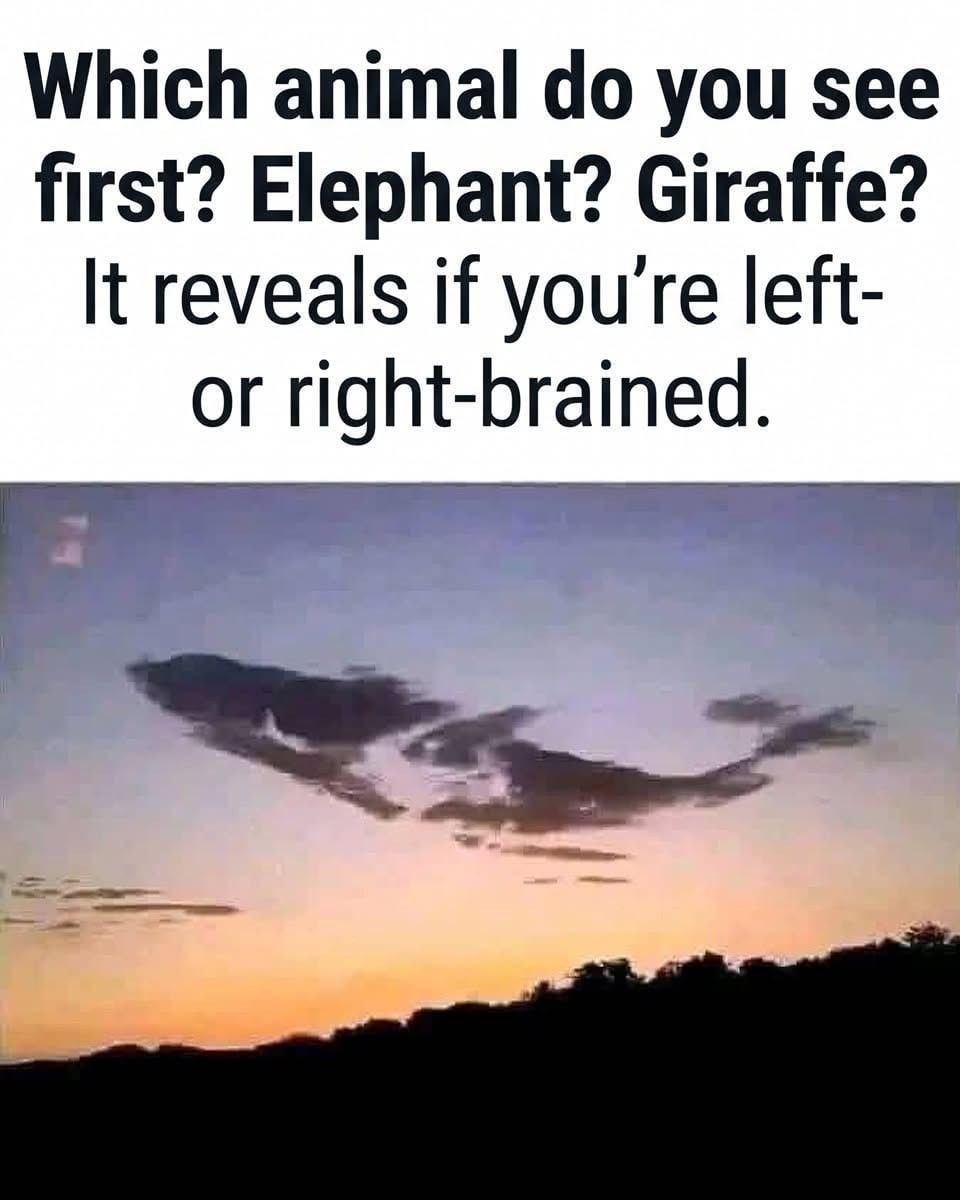
At their core, visual personality quizzes depend on optical illusions—images designed to simultaneously display multiple elements, prompting viewers to interpret them in distinct ways. The intrigue emerges from the idea that one’s instant perception might correlate with individual traits or preferences. The “Which Animal Do You See First?” quiz often presents a composite image where several animals are overlapping or intertwined. The participant’s task is simple: report the first animal that catches their eye.
This experience feels personal and interactive, giving users an enjoyable opportunity to speculate about themselves. Some see elephants, suggesting traits such as strength or intelligence. Others spot giraffes, which might be associated with curiosity or awareness. Sea creatures could evoke adaptability, creativity, or emotional depth. While these interpretations are playful, they serve to stimulate reflection and conversation.
The Psychology of Perception: How Our Brains Make Sense of Images
Visual perception is a complex neurological process. Research in cognitive science and psychology demonstrates that the human brain can rapidly interpret ambiguous images using prior experiences, expectations, and emotional states. According to the BBC, optical illusions are powerful tools for revealing the mechanisms behind attention, pattern recognition, and cognitive biases.
Dr. Susana Martinez-Conde, a neuroscientist specializing in visual perception, notes that no two people see illusion images in exactly the same way at first glance. Factors such as age, cultural background, and even mood can influence how someone processes an optical illusion. This variability underscores the entertainment value rather than scientific accuracy of quizzes like “Which Animal Do You See First?”
Entertainment versus Science: The Limits of Personality Quizzes
Although many visual quizzes claim to reveal hidden aspects of the self, psychologists caution against interpreting their results as meaningful diagnoses. The American Psychological Association (APA) has clarified that personality is shaped by numerous factors—genetics, environment, and life experiences—not merely by what images we notice first (APA).
True personality assessments are rigorous constructs, often relying on comprehensive inventories like the Big Five or Myers-Briggs tests, which involve standardized questions and statistically validated interpretation. In contrast, “first glance” quizzes, while entertaining, lack empirical evidence and scientific grounding. Nonetheless, their popularity reinforces the public’s desire for self-discovery and playful insight.
Why We Enjoy Visual Perception Quizzes
The widespread appeal of quizzes such as “Which Animal Do You See First?” is driven by accessibility, shareability, and emotional engagement. Unlike formal psychological assessments, optical illusion quizzes demand little time or effort. They offer instant gratification and invite users to compare results with friends and family, strengthening social bonds and fostering community interactions. The quiz format encourages storytelling and introspection—people reflect on why they saw the elephant and recall childhood memories or personal traits associated with the animal.
Social media platforms like Facebook, Instagram, and Twitter have amplified these quizzes, making it possible for millions to participate simultaneously. As a result, such quizzes have evolved into global phenomena, crossing linguistic and cultural boundaries.
Cultural and International Influences on Visual Perception
What you see first may depend on cultural values and traditions as much as individual personality. In many regions, elephants symbolize wisdom, power, or luck, making them instantly recognizable and appealing. Giraffes may be linked to exploration and perspective, valued in societies that prize innovation. Sea creatures, often depicted as mysterious and adaptive, resonate differently depending on local mythology or folklore.
International reactions to the quiz highlight differences in perception and interpretation. According to The Guardian, researchers have found that exposure to certain animals in childhood, media, or daily life can bias visual processing. For example, someone living in sub-Saharan Africa or South Asia may notice elephants more quickly due to familiarity, while others in coastal communities could see sea animals first. This reinforces the importance of cultural context in visual illusions.
Expert Views: Entertainment Value and Psychological Insights
While experts agree that optical illusion quizzes offer limited insight into personality, many acknowledge their value as a gateway to self-reflection and entertainment. Dr. Richard Wiseman, a psychologist and author, argues that “these quizzes are fun, but people should be wary of reading too much into their results.” He suggests that interpreting results can encourage curiosity about psychological science, motivating users to learn more about perception and cognition.
Educators and mental health professionals recommend using such quizzes as conversation starters, not diagnostic tools. They propose discussing the science behind optical illusions and exploring why perceptions differ from person to person. This approach empowers users to distinguish between entertainment and scientific rigor, fostering critical thinking.
Popular Variations and How They Work
The “Which Animal Do You See First?” format is just one example among a myriad of visual quizzes. Other common versions include tests based on inkblots, abstract shapes, or color patterns. Each version plays with ambiguity, challenging the viewer to extract meaning from complexity.
Some quizzes include additional prompts, such as “What does your answer say about you?” or “How would you react in a similar situation?” These are often accompanied by pseudo-psychological explanations, offering lighthearted interpretations that may or may not connect to established personality frameworks. For instance, a “lion” might indicate bravery, while a “parrot” suggests sociability. The universality of such imagery ensures broad appeal and enduring popularity.
Responsible Enjoyment: Understanding the Limits
As the popularity of visual perception quizzes rises, it is important for users to engage responsibly. Quiz creators and media outlets should clearly label such quizzes as entertainment, not science, to avoid confusion or misinterpretation. Transparent communication helps readers enjoy content playfully without fear of misleading claims.
For those interested in genuine self-discovery, psychologists recommend accessing validated personality inventories or consulting trained professionals. The distinction between science and entertainment is crucial to maintaining the integrity of psychological understanding.
Conclusion: The Value of Playful Exploration
In summary, “Which Animal Do You See First?” quizzes serve as captivating tools for entertainment and introspection. While they lack scientific grounding, these optical illusion quizzes provide accessible opportunities to reflect on self-perception and engage with friends, family, and the broader online community. By understanding the limits and appreciating the playful nature of visual personality tests, users can cultivate curiosity and critical thinking, contributing to a richer exploration of psychology and human behavior.
As you next glance at a composite animal image, remember that your answer says more about your context, experiences, and mood than it does about deep personality traits. The real value lies in the conversations, connections, and curiosity fostered through shared exploration.
Sources
- BBC – How Optical Illusions Reveal the Brain’s Inner Workings
- The Guardian – Science and Perception
- American Psychological Association – Personality Psychology
- Reuters – Science News
Disclaimer: This content is intended for entertainment purposes only and is not based on real events.