


A Vertical City Takes Shape
Imagine living in a residential complex large enough to include shops, restaurants, offices, fitness facilities and thousands of neighbours. In Hangzhou, China, Regent International has become one of the internet’s most discussed examples of dense urban housing. Often described online with dramatic labels, the development offers a more useful lesson about how modern cities are responding to limited land, growing populations and changing lifestyles.
Regent International and the Idea of a Vertical City
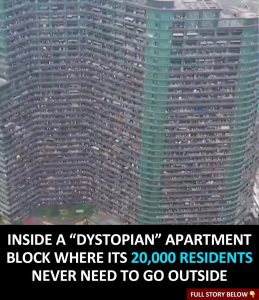
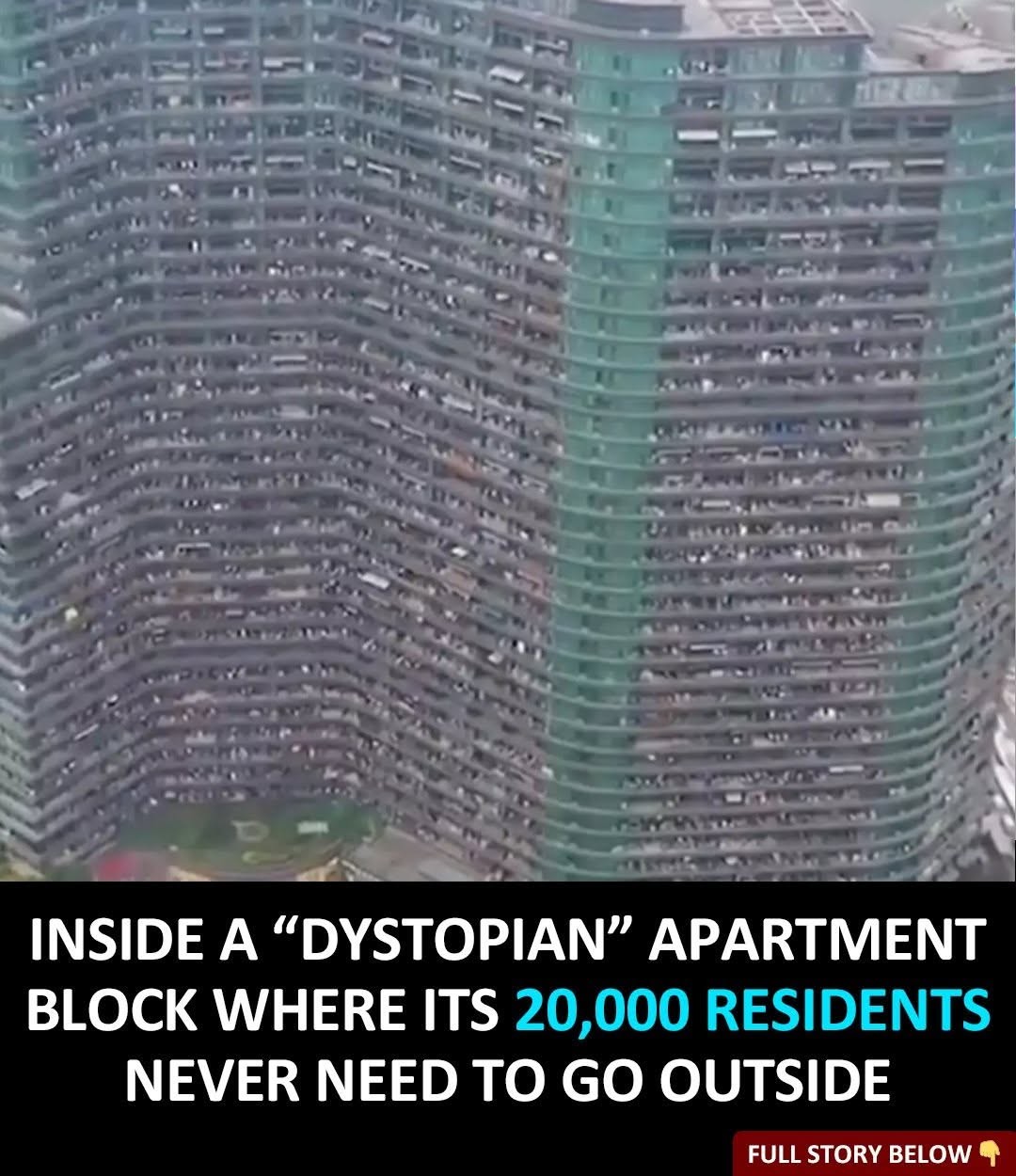
Regent International, located in Hangzhou’s Qianjiang Century City area, has attracted international attention because of its extraordinary scale. The complex is frequently reported to accommodate as many as 20,000 residents, although publicly cited population figures are estimates and can vary over time. Its size, layered appearance and high concentration of homes have made it a popular topic in photographs, videos and social-media posts.
Descriptions of the building often focus on its visual impact: broad façades filled with windows, balconies and repeated apartment units create an impression of a city compressed into one structure. However, Regent International is not simply a residential tower in the conventional sense. It is better understood as a mixed-use, high-density development designed around the principle that daily services can be located close to where people live.
The term “vertical city” is commonly used to describe this type of urban environment. It does not mean that one building fully replaces a city. Rather, it refers to developments that bring together housing, commerce, leisure and services in a compact area, reducing the need for residents to travel long distances for routine activities. In a rapidly expanding metropolitan region, this approach can be a practical response to land constraints and housing demand.
Hangzhou, the capital of Zhejiang province, is one of China’s major technology, commerce and tourism centres. Like many successful cities around the world, it has experienced substantial urban growth. New housing has had to serve a wide range of residents, including young professionals, service workers, families and people relocating for employment. Large residential developments are one part of the wider effort to accommodate this growth.
Why High-Density Housing Has Become More Common
High-density housing is not unique to China. Major cities from Singapore and Seoul to London, New York and São Paulo face similar questions: how can they provide homes for growing populations without expanding endlessly into surrounding land? Building upward, rather than outward, is one of the most common answers.
Urban planners often support density when it is matched with public transport, accessible streets, green spaces and essential services. A compact neighbourhood can make it easier to support frequent transit, local businesses and shared infrastructure. It can also reduce the distance between homes and workplaces, schools, shops or health services. These potential benefits depend heavily on planning quality, affordability and the availability of public amenities beyond a building’s walls.
In developments such as Regent International, convenience is a central attraction. Residents may find food outlets, small retailers, delivery services, gyms and other businesses either within the complex or immediately nearby. For people with demanding work schedules, having routine services close to home can save time. This is particularly relevant in large metropolitan areas where commuting can be expensive and time-consuming.
Dense housing can also create a large, reliable customer base for local businesses. A grocery shop, café or repair service located near thousands of residents may have a level of foot traffic that would be difficult to achieve in a low-density suburb. This can support a more active local economy, although it can also place pressure on building management, public transport systems and neighbourhood infrastructure.
Living in a Large Residential Complex
For residents, life in a very large apartment complex is shaped by both convenience and scale. The experience can vary widely depending on the size of a household, income, work patterns and expectations of privacy. Some people may value the ability to buy groceries, meet friends or access services without travelling far. Others may prefer quieter, lower-density neighbourhoods with more private outdoor space.
Large developments can feel self-contained because so many daily activities take place nearby. This does not necessarily mean residents are isolated from the wider city. In fact, the success of high-density housing often depends on strong connections to the city around it, including metro lines, buses, public parks, schools, medical facilities and employment districts.
Community life in a dense complex is also more complicated than images of packed windows might suggest. Thousands of people living near one another do not automatically form a single social community. Residents may have different schedules, backgrounds and reasons for living there. Some may be long-term homeowners, while others may rent for a shorter period because of work or study.
At the same time, shared spaces can create opportunities for everyday interaction. Neighbours may meet in lifts, shops, communal entrances or nearby restaurants. Building notice boards, resident groups and property-management channels can help people exchange practical information. The quality of these systems matters, particularly in a complex with a population comparable to that of a small town.
Online Attention and the Limits of the “Dystopian” Label
Images of Regent International have circulated widely online, often accompanied by the word “dystopian.” The term is attention-grabbing, but it can oversimplify a real place and the lives of the people who live there. A photograph showing a dense façade cannot explain whether homes are affordable, whether residents are satisfied, how the building is managed or how well the surrounding neighbourhood functions.
Social media also encourages comparisons between real buildings and fictional cityscapes. Such comparisons may be visually compelling, but they can overlook the economic and planning realities behind high-rise housing. Dense apartment living is a normal part of urban life for millions of people worldwide, especially in cities where land is scarce and housing demand is high.
A more balanced perspective recognises that density itself is neither automatically positive nor automatically negative. It is a planning condition that can produce different outcomes. Well-designed density can support walkability, public transport and efficient use of infrastructure. Poorly managed density can contribute to crowding, inadequate services, noise concerns or limited access to green space.
For this reason, journalists, researchers and viewers should be cautious when interpreting viral images. Claims about exact resident numbers, building services and living conditions should be checked against reliable reporting and official information. Population estimates may change as units are occupied, sold, rented or repurposed. A responsible account should distinguish between verified facts and dramatic online commentary.
Planning Challenges in Vertical Communities
Managing a development with thousands of residents requires careful coordination. Property management must address maintenance, cleaning, waste collection, security, lift operations, fire safety procedures and communication with residents. These responsibilities exist in all apartment buildings, but the scale of a large complex makes reliable systems especially important.
Urban planners also consider what happens outside the building. A high concentration of residents can increase demand for roads, public transport, childcare, schools, healthcare and public space. If these services are planned alongside new housing, density can be integrated into a functioning neighbourhood. If they are not, residents may face long waiting times, congestion or an uneven distribution of amenities.
Access to sunlight, ventilation and outdoor space is another important consideration. Modern building codes and local planning rules vary by country and city, but they generally address issues such as structural safety, emergency access and occupancy. In dense cities, planners must balance the desire to build more homes with the need for liveable streets and healthy residential environments.
Housing affordability is equally significant. A large complex may contain units with different sizes and price levels, but the broader question remains whether workers across a city can afford to live reasonably close to jobs and services. The United Nations has repeatedly identified adequate, safe and affordable housing as a core component of sustainable urban development.
What Regent International Reveals About Urban Growth
Regent International has become a symbol of the possibilities and pressures of urban density. Its popularity online reflects public curiosity about what life looks like when a very large number of people share one residential environment. Yet the development is also part of a much larger global conversation about housing supply and the future of cities.
By 2050, the United Nations expects a substantial majority of the world’s population to live in urban areas. This long-term shift means cities will need more homes, more infrastructure and more resilient public services. There is no single model that will work everywhere. Some cities may prioritise mid-rise neighbourhoods, others may build high-rise towers near transit hubs, and many will use a mixture of approaches.
The most successful solutions are likely to focus on more than the number of apartments created. They will also consider transport, affordability, environmental performance, safety, accessibility and community needs. A building can be visually impressive, but its long-term value depends on whether residents can live there comfortably and connect easily with the city around them.
High-density developments can be part of sustainable urban planning when they are paired with efficient transit, energy-conscious design and accessible public facilities. They can reduce pressure to expand into undeveloped land and may make some public services more efficient to deliver. However, density must be accompanied by thoughtful management and investment in shared spaces.
A More Balanced View of Dense Urban Living
It is understandable that a building on the scale of Regent International inspires strong reactions. Its size challenges familiar ideas about homes, neighbourhoods and personal space. But it should not be reduced to a viral label. For many residents, large apartment complexes may offer practical access to housing, transport, workplaces and everyday services in a major city.
For others, the same environment may feel busy or impersonal. Both responses can be valid, because housing preferences are deeply personal. What matters from a public-policy perspective is whether people have meaningful choices: safe homes, fair access to services, dependable infrastructure and neighbourhoods that support daily life.
As urban populations continue to grow, vertical communities will remain an important subject for architects, policymakers and residents. Regent International is a striking example of how cities can concentrate homes and services at a remarkable scale. Its real significance lies not in internet speculation, but in the questions it raises about how future cities can become both more efficient and more liveable.
Sources
- Reuters — International reporting and context on China, urban development and housing.
- BBC News — Global reporting and explanatory coverage of urbanisation and housing.
- UN-Habitat — United Nations guidance and research on sustainable cities, housing and urban development.
- United Nations Department of Economic and Social Affairs — Population and urbanisation data and analysis.
- World Bank Urban Development — Research on inclusive, resilient and sustainable urban growth.
Disclaimer: This content is intended for entertainment purposes only and is not based on real events.