

A Tiny Neck Bump Before a Recital: What Parents Should Know
A visible skin bump can feel especially important to a teenager when a recital, school event, family gathering, or other long-awaited occasion is approaching. A small growth on the neck may seem minor medically, but it can affect confidence at a time when appearance feels closely tied to comfort on stage. Parents may understandably want a quick answer and an immediate solution.
However, trying to remove an unidentified growth at home shortly before an event can create more problems than it solves. Tweezers, scissors, shaving, over-the-counter wart products, and other do-it-yourself approaches can irritate the skin, lead to bleeding or infection, and leave a visible mark. The safest short-term goal is usually to protect the area, reduce irritation, and help the teenager feel supported while arranging professional advice if needed.
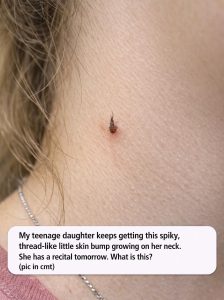
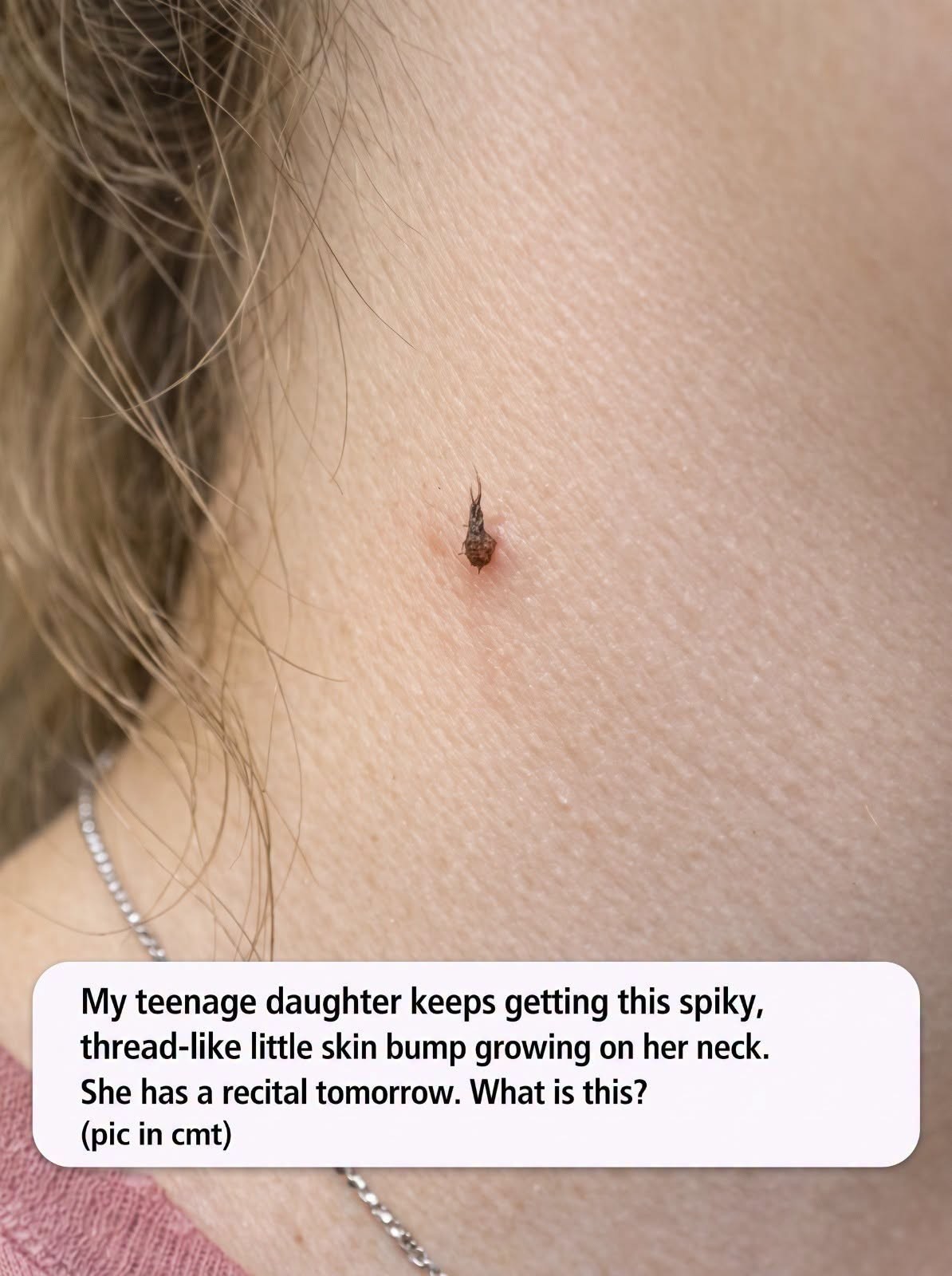
A thin, fingerlike bump on the neck may be a filiform wart, but it could also be a skin tag or another noncancerous skin growth. A visual description alone cannot reliably establish a diagnosis. A clinician, particularly a dermatologist or primary care professional, can examine the area and explain whether treatment is necessary.
Why a Neck Growth Should Not Be Diagnosed by Appearance Alone
Many skin conditions can look alike. A small raised bump may be harmless, temporary, or easily treatable, but the appropriate treatment depends on what it actually is. The neck is also a sensitive and highly visible area, where inflammation or accidental injury may be particularly distressing.
Filiform warts are narrow, threadlike growths that can occur on the face, neck, eyelids, lips, or other areas of the body. They are caused by certain types of human papillomavirus, commonly known as HPV. According to the American Academy of Dermatology, common warts result from HPV entering the skin through small breaks or areas of irritation. They can spread through direct skin contact or by touching an item that has contacted a wart, although transmission is not inevitable after every exposure.
Importantly, a possible wart in a child or teenager does not indicate sexual activity. HPV is a large family of viruses, and the types associated with common skin warts differ from the types most often discussed in relation to sexually transmitted infections. Common warts are frequently seen in children and adolescents and can be acquired through ordinary daily contact.
Skin tags are another possibility. These soft, small growths commonly develop in places where skin rubs against skin or clothing, including the neck, underarms, and groin. Friction from collars, necklaces, sports equipment, or costume materials can make an existing bump more noticeable or uncomfortable. Skin tags are generally benign, but they should still be assessed if a growth is new, changing, bleeding, painful, or difficult to identify.
Other conditions, including irritated hair follicles, small cysts, moles, and inflammatory skin changes, may also resemble a wart or skin tag. This is why online photos, personal experiences, and appearance alone should not replace an in-person medical assessment.
Why At-Home Removal Can Be Risky
When a performance is only days away, the temptation to remove a bump quickly may be strong. Yet home removal is not a reliable shortcut. Cutting, tying off, pulling, or scraping a growth can cause pain, bleeding, infection, scarring, or discoloration. It can also make it harder for a clinician to determine what the bump was originally.
Over-the-counter wart-removal products may contain salicylic acid or other active ingredients designed for use on common warts in thicker skin, such as the hands or feet. These products can irritate healthy skin. The face and neck require special caution because the skin is thinner and more prone to visible irritation. The U.S. Food and Drug Administration advises consumers to follow product directions carefully and seek medical guidance for growths that are uncertain, unusual, or located in sensitive areas.
Home freezing products are also not the same as the treatments provided in a medical setting. A healthcare professional can select an appropriate technique, protect nearby skin, and decide whether removal is advisable. Depending on the diagnosis, a clinician may recommend watchful waiting, topical treatment, cryotherapy, electrosurgery, excision, or another approach. The choice should be based on the location, appearance, symptoms, age of the patient, and likelihood of scarring.
Trying several products in rapid succession is particularly unhelpful. Repeated irritation can turn a small cosmetic concern into redness, swelling, crusting, or discomfort just before an important event.
Safe Steps Before a Recital or Important Event
For an otherwise well teenager with a small, uncomplicated bump, the priority before a recital is usually comfort rather than overnight removal. Gentle skin care can reduce the chance that the area becomes more irritated.
- Wash the area gently with mild soap and water, then pat it dry rather than rubbing it.
- Avoid picking, squeezing, cutting, shaving over, or repeatedly touching the bump.
- Reduce friction from tight collars, costume necklines, necklaces, scarves, or straps where possible.
- Choose soft, clean clothing around the neck and avoid accessories that catch on the growth.
- Keep makeup, fragranced products, and harsh skin-care treatments away from broken or irritated skin.
- Do not share razors, towels, or personal grooming tools, particularly if a wart is suspected.
If the skin is intact and not irritated, a teenager may be able to use ordinary makeup or styling choices in a way that helps them feel more confident. Makeup should not be applied to skin that is open, bleeding, inflamed, or recently treated. Heavy cosmetic products can worsen irritation for some people, especially when sweat, stage lighting, or costume friction are involved.
Most importantly, a small skin concern does not usually need to prevent participation in a recital. Unless a clinician has advised otherwise, a routine bump without significant pain or signs of infection is not generally a reason to miss a performance. Encouragement from parents and caregivers can help shift attention back to the preparation, skill, and enjoyment that the teenager has worked hard to build.
When to Arrange a Medical Assessment
It is sensible to make an appointment with a doctor or dermatologist when a growth is new and its cause is uncertain. A routine appointment can help provide reassurance, a diagnosis, and a plan for safe treatment if treatment is wanted.
Medical evaluation is especially important if the bump:
- Persists and does not improve over time.
- Grows quickly or changes in size, color, texture, or shape.
- Becomes painful, itchy, or tender.
- Bleeds without being scratched or injured.
- Develops redness, warmth, swelling, drainage, or other signs of infection.
- Appears near the eye, lip, or another especially sensitive area.
- Causes repeated snagging on clothing, jewelry, or hair tools.
- Is accompanied by multiple new growths or broader skin changes.
Urgent medical advice may be appropriate if there is rapidly spreading redness, substantial swelling, fever, severe pain, or signs that an infection could be developing. While these symptoms do not occur with every skin growth, they should not be ignored.
How Clinicians Evaluate Warts, Skin Tags, and Similar Bumps
Healthcare professionals often diagnose common skin growths through a medical history and visual examination. They may ask when the bump first appeared, whether it has changed, whether it catches on clothing, and whether there are similar growths elsewhere. They may also ask about skin irritation, shaving, recent illness, medications, or a personal and family history of skin conditions.
In many cases, no testing is required. If a growth has unusual features or cannot be confidently identified, a clinician may recommend further evaluation. This approach is designed to ensure that treatment is appropriate and that potentially significant skin changes are not overlooked.
Not every wart or skin tag needs removal. Some warts disappear without treatment, although this can take time. Treatment may be considered when a growth is uncomfortable, spreading, repeatedly irritated, cosmetically troubling, or causing emotional distress. For teenagers, a clinician can also discuss what to expect from treatment, including the possibility of temporary redness or healing time.
Supporting a Teenager’s Confidence Without Dismissing Their Concern
Adults may see a tiny bump as insignificant, while a teenager may feel that everyone will notice it. Both perspectives can be understandable. It is helpful to avoid minimizing the concern while also avoiding alarm. A calm response can acknowledge that the bump feels important and reinforce that a single skin change does not define appearance, talent, or readiness for a performance.
Parents can offer practical choices: selecting a comfortable costume adjustment, deciding whether to wear a necklace, scheduling a nonurgent medical appointment, or practicing a hairstyle that makes the teenager feel at ease. These small decisions can restore a sense of control without encouraging unsafe treatment.
It may also help to remind a young performer that audiences tend to focus on the overall performance rather than a small detail the performer sees up close in the mirror. The value of a recital comes from practice, expression, and participation—not from having completely flawless skin.
Preventing Irritation and Possible Spread
There is no guaranteed way to prevent every wart or benign skin growth. However, basic hygiene and skin protection can reduce irritation and may lower the chance of spreading a suspected wart to other parts of the body.
Encourage regular handwashing, avoid picking at the bump, and cover any broken skin with an appropriate clean dressing if recommended by a healthcare professional. Razors, nail clippers, towels, and similar personal items should not be shared. If shaving around the neck, it is best to avoid shaving directly over an unexplained bump until it has been evaluated.
For skin tags and friction-related irritation, choosing looser collars and removing jewelry that repeatedly rubs the same spot may help. These measures will not necessarily remove an existing growth, but they can reduce discomfort and prevent unnecessary inflammation.
Key Takeaway for Parents
A small neck bump before a recital can be emotionally significant even when it is medically uncomplicated. It may be a filiform wart, a skin tag, or another benign condition, but only a qualified clinician can make a reliable diagnosis. The safest approach is to avoid cutting, picking, shaving, or applying wart medication to an unidentified growth on delicate neck skin.
Focus first on gentle care, reducing friction, and protecting the teenager’s confidence. Arrange medical assessment if the bump persists, changes, causes symptoms, or raises concern. In the meantime, an uncomplicated skin growth should not overshadow a moment that the young performer has prepared for and deserves to enjoy.
Sources
Disclaimer: This content is intended for entertainment purposes only and is not based on real events.