
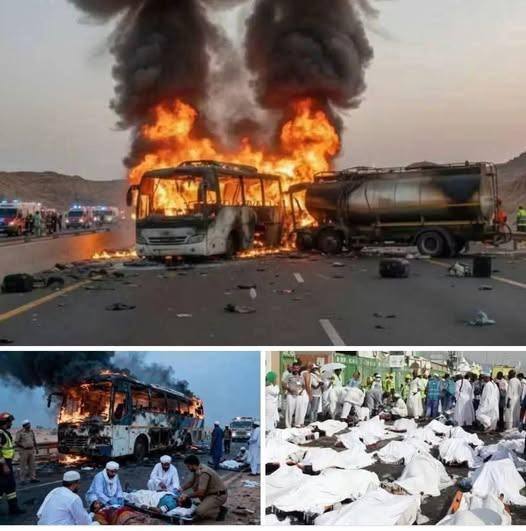
A catastrophic road accident near the holy city of Medina in Saudi Arabia has left at least 42 Indian pilgrims feared dead after the bus carrying them collided with a diesel tanker and burst into flames in the early hours of Monday morning. The tragedy, which struck during one of the most spiritually significant journeys a Muslim can undertake, has sent waves of grief across India and prompted an immediate response from both governments as families desperately seek information about their loved ones.
The collision occurred at approximately 1:30 in the morning near the area of Mufrihat, as the passenger bus was making its way from the holy city of Mecca toward Medina — a route traveled by countless pilgrims each year as part of the Umrah pilgrimage. The impact between the bus and the diesel tanker triggered an immediate and intense fire that rapidly consumed the vehicle. What made the circumstances particularly devastating was the timing of the accident. The majority of passengers on board were asleep when the collision happened, unaware of the danger and therefore with almost no opportunity to recognize what was occurring and respond in time to reach safety.
Emergency response teams from the Saudi Civil Defence and local police units rushed to the scene following the alarm, arriving to find the bus severely damaged and still engulfed in flames. The intensity and speed with which the fire had spread through the vehicle presented serious challenges to rescue personnel working at the scene. Recovery and identification efforts have been significantly complicated by the extent of the damage caused by the fire, making the process of confirming the identity of victims slow and technically demanding work that has required careful and painstaking attention from the teams involved.
Official figures are still being confirmed by authorities, but reports from the scene suggest that at least one survivor has been identified, while the complete count of those injured in the accident remains unverified at this stage. Informal accounts emerging from those close to the situation indicate that among those who lost their lives were eleven women and ten children — details that have added a particularly painful dimension to an already devastating event, as the presence of families including young children on the pilgrimage reflects the deeply personal and communal nature of the journey for many of those who undertake it.
The Human Scale of the Loss
![42 Indian Umrah pilgrims feared dead in Saudi Arabia bus–tanker collision - [İLKHA] Ilke News Agency](https://ilkha.com/img/NewsGallery/2025/11/17/491916/FeaturedImage/d1431f64-cfe7-4990-8fc0-b40e335b9b68.webp)
The Umrah pilgrimage is one of the most profound and meaningful experiences in the lives of the Muslim men, women, and families who undertake it. Unlike the Hajj, which is obligatory for those who are physically and financially able and takes place during a specific period of the Islamic calendar, the Umrah is a voluntary pilgrimage that can be performed at any time of year. For many of the pilgrims who save for years to make the journey, it represents a deeply personal act of faith — a rare opportunity to visit the most sacred sites in Islam, to pray in proximity to places of immense religious significance, and to experience a spiritual renewal that many describe as transformative.
The bus that was involved in Monday’s accident was carrying pilgrims who had completed part of their journey and were traveling between two of the holiest cities in the Islamic world. That so many of them were asleep at the moment of the collision — resting during what should have been a routine overnight transit between sacred destinations — adds a quiet and sorrowful dimension to the account of what happened. They were simply resting, in the ordinary way of travelers on a long night journey, with no warning of what was coming.
India’s Response: Government Mobilizes Support
The scale of the loss has prompted an immediate and visible response from the Indian government at multiple levels, reflecting the significance of the event and the responsibility felt toward the citizens and their families.
The Indian Consulate in Jeddah acted quickly to establish a dedicated 24-hour emergency control room specifically designed to assist the families of those affected, providing a point of contact for relatives seeking information and support during the uncertain and agonizing hours following the accident. For families in India waiting for news, the establishment of this resource has been an important practical step in a situation where confirmed information has been slow to emerge given the complexity of the identification process.
Prime Minister Narendra Modi responded publicly to the news with an expression of deep sorrow, extending heartfelt condolences to the families of those who lost their lives and offering assurances that the Indian government was coordinating fully with Saudi authorities to manage the aftermath of the accident and support those affected. The response from the head of government reflected the gravity with which the tragedy was received at the highest levels of India’s leadership.
External Affairs Minister S. Jaishankar described the crash as a deep shock and confirmed that both the Indian Embassy in Riyadh and the Consulate in Jeddah were providing comprehensive support to those affected by the accident. His statement emphasized the active and coordinated role that India’s diplomatic presence in Saudi Arabia was playing in the response, working alongside Saudi authorities to address the immediate needs arising from the disaster.
Telangana and Hyderabad at the Center of the Grief
Reports indicate that a significant proportion of the pilgrims on board the bus were from the Indian state of Telangana, with many coming specifically from the city of Hyderabad. This geographic concentration of the victims has meant that the tragedy has been felt with particular intensity in that community, where multiple families within the same neighborhoods and social networks are simultaneously facing loss and uncertainty.
Telangana Chief Minister A. Revanth Reddy responded to the news by directing senior state officials to compile detailed and accurate passenger lists and to coordinate closely with India’s Ministry of External Affairs and the Saudi Embassy. The immediate priority of establishing a complete and verified record of who was on board the bus reflects the practical urgency facing families who need official confirmation of what happened to their loved ones before they can begin to process the reality of their loss.
Hyderabad Member of Parliament Asaduddin Owaisi confirmed that he had personally shared passenger details with the Indian Embassy in Riyadh, working to ensure that the information needed to support identification efforts and family notifications was moving through the appropriate channels as quickly as possible. He has also issued a direct appeal to India’s central government to prioritize two specific outcomes: the repatriation of those who lost their lives, so that families can receive their loved ones and observe the proper customs of mourning and burial in their home communities, and the assurance that any survivors and injured persons receive full and comprehensive medical care throughout the process.
The importance of repatriation in this context cannot be understated. For Muslim families, the return of a loved one who has passed away so that they can be washed, prayed over, and buried in accordance with Islamic practice, preferably in their home community surrounded by family, carries profound religious and emotional significance. The logistical complexity of arranging repatriation from Saudi Arabia under these circumstances makes the coordination between the two governments all the more critical.
Search and Recovery Operations Continue
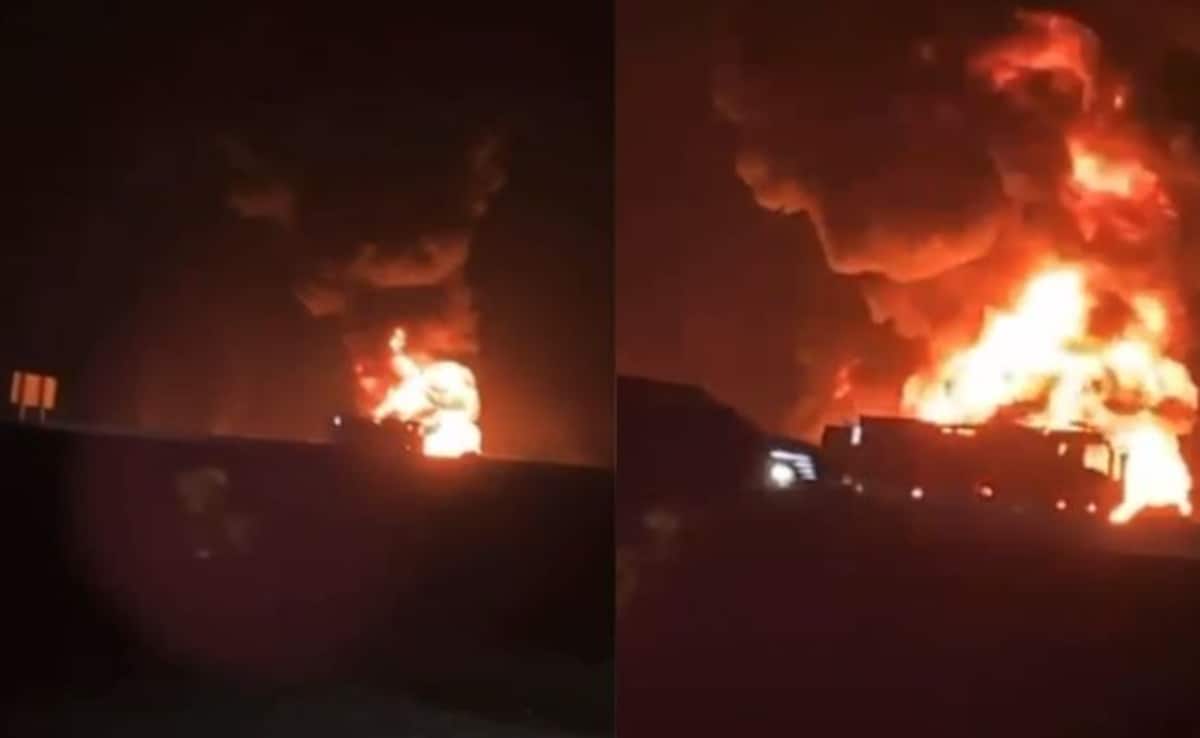
As of the time of reporting, search and recovery operations at the site of the accident were still ongoing, with teams from Saudi authorities continuing their careful work at what remains a difficult scene. Both Saudi and Indian officials have been in active coordination regarding the management of the aftermath, working to address the multiple simultaneous demands of victim identification, survivor support, family notification, and the documentation required for subsequent legal and consular processes.
The accident is being described as one of the most serious involving Indian pilgrims in recent memory, a characterization that reflects both the number of lives lost and the circumstances under which the tragedy occurred — on a journey of deep religious meaning, in the most sacred geography of Islam, in the quiet darkness of an early morning when those aboard had every reason to feel safe.
A Community in Mourning
Across Hyderabad and Telangana, and within the broader Indian Muslim community, the response to the news has been one of collective grief. Pilgrimages of this kind are rarely solitary undertakings — they are often organized through community networks, travel groups connected to mosques or local organizations, and social ties that mean a single accident can touch dozens of interconnected families simultaneously. The loss of eleven women and ten children among the victims reflects the family-centered nature of many Umrah journeys, where parents bring their children to share an experience of profound religious importance.
In the days ahead, as the full picture of what happened near Mufrihat in the early hours of Monday morning becomes clearer, the focus of both governments will shift toward ensuring that every family receives the information and support they need and that the process of returning those who were lost to their homes is carried out with the care and dignity that their lives and their journey deserve.
The road between Mecca and Medina is one of the most traveled in the world for those on the path of faith. Monday’s tragedy serves as a painful reminder of how fragile every journey is, and how much the safe arrival of those we love can never be taken for granted.