

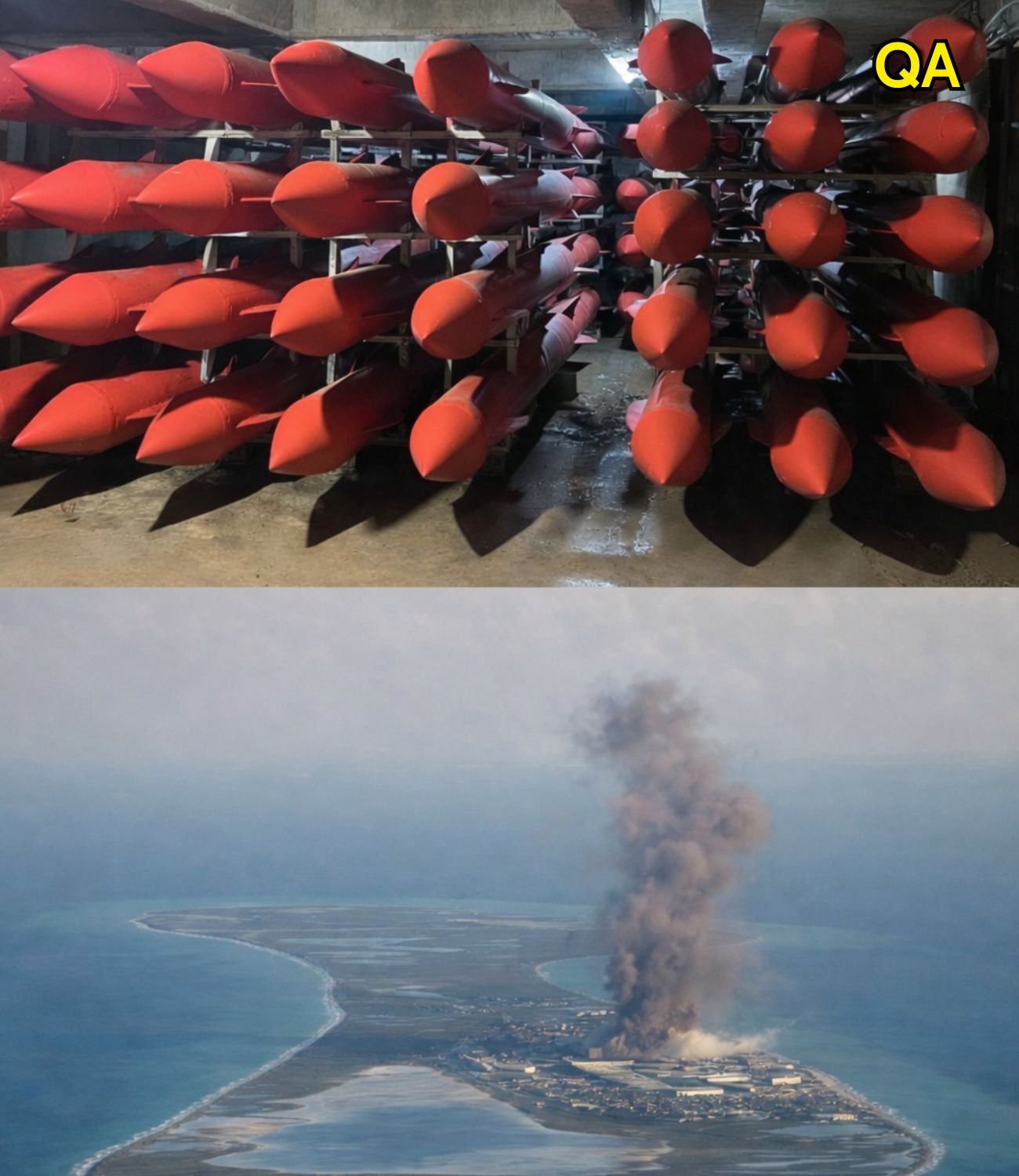
Two weeks into a military campaign that US President Donald Trump has described as a “short-term excursion,” the consequences of what has been designated Operation Epic Fury are being felt across the Middle East, through global energy markets, and in the foreign ministries of nations that had no say in the decision to launch it.
A coordinated air assault by the United States and Israel targeting Iran’s ballistic missile infrastructure, naval assets, and nuclear program facilities has triggered a crisis that is simultaneously reshaping regional stability, disrupting the global economy, and raising fundamental questions about what happens when a military operation achieves its immediate tactical objectives but produces consequences its architects appear not to have fully anticipated.
The Iranian regime remains in place. And it is striking back.
Iran: A Country That Defies Easy Solutions

To understand why this conflict has escalated in the ways it has, it is necessary to understand what Iran actually is — not as an abstraction in a geopolitical framework, but as a physical and political reality that presents challenges of a different order than the interventions that preceded it.
Iran is far larger than Iraq and Afghanistan combined — two countries where sustained foreign military involvement produced outcomes that fell significantly short of stated objectives and lasted far longer than originally projected. Its military infrastructure is deliberately dispersed across a vast geography, with key facilities buried in mountain bunkers designed specifically to survive aerial bombardment. Its population of more than ninety million people is ethnically and culturally diverse, encompassing Persian, Azerbaijani, Kurdish, Arab, and other communities with distinct histories and political orientations.
And its Islamic government, in power since the revolution of 1979, is deeply institutionalized, ideologically coherent, and organizationally sophisticated. Despite four separate Israeli strikes since April 2024 and one previous American strike, the regime demonstrated in January of this year — through a brutal suppression of a significant wave of popular protests — that it retains both the will and the capacity to defend its hold on power with considerable force.
Hope Gives Way to Fear
When the strikes began at the end of February, some Iranians responded with visible celebration. Videos circulated showing people reacting with apparent euphoria to reports that the supreme leader had been killed. For a population that had been living under severe economic pressure and had recently watched fellow citizens shot in the streets during protest suppression, the idea of external intervention breaking the stalemate carried a certain desperate appeal.
President Trump had told the Iranian people, in direct public messaging, to “take over your government.” Some appeared to believe, at least initially, that the conditions for exactly that were being created.
But the trajectory since then has moved in a different direction. Civilian casualties have risen. A strike on a primary school in Minab killed at least one hundred and sixty people, many of them children. Search and rescue operations have been conducted in the rubble of an apartment building in eastern Tehran. The United Nations has estimated that as many as 3.2 million people have been displaced within Iran — Iranians and long-term Afghan refugees alike — fleeing cities and seeking relative safety in rural areas.
In southern Lebanon, Israeli evacuation orders have forced at least eight hundred thousand civilians to relocate.
The war has not been without cost for those who launched it, either. Both the United States and Israel have lost military personnel. Nine Israeli civilians were killed when an Iranian ballistic missile struck a bomb shelter in the city of Beit Shemesh on March 1st.
The fear that has settled over the region is an uncomfortable one: that after all of this suffering, on all sides, the clerical government in Tehran will still be standing.
Low-Tech Responses to Overwhelming Firepower

The United States assembled one of the largest military deployments since the 2003 invasion of Iraq in preparation for this campaign — two carrier strike groups, vast numbers of aircraft, and essentially limitless supplies of precision munitions. US Secretary of Defense Pete Hegseth acknowledged publicly that this was never intended to be a fair contest in terms of conventional military capability.
Iran possesses significant stocks of ballistic missiles and armed drones, but those stockpiles are finite, and after two weeks of sustained conflict, the frequency and scale of Iranian long-range strikes has been declining. In terms of conventional military exchange, the outcome has been what the asymmetry of forces would predict.
But Iran has demonstrated that it retains other options. A series of attacks on commercial tankers at sea — using projectiles and naval drones that are harder to detect and intercept than conventional missiles — has signaled that Iran intends to impose costs through means that do not require matching American or Israeli firepower. These methods are relatively inexpensive to deploy, difficult to fully defend against, and highly effective at disrupting the economic activity that the United States and its allies depend on.
That particular form of retaliation may prove more consequential in the long run than any direct military exchange.
The Strait of Hormuz and the Global Economy
The economic consequences of this conflict have radiated outward with a speed and breadth that appears to have caught the White House off guard.
The Strait of Hormuz — a narrow passage through which approximately twenty percent of the world’s daily oil supply passes — has been functionally closed to normal traffic. Alternative routing exists in theory: a Saudi pipeline to the Red Sea and a smaller route through the United Arab Emirates to the Gulf of Oman could help relieve the pressure over time. But those alternatives are not immediately adequate to replace the volume that normally flows through Hormuz, and the transition is not instantaneous.
The result has been sharp price increases across a remarkable range of commodities. Oil and natural gas prices have surged. Jet fuel costs have risen dramatically, disrupting aviation. Fertilizer prices — particularly urea, which is derived from natural gas — have increased in ways that will affect agricultural production globally. Aluminum, wheat, and a broad range of manufactured goods dependent on petrochemical inputs are all more expensive than they were before the strikes began.
In practical terms, this is already changing behavior at the government level in countries far from the conflict zone. Officials in the Philippines have moved to a four-day working week to reduce fuel consumption from commuting. Government offices in Thailand have been instructed to set air conditioning no lower than twenty-six degrees Celsius. In Myanmar, private vehicles have been restricted to alternate-day driving.
In Britain and across Europe, governments have announced measures to address what they describe as potential price gouging by energy companies. In the United States, petrol prices are rising in direct contradiction to one of President Trump’s most prominent domestic pledges.
Travel and tourism have been severely disrupted, particularly in Qatar and the United Arab Emirates — both of which serve as major global aviation hubs. Dubai International Airport, which processed roughly a quarter of a million passengers daily in the first half of 2025, has been struck multiple times by Iranian drones. Tens of thousands of tourists and expatriate residents have left the region since the conflict began.
Allies Caught Off Guard

This was, by any honest account, a war that only two governments actively sought. Israeli Prime Minister Benjamin Netanyahu has spoken openly for decades about the existential threat he believes the Iranian government poses to Israel. President Trump has made the permanent elimination of Iranian nuclear capabilities a clear objective.
But while the two leaders share a core strategic goal, questions have multiplied about whether either gave serious thought to what a post-strike Middle East would actually look like, or whether the instability that a prolonged conflict generates was a factor in their planning.
For Washington’s Gulf allies — Saudi Arabia, the UAE, and others — the conflict has arrived as a profound and unwelcome shock. These governments view Iran with wariness and a degree of genuine fear, but they have also invested considerable effort in finding workable arrangements for coexisting in the same region. They understand, perhaps more acutely than governments in Washington or Jerusalem, what Iranian-generated instability across the broader region actually costs in practice.
Oman had believed itself to be close to brokering a diplomatic agreement between the United States and Iran on the nuclear question. In the hours immediately before the strikes began, Oman’s foreign minister went on American television and said a deal was within reach. It was not enough.
Among America’s more distant allies, few have faced a more uncomfortable position than the United Kingdom. Prime Minister Keir Starmer has worked to maintain a balance between expressing solidarity with Washington and avoiding direct involvement in a conflict that Britain neither initiated nor endorsed. The decision over whether to deploy warships to the region has exposed, in a publicly visible way, the significantly diminished scale of Britain’s naval capacity compared to its historical standing.
Further afield, Russia finds itself in an ambiguous position. Moscow may have preferred Iran’s military infrastructure to remain intact, but the disruption to global oil markets has produced a windfall in energy revenues that provides meaningful relief for an economy under sustained pressure from the costs of its war in Ukraine.
China, as the world’s largest importer of Iranian oil, faces a more straightforwardly difficult situation. Beijing must now find alternative sources of crude at higher prices. The conflict has also demonstrated the limits of Chinese diplomatic influence — its “Comprehensive Strategic Partnership” with Iran did not give Beijing the leverage to prevent an attack on a country it had formally aligned with.
A Familiar Trap
Successive American administrations have articulated a strategic vision of reducing American engagement in the Middle East and redirecting focus and resources toward managing the long-term challenges posed by China’s economic and military rise. That reorientation has repeatedly been interrupted by events in the region that proved impossible to ignore.
Trump’s own National Security Strategy, published just last November, declared that the Middle East had become a less troublesome region as a result of Iran having been significantly weakened, and suggested that the era of American foreign policy being dominated by Middle Eastern entanglements was effectively over.
Two weeks into Operation Epic Fury, with oil prices surging, allies alarmed, displaced populations in the millions, and the Iranian government still functioning and still striking back, that assessment looks considerably less confident than it did when it was written.