

For decades, New York City has worn its economic resilience like a badge of honor. Through financial crises, natural disasters, and global disruptions, the city’s labor market has repeatedly bounced back, drawing workers from across the country and around the world. But the first half of 2025 told a very different story — one that is raising serious concerns among economists, city officials, and workers alike.
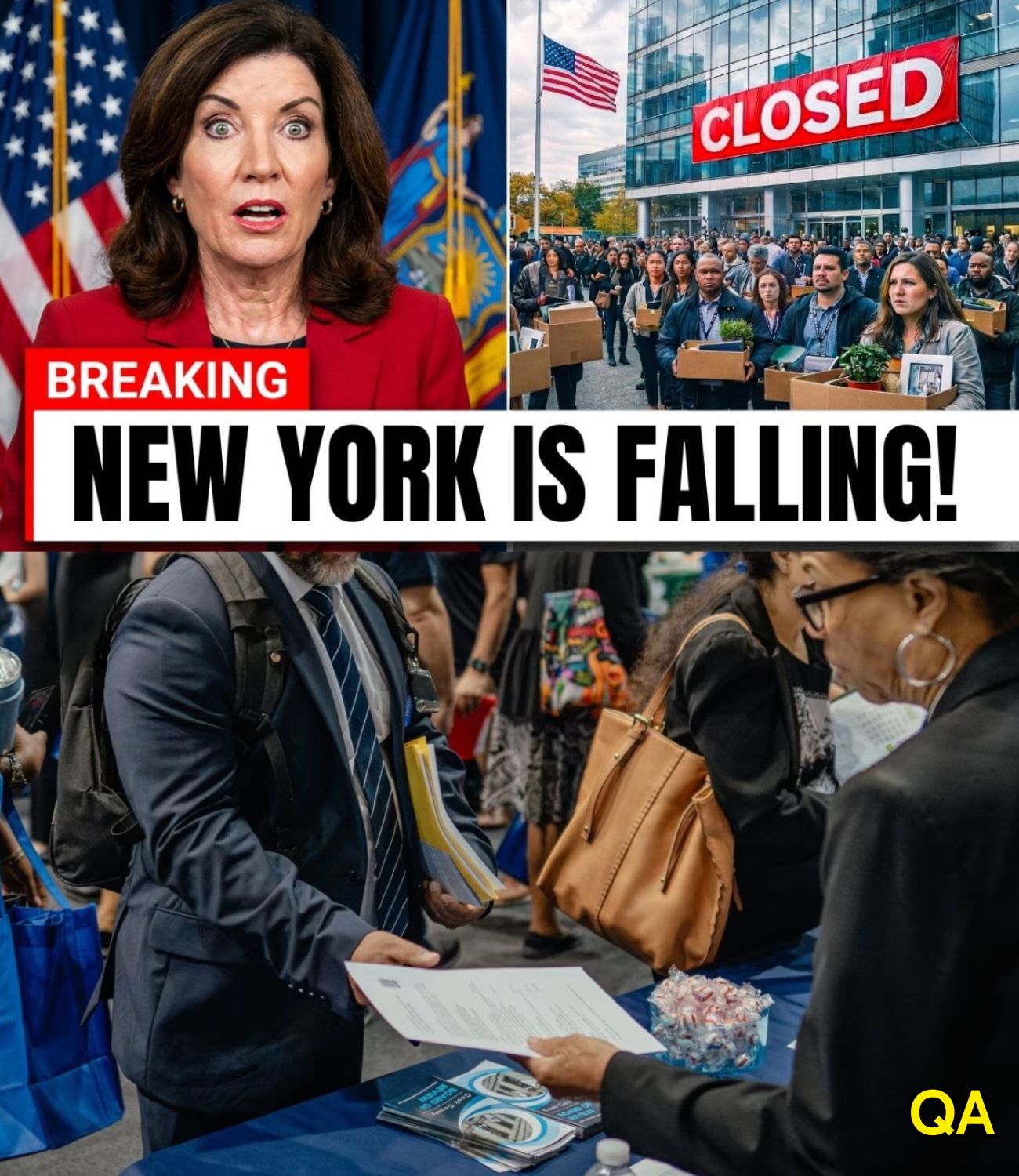
In the first six months of 2025, employers across New York City added fewer than one thousand private-sector jobs — precisely 956, according to data from the city’s Office of Management and Budget. That number is not just low. It is historically low. Outside of a formal economic recession or the extraordinary disruption caused by the global health crisis of 2020, this represents the weakest pace of job creation the city has seen since 2003. For a metropolitan economy that employs millions and generates enormous amounts of economic activity, the near-complete halt in hiring is a striking and sobering development.
To understand just how dramatic the slowdown has been, consider the comparison to the same period one year earlier. In the first half of 2024, companies across New York City brought on approximately 66,000 additional workers. That was not a period of spectacular boom — it was simply a normal, functioning labor market doing what it typically does in a healthy economy. The contrast between 66,000 jobs and fewer than 1,000 jobs over the same six-month window is difficult to overstate. It represents a collapse in employer confidence and hiring activity that experts say has few modern precedents outside of true economic crises.

The sectors driving this decline are not obscure corners of the economy. They are the pillars that New York City’s financial health has long rested upon. Finance and insurance, which employ hundreds of thousands of workers across Manhattan and the outer boroughs and generate enormous tax revenues for the city, have been cutting positions rather than adding them. Hospitality — the hotels, restaurants, bars, and entertainment venues that define much of the city’s cultural and tourist identity — has also shed jobs in meaningful numbers. Retail, another major employer, has followed a similar path.
These are not industries that are being replaced by new and growing sectors. While technology and creative industries have periodically offered optimism about the future of the city’s economy, they have not been hiring at a pace that comes close to offsetting the losses in traditional employment sectors. The result is a labor market that is effectively treading water — or slowly sinking.
What is behind this dramatic pullback in hiring? Economists and analysts point to a confluence of factors, with national policy playing a significant role. The economic agenda pursued by the current federal administration has introduced new layers of uncertainty into business planning across the country. Companies that might otherwise be expanding their workforces are instead adopting a wait-and-see posture, reluctant to commit to new hires when the broader business environment feels unpredictable. Higher costs, shifting trade conditions, and concerns about future demand have all contributed to a more cautious approach among employers.
New York City is not an island, economically speaking. What happens at the federal level sends ripples through every local economy in the country, and major urban centers have been among the most exposed to the current climate of uncertainty. The city’s heavy reliance on the finance sector, in particular, makes it sensitive to shifts in interest rates, regulatory expectations, and investor sentiment — all of which have been in flux.

But New York is not alone in its struggles. A look at other major metropolitan areas across the United States reveals that slow job growth has become something of a common theme among large cities in 2025. The Los Angeles metropolitan area, one of the largest labor markets in the country, has actually lost a small number of jobs so far this year. San Francisco and San Jose, long associated with the technology boom and among the most economically dynamic cities in the nation just a few years ago, are also reporting net job losses. Chicago, Miami, and other major hubs have recorded job growth that, while technically positive in some cases, remains far below what would be considered healthy or sustainable.
This pattern suggests that what New York is experiencing is not simply the result of local mismanagement or city-specific problems. It reflects broader national trends — a cooling labor market, cautious employers, and an economy that is navigating a difficult and uncertain transition period. Still, the scale of New York’s slowdown stands out even in this challenging national context.
For workers in the city, the consequences are very real. The labor market that greeted job seekers in 2023 and much of 2024 — one characterized by relatively plentiful opportunities, rising wages in some sectors, and employers competing to attract talent — has fundamentally changed. Today, many job seekers are finding that positions are harder to come by, hiring processes are more selective, and employers are in less of a hurry to fill open roles.
The city has attempted to provide support through its workforce development infrastructure. The Workforce1 Career Centers, operated by the city, provided job assistance to just over 100,000 New Yorkers during the 2025 fiscal year. These centers help residents with resume preparation, job training, career counseling, and connections to employers. That more than 100,000 people sought out such assistance in a single year is itself an indication of how many residents are actively navigating a difficult employment environment.
Looking ahead, the question on many minds is whether the second half of 2025 will bring any improvement. Some optimists point to signs that national-level policy uncertainty may begin to resolve, potentially freeing businesses to resume more normal hiring activity. Others are more cautious, noting that the structural challenges facing sectors like retail and commercial real estate are not easily reversed by short-term changes in the policy environment.

City officials have expressed concern about the long-term implications if the trend continues. New York City’s budget depends heavily on income tax and sales tax revenue, both of which are directly tied to employment levels and consumer spending. A prolonged period of weak job growth does not just affect individual workers — it affects the city’s ability to fund schools, public transportation, social services, and the infrastructure that makes the city function.
There is also a deeper psychological dimension to the current moment. New York City’s identity is inseparable from its economic dynamism. The sense that opportunity is available to those willing to work hard, that the city rewards ambition and talent, is part of what attracts millions of residents and drives billions in investment. A prolonged period of stagnation challenges that narrative in ways that can have lasting effects on how people think about the city as a place to build a career, start a business, or raise a family.
None of this is to say that New York City is in a state of collapse. The city remains one of the most significant economic centers in the world, home to major financial institutions, media companies, technology firms, healthcare networks, and cultural organizations that have no equivalent elsewhere. Its resilience over the past century has been tested repeatedly, and it has consistently found ways to adapt and recover.
But the data from the first half of 2025 is a clear warning signal — one that deserves serious attention from policymakers, business leaders, and anyone with a stake in the city’s future. Fewer than one thousand new private-sector jobs in six months is not a speed bump. It is a flashing light on the dashboard of one of the world’s great urban economies, and the people responsible for steering that economy forward would be wise to take it seriously.
The coming months will be telling. Whether hiring picks up, remains flat, or deteriorates further will shape not only the economic statistics that analysts track but the lived reality of millions of New Yorkers trying to find work, hold on to what they have, and build something better for themselves and their families. For now, the city waits — and watches.