
Preparing chicken for dinner is a routine part of many households. Occasionally, however, you may notice an unusual green or greenish-brown patch inside the meat. Understandably, this unexpected color can raise concerns about freshness and food safety.
The good news is that not every green area means the chicken has spoiled. In some cases, the discoloration results from natural changes in the muscle during the bird’s growth or from bruising that occurred before processing. In other situations, green coloration can indicate that the meat is no longer safe to eat.
Knowing how to recognize the difference can help you make informed decisions in the kitchen and reduce unnecessary food waste while protecting your health.
Is Green Chicken Always Unsafe?
The simple answer is no.
Green discoloration can occur for several different reasons, and some are unrelated to spoilage.
However, because color alone cannot determine safety, it is important to evaluate the meat using several observations rather than appearance alone.
Common Causes of Green Patches in Chicken
Bruising
Like people, chickens can develop bruises.
During handling or transportation, small blood vessels may break beneath the muscle tissue.
As the trapped blood naturally breaks down, the color can change over time.
A bruise may appear:
Purple
Blue
Brown
Greenish
Yellow-green
This color change is similar to the way a bruise heals on human skin.
If the chicken has been properly refrigerated and shows no other signs of spoilage, bruising alone does not necessarily indicate that the meat is unsafe.
Green Muscle Disease
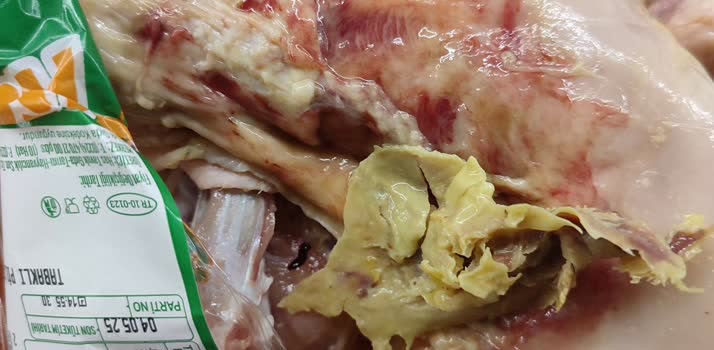
Another possible explanation is Green Muscle Disease, also known as Deep Pectoral Myopathy (DPM).
This condition most commonly affects:
Fast-growing broiler chickens
Turkeys
Large poultry breeds
The condition develops when part of the inner breast muscle receives insufficient oxygen during periods of vigorous wing activity.
As a result, the affected muscle changes color over time.
Typical characteristics include:
Greenish-brown discoloration
Firm or spongy texture
Location deep inside the breast muscle
Normal-looking outer meat
Because the affected muscle is usually discovered during processing or food preparation, many consumers encounter it unexpectedly.
Is Green Muscle Disease Harmful?
According to poultry experts, Green Muscle Disease is considered a quality issue rather than an infectious disease.
The condition itself is not caused by bacteria.
However, the affected tissue often has an unpleasant appearance and altered texture.
Many consumers choose to discard the affected portion because of its appearance, even when the remainder of the chicken is otherwise wholesome.
If you have concerns, replacing the product is the safest and most practical option.
Could It Be Spoilage?
Spoilage is a completely different situation.
Chicken that has spoiled may show several warning signs.
These include:
A sour odor
A sulfur-like smell
Sticky or slimy surface
Soft or mushy texture
Gray or widespread green discoloration
Leaking package
If any of these signs are present, the chicken should be discarded.
Rainbow or Green Shine on Chicken
Sometimes chicken appears to have a rainbow or metallic green sheen.
This phenomenon can occur because of the way light reflects from muscle fibers.
It is especially common with:
Vacuum-packed meat
Freshly sliced poultry
Cooked poultry
The iridescent appearance does not necessarily indicate spoilage.
If the meat smells fresh and has been stored correctly, this optical effect is generally harmless.
How to Evaluate Raw Chicken Safely
Instead of relying on color alone, consider several factors.
Check the:
Smell
Texture
Packaging
Expiration or use-by date
Refrigeration history
Overall appearance
When multiple warning signs are present together, the safest decision is to discard the product.
Safe Storage Tips
Proper storage helps reduce the risk of foodborne illness.
The U.S. Department of Agriculture recommends:
Refrigerating raw chicken at or below 40°F (4°C).
Using refrigerated chicken within one to two days.
Freezing chicken if it will not be used promptly.
Keeping raw poultry separate from ready-to-eat foods.
Avoiding cross-contamination during preparation.

Safe Cooking Temperatures
Cooking chicken thoroughly helps destroy harmful bacteria.
The USDA recommends cooking all poultry to an internal temperature of:
165°F (74°C)
Using a food thermometer is the most reliable way to confirm that chicken has reached a safe temperature.
Color alone cannot determine whether poultry is fully cooked.
When Should You Throw It Away?
Discard the chicken if:
It has a foul odor.
The surface feels sticky or slimy.
The package is leaking or swollen.
It has been left unrefrigerated too long.
You are uncertain about its storage history.
When in doubt, food safety experts generally recommend avoiding unnecessary risk.
Reducing Food Waste While Staying Safe
Not every unusual color indicates spoilage.
Learning the difference between harmless discoloration and true spoilage helps consumers:
Reduce unnecessary waste.
Handle poultry more confidently.
Maintain safe food preparation practices.
Protect family health.
Education remains one of the best tools for making informed kitchen decisions.
Conclusion
Green patches in chicken can result from bruising, Green Muscle Disease, or, in some cases, spoilage. While some forms of discoloration are simply quality concerns, others may indicate that the meat is no longer safe to consume.
Evaluating chicken by considering its smell, texture, storage history, and overall condition—rather than color alone—provides a more accurate assessment of food safety. When uncertainty remains, choosing not to consume the product is the safest course of action.
Curiosity about unexpected changes in food often leads to better understanding of food science. By relying on evidence-based guidance and safe food handling practices, consumers can confidently prepare meals while minimizing both health risks and unnecessary food waste.
Sources
U.S. Department of Agriculture (USDA). Food Safety and Inspection Service. Safe handling of poultry.
U.S. Food and Drug Administration (FDA). Food safety for consumers.
American Meat Science Association. Meat color and quality.
University of Georgia Cooperative Extension. Poultry quality and Green Muscle Disease.
Penn State Extension. Safe food storage and handling.
Disclaimer: This article is intended for educational purposes only and does not replace guidance from food safety authorities. If raw poultry shows signs of spoilage or you are uncertain about its safety, discard it and follow local food safety recommendations.