


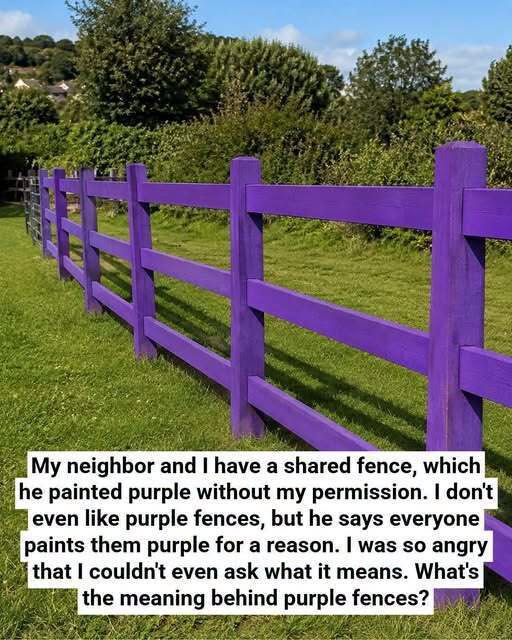
Imagine you’re hiking along a quiet trail or driving through the countryside when you notice bright purple paint on a fence post or a tree. At first glance, it might look like a decorative choice or an artistic touch. However, in many parts of the United States, that distinctive color serves a very practical purpose.
A purple fence—or more commonly, purple paint on fence posts or trees—is often a legal way for property owners to mark private land and indicate that unauthorized entry is not permitted. Known as the Purple Paint Law, this system provides a simple and durable alternative to traditional “No Trespassing” signs.
Although the law is not the same in every state, understanding what purple paint means can help outdoor enthusiasts, hunters, hikers, and travelers avoid accidental trespassing while respecting private property.
What Is the Purple Paint Law?
The Purple Paint Law allows landowners in certain U.S. states to use purple paint instead of posted signs to communicate that their property is private.
Rather than installing signs that may fade, be damaged by weather, or disappear over time, owners can apply purple paint to trees, fence posts, or other boundary markers according to state regulations.
When properly placed, these markings may carry the same legal significance as a “No Trespassing” sign.

Why Was Purple Chosen?
Purple was selected for several practical reasons.
Highly Visible
Purple stands out against natural backgrounds such as trees, grass, and wooden fences, making it easier to notice from a distance.
Long-Lasting
Quality exterior paint often remains visible longer than paper or metal signs exposed to changing weather.
Difficult to Remove Accidentally
Unlike signs that may fall, become damaged, or be removed, painted boundary markers generally require less maintenance.
Widely Recognizable
As more states adopted similar laws, purple became increasingly associated with private property boundaries.
Which States Recognize Purple Paint?
The Purple Paint Law is recognized in numerous states, although the exact requirements vary.
Examples include:
- Texas
- Arkansas
- Missouri
- North Carolina
- Pennsylvania
- Illinois
- Indiana
- Kansas
- Virginia
- Florida (for certain applications)
- Several additional states with similar provisions
Some states require specific dimensions, spacing, and placement heights for the paint marks.
Because regulations differ, visitors should consult local laws when traveling or participating in outdoor recreation.
How Are Purple Marks Applied?
Although requirements vary, many states specify that paint marks should be:
- Clearly visible.
- Applied vertically.
- Positioned several feet above ground level.
- Placed at regular intervals along property boundaries.
These standards help ensure the markings can be easily recognized by anyone approaching the property.
Why Not Simply Use Signs?
Traditional “No Trespassing” signs remain common and effective, but they present several challenges.
Signs can:
- Fade from sunlight.
- Become damaged by weather.
- Fall over.
- Be covered by vegetation.
- Be removed or stolen.
Painted boundary markers generally require less maintenance while remaining visible throughout the year.
Many landowners choose to use both signs and purple paint for additional clarity.
What Should Outdoor Visitors Do?
Whether hiking, hunting, fishing, or exploring rural areas, it’s always wise to remain aware of property boundaries.
If you encounter purple paint:
Stop Before Entering
Treat the marking as a possible indication of private property.
Look for Additional Information
Signs, gates, fences, or other markers may provide further guidance.
Stay on Public Trails
Marked public trails are typically designed to avoid private property whenever possible.
Ask Permission
If access is needed, contacting the landowner is often the best approach.
Respecting property boundaries helps maintain positive relationships between landowners and outdoor recreation communities.
Myth Versus Reality
Because purple paint is uncommon in everyday settings, several misconceptions have developed.
Myth: Every Purple Fence Means “No Trespassing.”
Reality: The meaning depends on state law. Not every state recognizes purple paint as an official legal marker.
Myth: Only Fences Can Be Painted Purple.
Reality: In many states, trees and fence posts are the most common locations for boundary markings.
Myth: Purple Paint Is Decorative.
Reality: In rural areas, purple paint is frequently intended as a functional property marker rather than decoration.
Understanding these differences helps prevent confusion when visiting unfamiliar areas.
Why Property Boundaries Matter
Clearly marked property benefits everyone.
Landowners can better protect their land, livestock, crops, and natural resources, while visitors gain clear visual guidance about where public access ends.
Boundary markers also reduce misunderstandings and encourage responsible outdoor recreation.
Whether exploring forests, farmland, or countryside trails, respecting marked property helps preserve good relationships between communities and outdoor enthusiasts.

The Growing Popularity of Purple Paint
As awareness of the Purple Paint Law increases, more people are learning to recognize its meaning.
Outdoor education programs, hunting safety courses, and conservation organizations often include information about property markings to promote responsible recreation.
The simple use of one highly visible color has become an effective communication tool across many rural landscapes.
Conclusion
A purple fence or painted tree may appear to be an unusual splash of color, but in many parts of the United States, it carries an important legal message.
Rather than serving as decoration, purple paint often marks private property and communicates that unauthorized entry is not permitted. The system provides landowners with a durable, highly visible alternative to traditional signage while helping visitors recognize property boundaries more easily.
Because regulations vary from state to state, it’s always wise to familiarize yourself with local laws before exploring unfamiliar areas. Paying attention to boundary markers, staying on designated public paths, and respecting private property contribute to safer and more enjoyable outdoor experiences for everyone.
Sometimes the smallest details in nature carry the most meaningful messages. A simple stripe of purple paint is one such reminder that awareness, courtesy, and respect remain essential companions on every outdoor adventure.

Sources
- National Conference of State Legislatures – Information on state property laws
- Texas Parks and Wildlife Department – Purple Paint Law guidance
- Pennsylvania Game Commission – Property marking regulations
- North Carolina Wildlife Resources Commission – Trespassing and land access guidance
- American Hiking Society – Responsible trail and land-use practices