

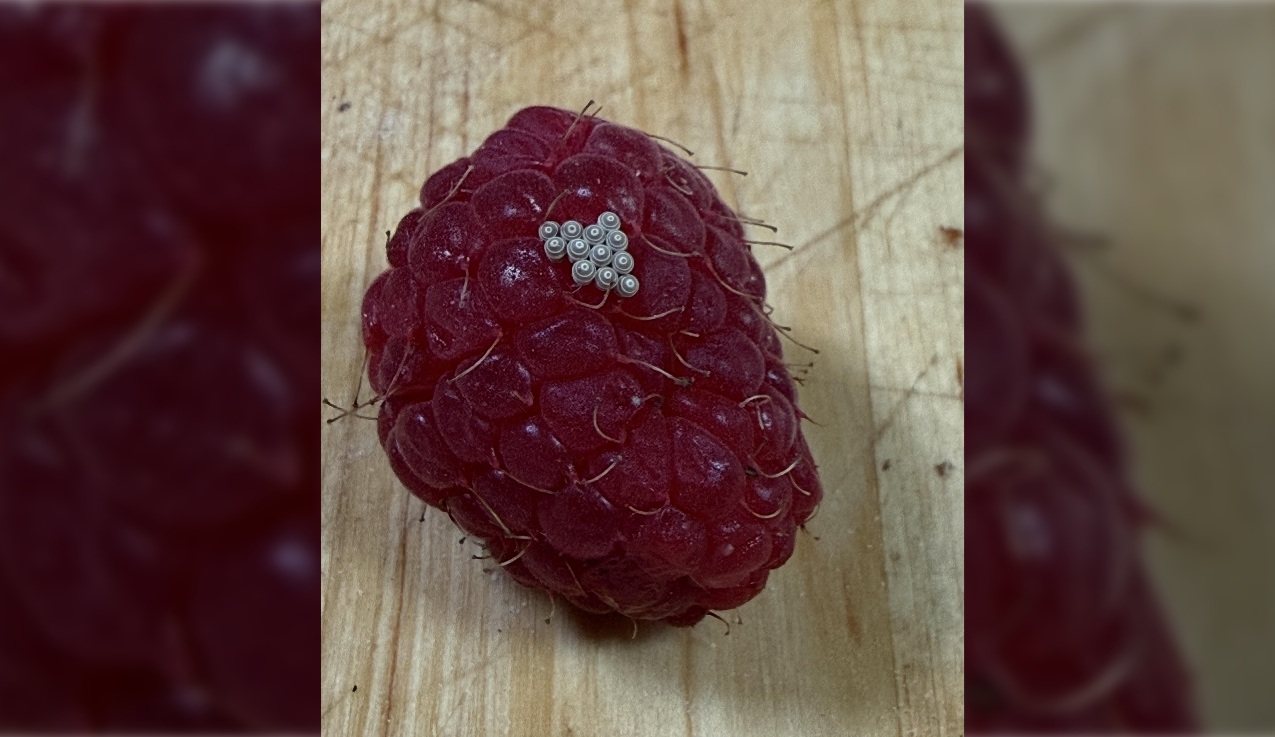
Videos and photos showing tiny white “worms” emerging from raspberries soaked in salt water regularly circulate on social media, often provoking alarm or disgust. While the sight can be unsettling, this phenomenon is well understood in agricultural and food safety science and is generally not considered a serious health threat for most healthy people.
This article explains what these creatures actually are, why they appear when berries are soaked, how common they are in soft fruit, what health agencies say about the risks, and how you can handle and wash raspberries and similar fruits safely at home.

What Are the Tiny White “Worms” in Raspberries?
The small white organisms people notice in raspberries are almost always insect larvae, not parasitic worms. In most cases, they are the larvae of fruit flies that lay eggs on or in soft fruit as it ripens.
Drosophila suzukii (Spotted Wing Drosophila)
One key species involved is the spotted wing drosophila (Drosophila suzukii), an invasive fruit fly that has spread widely in North America, Europe and other regions. Unlike many other fruit flies that prefer overripe or fermenting fruit, D. suzukii females have a serrated ovipositor that allows them to pierce the skin of fresh, ripening fruit such as:
- Raspberries
- Blackberries
- Strawberries
- Cherries and some other soft fruits
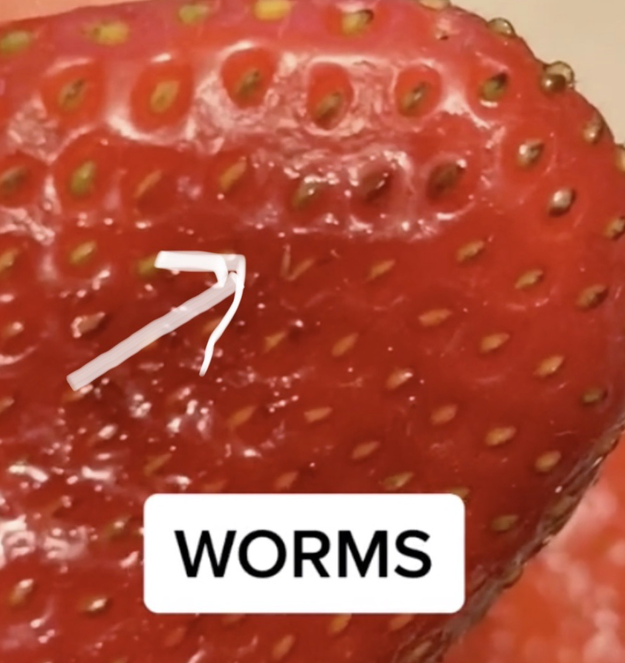
They lay eggs under the skin. The eggs hatch into tiny white maggots (larvae) that feed inside the fruit. These larvae are typically only a few millimeters long and can be difficult to see without close inspection or magnification.
Many consumers do not realize they are present until they use methods such as soaking fruit in salt water or sugar water, which can cause the larvae to leave the fruit and become visible.
Why Do They Come Out in Salt Water?
Online videos often show people placing fresh raspberries into a bowl of water with added salt and then observing small white larvae floating out of the berries. Several factors help explain this effect:
- Osmotic stress: A salt solution creates an environment that is stressful for the larvae. Differences in salt concentration between the water and the larvae’s bodies can cause them to move, detach, or try to escape.
- Changes in buoyancy: The salt water can alter density and surface tension, making it easier for very small organisms to become dislodged and float.
- Movement contrast: The clear background of a water-filled bowl makes any movement much more visible than it would be inside the uneven structure of a berry.
As a result, larvae that were already present in the fruit become obvious only after soaking. Salt water does not create larvae; it simply reveals what was already there.

How Common Are Insect Larvae in Raspberries and Other Berries?
Soft fruits, especially those grown outdoors, are part of a complex ecosystem and can host very small insects at low levels. This is not unique to raspberries and is not limited to any one country.
Food safety regulators recognize that it is almost impossible to eliminate small insect larvae entirely from some types of fresh produce. For example, the U.S. Food and Drug Administration (FDA) maintains “defect action levels” for certain foods, which are practical limits for natural, unavoidable defects such as insect fragments. While raspberries themselves are not always listed in public summaries, other soft fruits and processed products have similar allowances.
These thresholds reflect the reality that zero insect presence in large-scale agriculture is technically unrealistic and would often require much heavier pesticide use, which brings its own health and environmental trade-offs.
Are These Larvae Dangerous to Human Health?
For most healthy individuals, unintentionally consuming a few fruit fly larvae in fresh berries is not known to cause illness. Key points from food safety and medical perspectives include:
- They are not typical human parasites. Fruit fly larvae such as Drosophila suzukii are adapted to fruit, not to living inside humans.
- They are generally digested like other proteins. The human digestive system can break down small insect larvae similarly to other animal proteins.
- Documented illness is rare. Large health organizations do not list fruit fly larvae in fruit as a common cause of disease.
However, some people may still want to minimize insect presence for personal or cultural reasons. Also, there are a few situations in which extra caution is reasonable:
- Severely immunocompromised individuals (for example, some patients undergoing chemotherapy, organ transplant recipients, or people with advanced HIV) often receive advice to be especially careful with all raw produce. They should follow specific guidance from their healthcare team.
- People with strong aversions or phobias may experience distress or nausea if they know they have eaten insects, even if there is no objective health risk.
If you have specific health conditions or concerns, speaking with a medical professional can help tailor advice to your situation.
Why Don’t We Usually See Them Without Soaking?
There are several reasons larvae in raspberries and other soft fruits are typically not visible during normal handling:
- Small size: Early-stage larvae are extremely small and nearly translucent, making them hard to notice.
- Fruit structure: Raspberries are composed of many tiny drupelets with crevices and folds where larvae can hide.
- Color and texture: The light color of the larvae can blend with pale internal tissues of the fruit.
- Short shelf life: Berries are often eaten relatively soon after purchase, so larvae may not have had time to grow large enough to be more easily spotted.
Soaking in water, particularly salt water, not only stresses and dislodges the larvae but also provides an even background where any motion is easier to detect.
How Do Farmers and Growers Manage This Problem?
Berry farmers and agricultural researchers have devoted considerable effort to managing fruit fly infestations, especially the spread of Drosophila suzukii. Strategies include:
- Monitoring: Using traps and field surveys to detect fruit fly presence and population levels.
- Field hygiene: Removing overripe or fallen fruit, which can serve as breeding sites.
- Netting and physical barriers: Using fine mesh to reduce the ability of adult flies to reach the fruit.
- Time and variety selection: Planting varieties and scheduling harvests to avoid peak fly activity where possible.
- Targeted insecticides: In some regions, growers use approved insecticides or biological controls, following strict regulations and pre-harvest intervals to minimize residues.
Despite these measures, complete elimination is not feasible at scale without major costs and potential environmental impact. This is why low levels of insect presence are considered an unavoidable natural defect rather than evidence of negligence by growers.
Should You Always Soak Raspberries in Salt Water?
Some people have started routinely soaking berries in salt water at home after seeing online demonstrations. There are several aspects to consider:
Pros of Soaking
- May reveal and remove some insect larvae present in the fruit.
- Can help dislodge visible dirt or small surface debris.
Potential Drawbacks
- Texture damage: Raspberries are very delicate. Prolonged soaking, especially in salt water, can make them mushy and reduce quality.
- Limited effect: Soaking may not remove all larvae or microorganisms. It is a partial measure, not a sterilization method.
- Food waste: Some people may discard fruit unnecessarily after seeing larvae that pose very low health risk, increasing avoidable food waste.
For most households, food safety agencies recommend gentle rinsing under running potable water as the standard approach, rather than extended soaking in salt solutions.
Evidence-Based Tips for Washing Raspberries Safely
Health authorities such as the World Health Organization (WHO), the U.S. Centers for Disease Control and Prevention (CDC), and national food safety agencies provide general guidance on washing fresh produce. Applying these principles to raspberries, you can follow these steps:
1. Wash Right Before Eating
- Only wash raspberries just before you plan to eat or cook them. Washing too early can introduce moisture that speeds spoilage.
2. Use Clean, Potable Water
- Rinse berries under cool, running drinking water.
- Gently move the berries with your hands to help dislodge dirt and surface contaminants.
3. Avoid Harsh Treatments
- Do not use soap, detergent, or bleach on fruits; these substances are not intended for ingestion.
- Vinegar or commercial produce washes are not generally required for safety if you already use clean, running water.
4. If You Choose to Use Salt Water
If you still prefer to use a salt-water soak for personal reassurance, consider these points:
- Use a mild solution, for example about 1–2 teaspoons of salt per liter of water.
- Limit soaking time to a few minutes to reduce damage to the fruit.
- Rinse thoroughly under clean running water afterward to remove both salt and any dislodged debris or larvae.
- Dry gently with a clean paper towel or use a salad spinner with a fine insert designed for berries.
5. Store Properly
- Refrigerate raspberries promptly and keep them as dry as possible.
- Discard berries that are moldy, leaking, or have a strong off-odor.
Why This Topic Attracts So Much Attention Online
Social media platforms amplify content that is surprising or emotionally charged. Videos showing live organisms emerging from food are especially likely to spread quickly because they trigger strong reactions.
However, such clips often lack context about:
- How common low-level insect presence is in many natural foods.
- The difference between fruit fly larvae and harmful parasites.
- What food safety agencies and health experts actually advise.
Understanding the science behind the phenomenon can help reduce unnecessary fear while still empowering consumers to handle food safely.
Balancing Food Safety, Realism, and Sustainability
Fresh berries are highly nutritious, providing vitamins, minerals, dietary fiber, and a wide range of beneficial plant compounds. From a public health standpoint, the benefits of eating fruits and vegetables are strongly supported by evidence.
At the same time, consumers deserve transparency about how food is grown and processed. Recognizing that a small number of harmless insect larvae may be present in some soft fruits can be uncomfortable, but it also reflects the reality of agriculture that avoids extreme chemical use.
Key points to keep in mind include:
- Low-level insect presence in soft fruits is natural and widely recognized by regulators.
- For healthy individuals, accidental consumption of a few fruit fly larvae is not considered a significant health risk.
- Gentle washing with clean water is generally sufficient for safety at home.
- Excessive fear can lead to food waste and reduced fruit consumption, which may be more harmful to overall health.
By relying on credible information and practical food-handling habits, you can enjoy raspberries and other berries with confidence, without being unduly alarmed by what viral videos may reveal in a bowl of salt water.
When to Seek Professional Advice
If you have specific medical conditions, are advised to follow a neutropenic or highly restricted diet, or are caring for someone with a severely weakened immune system, consult a qualified healthcare professional or dietitian for personalized guidance on consuming fresh berries and other raw produce.