
When the Ocean Turns Against the Shore How Powerful Undersea Earthquakes Trigger Devastating Tsunamis and Change Coastal Communities Forever
A powerful earthquake beneath the ocean can move an immense volume of seawater in a matter of seconds. What begins far offshore, often beyond the sight of coastal residents, can develop into a tsunami capable of reaching shorelines across an ocean basin. Tsunamis are not ordinary waves. They are a series of long, fast-moving waves generated by the sudden displacement of water, most commonly after a major earthquake beneath the seabed.
For people who live, work, travel, or fish near the coast, understanding tsunami risk is an essential part of disaster preparedness. While modern warning systems have improved greatly, the most effective protection still depends on public awareness, reliable communication, resilient infrastructure, and rapid action when natural warning signs appear.
How Undersea Earthquakes Create Tsunamis
Most tsunamis are linked to earthquakes that occur beneath the ocean floor, especially in tectonically active regions such as the Pacific Ring of Fire. The Earth’s outer layer is divided into large tectonic plates that move slowly over time. At some plate boundaries, one plate is forced beneath another in a process known as subduction. Stress can accumulate for years or centuries before it is released suddenly as an earthquake.
When an earthquake causes a large section of the seafloor to rise or sink vertically, the water above it is displaced. Gravity then pulls the disturbed water back toward equilibrium, producing waves that spread outward in multiple directions. The scale of a tsunami depends on several factors, including the earthquake’s magnitude, depth, location, type of fault movement, and the amount of vertical displacement of the seafloor.
Not every offshore earthquake produces a tsunami. Many earthquakes are too small, too deep, or involve mainly horizontal movement along a fault. However, a major shallow earthquake involving vertical seafloor displacement can pose a serious threat. Underwater landslides, volcanic eruptions, and, in rare cases, impacts from space objects can also generate tsunamis.
Why Tsunami Waves Behave Differently From Ordinary Waves
Wind-driven waves generally affect the upper layer of the ocean and have relatively short wavelengths. Tsunami waves, by contrast, involve the movement of water from the surface to the seafloor. In deep water, a tsunami may travel at speeds comparable to a commercial aircraft, sometimes exceeding 700 kilometers per hour. Yet it may be difficult for ships far from shore to notice because its height can be small in the open ocean.
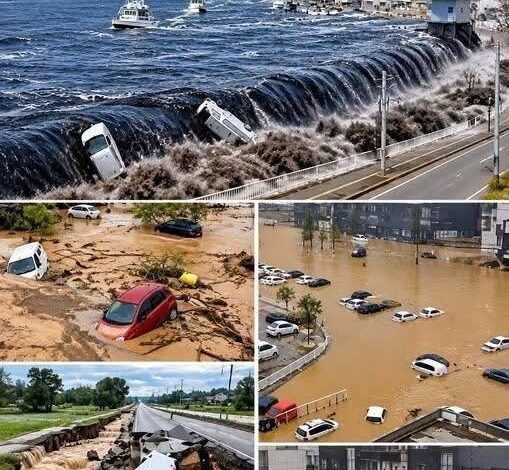
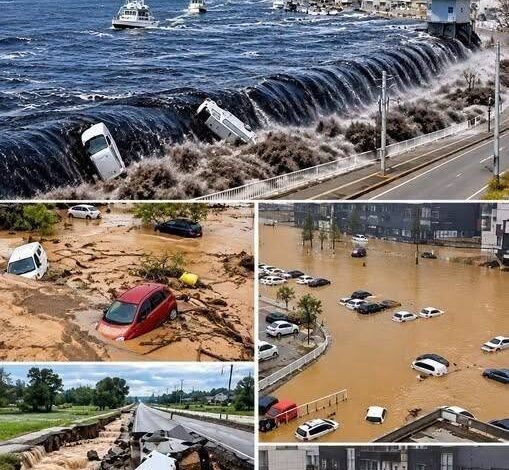
As a tsunami approaches shallow coastal water, it slows down, but the energy carried by the wave becomes compressed. The water can rise substantially and move inland with powerful currents. A tsunami does not always arrive as a single towering wall of water. It may appear as a rapidly rising flood, a sequence of surges, or strong currents that continue for hours.
The first wave is not necessarily the largest. This is one of the most important facts for coastal communities and visitors to understand. People should not return to low-lying areas simply because the water seems to have receded after an initial surge. Official authorities must determine when conditions are safe.
Natural Warning Signs That Should Never Be Ignored
Technology can provide important alerts, but nearby tsunamis may reach the coast before an official warning is issued or received. For this reason, emergency agencies emphasize the value of natural warning signs. Anyone near the coast should move to higher ground or farther inland immediately if they experience a strong or prolonged earthquake.
Other warning signs may include an unusual and rapid withdrawal of the sea, a sudden rise in water levels, or a loud roaring sound from the ocean. A rapidly receding shoreline can expose areas of the seabed that are normally underwater. This is not an invitation to investigate or take photographs. It may indicate that a powerful surge is approaching.
The guidance is simple: if the ground shakes strongly near the coast, or if the ocean behaves in an unusual way, move away from the shore without waiting for confirmation. Emergency planners often use the phrase “long or strong, get gone” to communicate this life-saving principle.
Tsunami Warning Systems and International Cooperation
Countries around the world have developed warning networks that combine earthquake monitoring, sea-level measurements, computer modeling, and public communication systems. Seismic stations detect and analyze earthquakes, while ocean buoys and coastal tide gauges help confirm whether a tsunami has formed and measure its progress.
In the Pacific, the Pacific Tsunami Warning Center plays a major role in monitoring seismic events and issuing information to national authorities. Other regional systems operate in the Indian Ocean, the Caribbean, the Mediterranean, and the northeastern Atlantic. UNESCO’s Intergovernmental Oceanographic Commission supports international cooperation on tsunami preparedness, early warning, education, and risk reduction.
Warnings may be issued as watches, advisories, or more urgent alerts depending on the assessed risk. A tsunami watch means that an event has occurred and is being evaluated. A warning indicates that dangerous waves are expected or observed and that people in at-risk areas should follow evacuation instructions immediately. Local authorities decide how to communicate these messages through sirens, mobile alerts, radio, television, social media, and community networks.
Warning systems are most effective when residents understand what the messages mean and know where to go. A technically advanced alert system cannot protect people who do not receive, trust, or act on its instructions. This is why regular drills and clear evacuation signage remain central to coastal safety.
Lessons From Major Tsunami Disasters
Past disasters have shaped international understanding of tsunami risk. The Indian Ocean tsunami of December 2004 followed a massive undersea earthquake off the coast of northern Sumatra, Indonesia. It affected communities across the Indian Ocean and prompted a major expansion of regional warning capabilities. The event also demonstrated that tsunamis can affect countries far from the original earthquake zone.
In March 2011, a major earthquake off northeastern Japan generated a tsunami that caused widespread coastal flooding and severe disruption. The disaster reinforced the importance of evacuation planning, building standards, public education, and protection for critical infrastructure. It also led to extensive discussions worldwide about disaster resilience, emergency communication, and the risks faced by coastal industrial facilities.
These events are remembered not only for their scale but also for the long recovery that followed. Communities faced losses of homes, livelihoods, public services, cultural sites, and local ecosystems. Recovery often required years of coordinated work by residents, governments, humanitarian organizations, scientists, and businesses.
How Tsunamis Affect Coastal Communities
The effects of a tsunami extend far beyond the initial flooding. Coastal neighborhoods may experience damage to roads, ports, water systems, schools, hospitals, and communications networks. Fishing fleets and tourism businesses can be particularly affected because they rely directly on access to safe coastlines and functioning infrastructure.
Families may be displaced, and local economies can face prolonged interruptions. Saltwater can contaminate farmland and freshwater supplies, while debris can complicate cleanup and recovery. The emotional impact is also significant. People who have lived through a disaster may experience grief, uncertainty, and anxiety during future earthquake or storm alerts.
Respectful recovery planning recognizes that affected communities are not passive recipients of aid. Local residents hold essential knowledge about their neighborhoods, traditions, evacuation routes, and needs. Effective recovery efforts involve communities in decisions about rebuilding, housing, education, health care, and economic support.
Preparedness Steps for Residents and Visitors
Tsunami preparedness begins before an emergency. People living in or visiting a coastal area should learn whether their accommodation, workplace, school, or recreation site is located in a tsunami hazard zone. Local government websites, emergency management offices, and posted evacuation maps can provide this information.
Every household should identify more than one route to higher ground or inland areas. In some densely built coastal locations, authorities may designate vertical evacuation structures, such as reinforced multistory buildings, when natural high ground is too far away. The correct destination depends on local plans, so residents should follow official guidance.
A basic emergency kit can support a family during an evacuation or temporary disruption. It may include drinking water, non-perishable food, essential medications, a flashlight, batteries, a phone charger, copies of important documents, and supplies for infants, older adults, or pets. Kits should be adjusted to individual needs.
Families should also establish a communication plan. During an emergency, local phone networks may be congested. A designated out-of-area contact can help relatives confirm that they are safe. Text messages may work when voice calls are difficult. People should rely on official alerts and avoid sharing unverified reports online.
What To Do During a Tsunami Emergency
If authorities issue a tsunami warning, evacuate promptly using the recommended route. Do not go to the beach to watch the waves. Do not drive into flooded areas or attempt to cross moving water. Conditions can change quickly, and even relatively shallow fast-moving water can be dangerous.
If an earthquake occurs while you are near the coast, first protect yourself during the shaking by following local earthquake safety guidance. Once the shaking stops, move to higher ground or inland as quickly as possible if the earthquake was strong or lasted a long time. Take essential items only if they are immediately available; do not delay evacuation to collect belongings.
People on boats should follow instructions from harbor authorities and emergency officials. In some circumstances, boats already in deep water may be safer offshore than in a harbor, but this depends on the location, timing, vessel, and official advice. Boaters should never make independent assumptions during a tsunami alert.
Remain in a safe area until authorities announce that the danger has passed. Tsunami hazards can continue for many hours, and later waves may be more dangerous than the first. Returning too early can place individuals and emergency responders at unnecessary risk.
Building Safer and More Resilient Coastlines
Reducing tsunami risk requires more than emergency alerts. It also involves long-term planning. Governments and communities can use hazard maps to guide where homes, schools, hospitals, and critical infrastructure are built. Building codes, elevated structures, protected evacuation routes, and clearly marked safe zones can reduce vulnerability.
Natural features may also contribute to coastal resilience. Dunes, wetlands, reefs, and mangrove forests can help reduce the force of some coastal flooding and erosion, although they cannot eliminate tsunami risk. Environmental protection should complement, rather than replace, evacuation planning and warning systems.
Schools play an important role in preparedness. Children who understand evacuation procedures can share life-saving information with their families. Community drills help identify problems before a real emergency, including inaccessible routes, unclear signs, and communication barriers affecting older residents or people with disabilities.
The Importance of Accurate Information
During a disaster, rumors can spread quickly. False claims about wave heights, evacuation orders, or supposedly safe locations can create confusion. The most reliable information comes from official emergency management agencies, national meteorological services, recognized tsunami warning centers, and local authorities.
News organizations also have an important public-service role when they report verified developments clearly and responsibly. Accurate reporting can help people understand the difference between an advisory and a warning, explain why evacuations are necessary, and connect affected communities with trustworthy resources.
The ocean can be a source of food, trade, recreation, and cultural identity. It can also carry hazards that demand humility and preparation. Scientific monitoring, international cooperation, and community readiness have improved the world’s ability to respond to tsunami threats. Yet the most immediate protection often remains human action: recognizing danger, moving quickly, and helping others reach safety.
Sources
- U.S. National Tsunami Warning Center and Tsunami.gov
- National Oceanic and Atmospheric Administration: Tsunami Education
- UNESCO: Tsunami Preparedness and Early Warning
- U.S. Geological Survey: Earthquakes and Tsunamis
- World Health Organization: Emergencies and Health
- BBC News: Background on the 2011 Japan Earthquake and Tsunami
Disclaimer: This content is intended for entertainment purposes only and is not based on real events.