

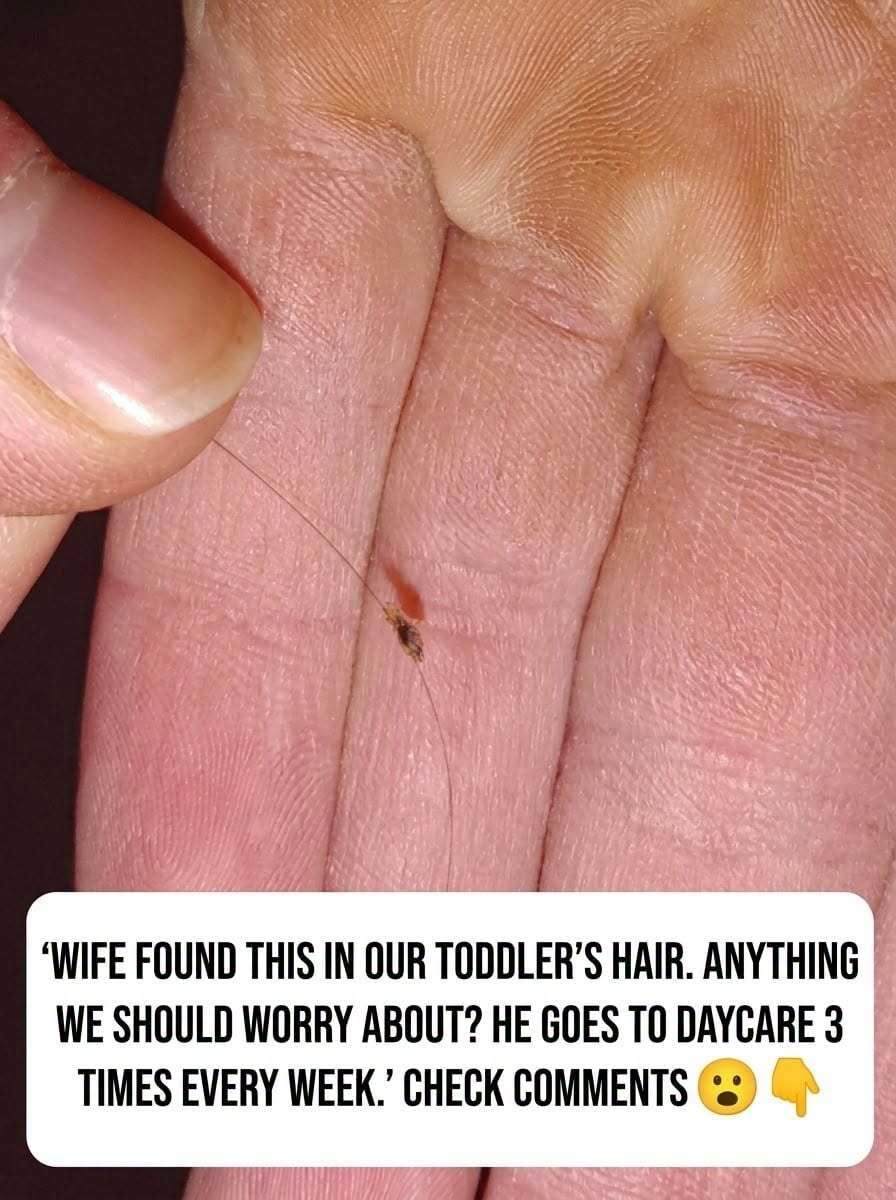
It starts with a scratch, then another, and suddenly an entire family is on edge. Something so small can spread fast in crowded classrooms and playgroups, leaving parents frustrated and desperate for a fix. Many reach for home remedies first, but the truth is far less comforting than the rumors suggest…
What families are dealing with here is head lice, a common issue that spreads mainly through direct head-to-head contact. The itching can be intense, but the insects themselves are tiny and easy to miss. That is why regular scalp checks matter, especially after children have been in close contact with others.
Some home tricks, like mouthwash or vinegar, are often mentioned online, but they are not proven to kill lice or their eggs. The most reliable approach is a proper lice treatment, paired with careful combing to remove live lice and nits. If there is any doubt, a doctor or pharmacist can help choose the right option and explain how to use it correctly.
Head Lice in Children
Head lice are a common concern for families with school-aged children, but they are not a sign of poor hygiene or an unclean home. These tiny insects can affect anyone, regardless of age, hair length, or how frequently someone washes their hair. Although discovering lice can be upsetting, understanding how they spread and how to treat them can help families manage the problem calmly and effectively.
One of the biggest challenges is recognizing an infestation early. Head lice are small, move quickly, and tend to stay close to the scalp. Their eggs, commonly called nits, are attached firmly to individual hair strands, making them different from ordinary dandruff or loose flakes of skin.
Understanding How Head Lice Spread
Head lice are parasitic insects that live on the human scalp and feed on small amounts of blood. They cannot survive for long away from a human host, and they do not jump or fly. Instead, they crawl from one person’s hair to another when heads come into direct contact.
This explains why infestations are frequently reported among children who play together, share close spaces, or participate in activities involving close physical contact. Schools and childcare settings can provide opportunities for transmission, although simply attending the same classroom does not automatically mean that children will get lice.
Sharing personal items such as combs, brushes, hats, scarves, and hair accessories may occasionally contribute to transmission, but direct head-to-head contact remains the primary route. Families should therefore focus on reducing close hair-to-hair contact rather than treating ordinary classroom surfaces as the main source of infestation.
Head lice are also not associated with dirt or poor personal hygiene. Clean hair can provide just as suitable an environment for these insects as hair that is washed less frequently. This is an important point because children should never be embarrassed, blamed, or excluded simply because they have head lice.
Recognizing the Most Common Symptoms
Itching is one of the best-known symptoms of head lice, but it does not always appear immediately. The sensation is generally caused by the body’s reaction to substances introduced into the skin when lice feed. Some children may develop itching only after several weeks, particularly during their first infestation.
Other possible signs include:
-
A tickling or crawling sensation in the hair.
-
Frequent scratching around the scalp, neck, and behind the ears.
-
Small red bumps or irritated areas caused by scratching.
-
Difficulty sleeping when itching becomes more noticeable at night.
-
Visible live lice or eggs attached to individual hairs.
However, itching alone does not confirm an infestation. Dry skin, dandruff, eczema, and other scalp conditions can produce similar discomfort.
The most reliable way to confirm head lice is to find a live, moving louse. Adult lice are generally about the size of a sesame seed, while younger lice, known as nymphs, are smaller and more difficult to see.
Nits are often mistaken for dandruff. Unlike loose flakes, they are firmly attached to the hair shaft and cannot easily be brushed away. They are usually found close to the scalp, particularly around the ears and the back of the neck.
How to Check a Child’s Hair Properly
A careful examination is more useful than relying on itching alone. Parents can use a fine-toothed detection comb, preferably one specifically designed to identify and remove head lice.
Wet combing is a practical method that can help reveal an infestation. The process involves several steps:
-
Wash the hair with ordinary shampoo and apply plenty of conditioner.
-
Use a wide-toothed comb to remove tangles.
-
Divide the hair into manageable sections.
-
Place a fine-toothed lice comb close to the scalp and draw it through the hair from root to tip.
-
Check the comb after each stroke for moving insects.
-
Repeat the process across the entire head, paying particular attention to the areas behind the ears and around the neckline.
The comb should be cleaned after each pass, and the process should be repeated until the entire scalp has been examined.
Wet combing can also be used as a treatment method. However, it requires patience and consistency. NHS guidance recommends repeating the process on days 1, 5, 9, and 13, followed by another check on day 17. This schedule helps identify newly hatched lice before they can continue the infestation.
Finding an empty egg case does not necessarily mean that live lice are still present. For this reason, identifying moving insects is more useful when determining whether treatment is necessary.
NHS+1
Choosing an Appropriate Head Lice Treatment
When live lice are confirmed, families have several treatment options. These generally include wet combing and specially formulated lotions or sprays.
Pharmacies offer products containing different active ingredients. Some treatments work by affecting the nervous system of the lice, while others use physical mechanisms to kill them. The appropriate choice depends on the person’s age, health circumstances, product availability, and local treatment recommendations.
Parents should never assume that every lice product is suitable for every child. Age restrictions and application instructions vary considerably between products.
It is particularly important to follow the directions regarding:
-
The amount of product required.
-
Whether the hair should be dry or damp before application.
-
How long the treatment should remain on the hair.
-
Whether the product needs to be repeated.
-
Whether combing is recommended after application.
One common mistake is assuming that a single application will always eliminate every louse and egg. Some products kill live insects but do not reliably destroy unhatched eggs. In those situations, a second application may be necessary after the interval specified by the manufacturer.
For example, the U.S. Centers for Disease Control and Prevention explains that certain treatments require a repeat application approximately seven to nine days after the first one. Other products may kill both lice and eggs, making routine retreatment unnecessary unless live lice are detected afterward.
Using additional medication too soon or applying several different products simultaneously can cause unnecessary irritation and other problems. If treatment appears unsuccessful, parents should consult a pharmacist or healthcare professional before trying another product.
CDC+2
Why Some Popular Home Remedies Should Be Avoided
Searching online for head lice treatments can produce dozens of suggestions involving everyday household products. Vinegar, mouthwash, mayonnaise, essential oils, and various mixtures are frequently discussed as inexpensive alternatives.
However, popularity does not establish effectiveness.
There is insufficient reliable evidence that mouthwash or vinegar can consistently eliminate an infestation. Similarly, household oils and thick substances such as mayonnaise have not been established as dependable treatments.
Some natural products may also irritate sensitive skin or cause allergic reactions. Applying substances around the scalp without understanding their ingredients and potential effects can create additional discomfort without resolving the original problem.
Essential oils deserve particular caution. Products containing tea tree, eucalyptus, or lavender oils are sometimes promoted as natural lice remedies, but they should not automatically be considered safe or effective alternatives to established treatments. The NHS specifically advises against relying on several plant-oil treatments for head lice.
Another important precaution is avoiding household insecticides, agricultural chemicals, cleaning products, or other substances that are not designed for use on human hair and skin. These products can expose children to unnecessary health risks.
The safest principle is straightforward: use a treatment specifically intended for head lice and follow its instructions carefully. When a product’s suitability is uncertain, professional advice is preferable to experimenting with an unverified remedy