
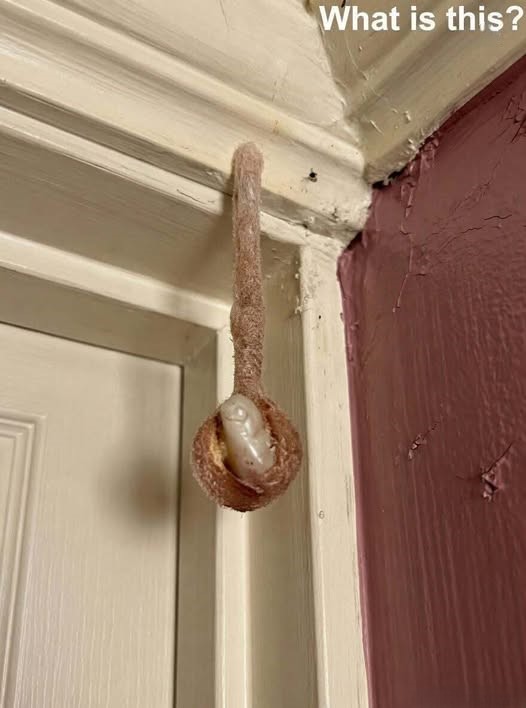
A relaxing hotel stay is usually associated with comfortable beds, spotless rooms, and a welcome break from everyday routines. After checking into what appears to be a perfectly maintained room, most travelers expect little more than a peaceful night’s rest. But sometimes, the smallest detail can transform an ordinary trip into an unforgettable story.
Imagine noticing a tiny patch of dried mud attached to a wall. At first, it seems like a minor paint flaw or a spot that housekeeping accidentally overlooked. Looking a little closer, however, reveals something entirely unexpected—a carefully constructed mud dauber wasp nest.
Stories like this remind us that nature often finds creative ways to coexist alongside people. While discovering wildlife indoors may be surprising, it also offers an opportunity to better understand the remarkable adaptability of insects and the importance of thoughtful, professional responses when unexpected encounters occur.
What Is a Mud Dauber Wasp?
Mud daubers are solitary wasps known for constructing distinctive nests from small pellets of mud.
Unlike many social wasps, mud daubers typically live and work alone rather than forming large colonies.
Their nests are often found in sheltered locations such as:
- Under roof overhangs
- Garages
- Sheds
- Barns
- Porches
- Occasionally inside buildings that have accessible openings
Because each female builds her own nest, these structures are usually much smaller than the paper nests created by social wasps.

How Mud Dauber Nests Are Built
One of the most fascinating characteristics of mud daubers is their construction technique.
The female wasp gathers small amounts of wet mud and shapes them into narrow tubes or rounded cells.
After completing each chamber, she places food for her developing offspring before sealing the compartment with another layer of mud.
This careful process demonstrates remarkable instinctive engineering using only natural materials.
Why a Nest Might Appear Inside a Building
Mud daubers seek protected locations where their nests are less likely to be disturbed by weather.
Buildings occasionally provide suitable conditions because they offer:
Shelter
Walls and ceilings remain dry during rain.
Stable Temperatures
Indoor environments can provide relatively consistent conditions.
Quiet Spaces
Less frequently used areas may remain undisturbed for extended periods.
Hotels, homes, and other buildings sometimes become temporary nesting sites if insects find small entry points.
Are Mud Dauber Wasps Dangerous?
For most people, mud dauber wasps are considered among the less aggressive wasp species.
Because they do not defend large communal nests, they are generally less likely to interact with people compared with social wasps.
As with many insects, the best approach is simply to avoid disturbing them and allow trained professionals to manage nests found inside occupied buildings.
Anyone with known insect sting allergies should exercise appropriate caution around all stinging insects.
The Importance of Professional Removal
If a wasp nest is discovered inside a hotel room, home, or workplace, notifying property management is the safest course of action.
Professional pest management personnel can:
- Correctly identify the species
- Evaluate whether the nest is active
- Remove it safely when appropriate
- Inspect for additional nests
- Recommend preventive measures
Attempting to remove unfamiliar insect nests without proper knowledge is generally discouraged.

Nature’s Ability to Adapt
One reason stories like this capture attention is that they demonstrate how wildlife continually adapts to human environments.
Many animals successfully use buildings as substitutes for natural habitats.
Examples include:
- Birds nesting beneath roofs
- Bees using wall cavities
- Bats roosting in attics
- Mud daubers building nests on sheltered walls
These adaptations highlight the remarkable flexibility of many species.
Why Small Discoveries Leave Lasting Memories
Travel often becomes memorable because of unexpected experiences.
While famous landmarks attract visitors, it is frequently the small surprises that people remember most.
A tiny insect nest hidden on a hotel wall can encourage travelers to observe their surroundings more carefully and appreciate the diversity of life that exists even in highly developed environments.
Supporting Biodiversity Responsibly
Although insects occasionally create inconveniences indoors, many play valuable ecological roles.
Mud dauber wasps contribute to ecosystems by helping regulate populations of other small invertebrates.
Supporting biodiversity means balancing appreciation for wildlife with practical management when insects enter places intended for human use.
Professional removal, rather than unnecessary destruction, helps achieve this balance.

Frequently Asked Questions
What is a mud dauber wasp?
Mud daubers are solitary wasps that construct nests from mud instead of paper-like material.
Are mud dauber nests common?
They can occasionally be found on buildings, particularly in sheltered outdoor locations. Indoor discoveries are less common but may occur if insects gain access through small openings.
Should you remove a mud dauber nest yourself?
If a nest is located inside an occupied building, contacting property management or a qualified pest management professional is generally recommended.
Why do mud daubers use mud?
Mud is readily available, durable when dry, and provides secure chambers for developing offspring.
Conclusion
Discovering a mud dauber nest during a hotel stay may come as a surprise, but it also offers a fascinating glimpse into the remarkable adaptability of the natural world. Even carefully maintained buildings occasionally become temporary habitats for wildlife seeking shelter.
Rather than viewing these encounters solely as inconveniences, they can remind us that nature continues to exist alongside us in unexpected ways. With professional management and respectful observation, both people and wildlife can be treated safely and responsibly.
Human curiosity often begins with noticing something small that seems out of place. Sometimes, a tiny patch of dried mud on a wall becomes more than a simple discovery—it becomes a reminder that the natural world is full of quiet surprises waiting for observant eyes.
Sources
- Smithsonian Institution – Information on solitary wasps and insect behavior
- University of Kentucky Entomology – Mud dauber biology and identification
- University of California Integrated Pest Management (UC IPM) – Wasp identification and management
- National Pest Management Association (NPMA) – Guidance on common household insects
- U.S. Forest Service – Native pollinators and beneficial insects
- Editorial inspiration: Prime Dailys, “Hidden Nature Run.” The anecdotal account has not been independently verified and is presented here as a starting point for discussing mud dauber wasps and their natural behavior.