
For millions of television viewers, Petticoat Junction was more than just a sitcom.
It was a warm escape to a simpler world — a place where family, friendship, small-town adventures, and gentle humor came together at the Shady Rest Hotel in fictional Hooterville.
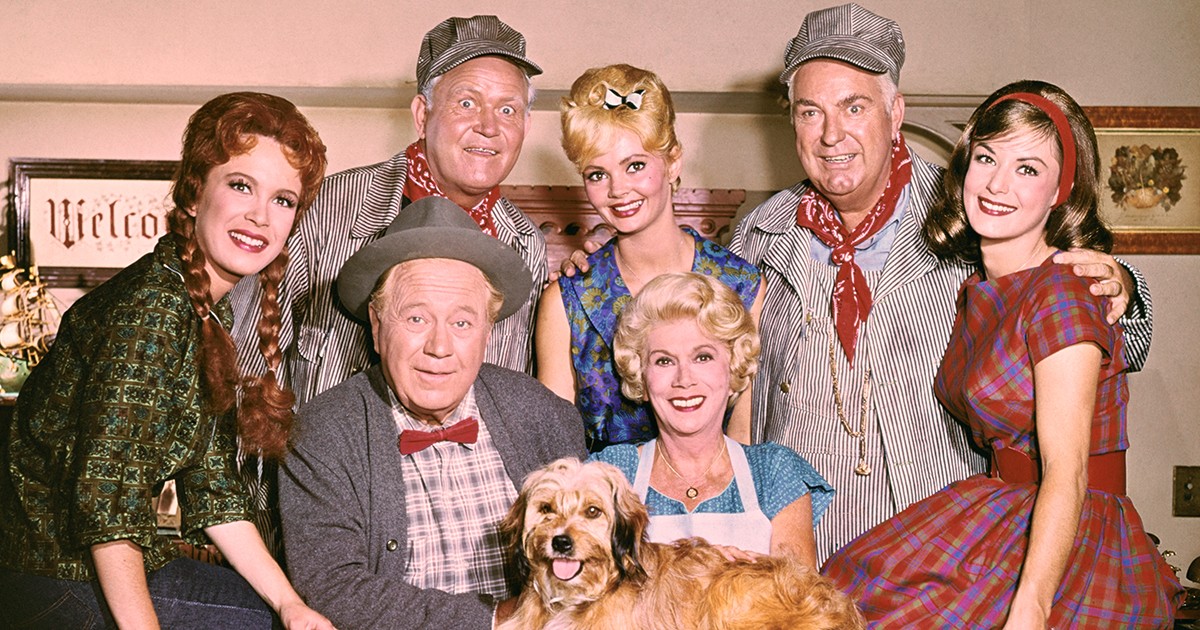
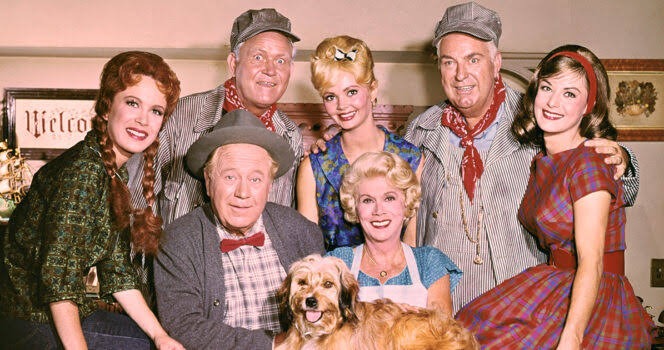
The classic series premiered in 1963 and quickly became a favorite among viewers. At the center of the story was Kate Bradley, the widowed owner of the Shady Rest Hotel, and her three daughters: Betty Jo, Bobbie Jo, and Billie Jo. Uncle Joe Carson, played by Edgar Buchanan, added another layer of comedy with his endless schemes and remarkable talent for avoiding hard work.
The show eventually ran for seven seasons and 222 episodes, ending in 1970.
But behind those familiar characters and the famous Hooterville Cannonball was a television production filled with fascinating details, continuity mistakes, real-life romances, unexpected casting decisions, and heartbreaking stories.
Here are some of the most interesting facts about Petticoat Junction that even longtime fans may not know.
The “Junction” Wasn’t Really a Junction
The title Petticoat Junction might make you imagine a busy railway intersection where several train lines meet.
That wasn’t actually the case.
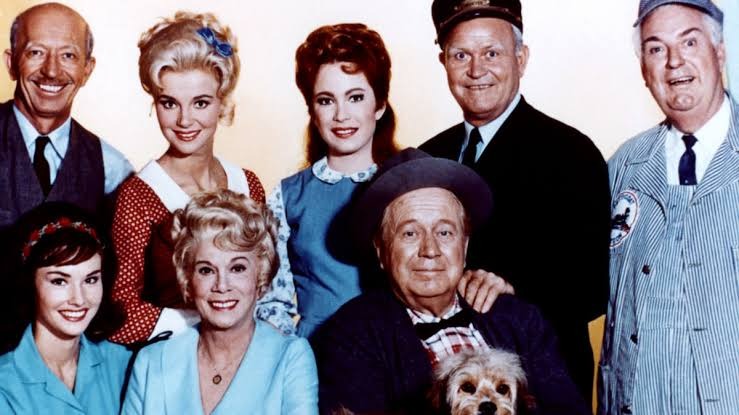
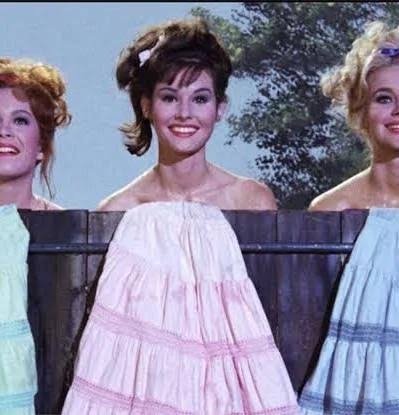
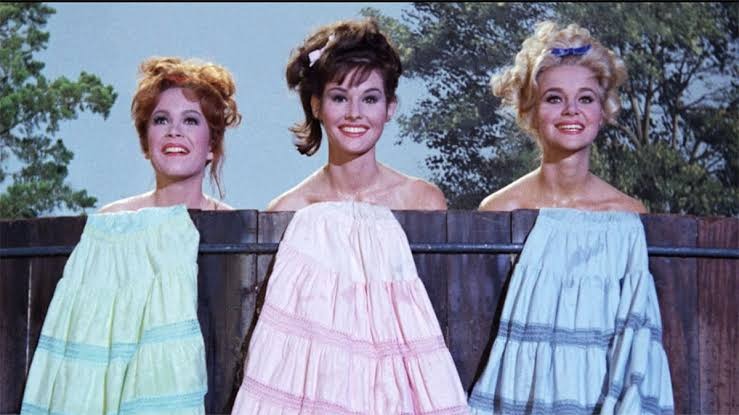
The Shady Rest Hotel was located beside a water stop on an isolated branch railroad line. The unusual name came from the Bradley sisters’ famous habit of swimming in the railroad water tower.
The girls would leave their petticoats hanging over the side of the tower while they swam.
That playful idea became one of the show’s most recognizable images and helped give the series its memorable title.
It also explained the cheeky opening sequence that became instantly recognizable to viewers.
There Was a Major Mistake in the Opening Credits
One of the most amusing details in Petticoat Junction involves the show’s opening credits.
Billie Jo was originally played by Gunilla Hutton. When Meredith MacRae took over the role at the beginning of the 1966–67 season, viewers might have expected the opening sequence to be updated immediately.
It wasn’t.
In the long shot showing the Bradley sisters climbing down from the water tower, Gunilla Hutton remained visible even after MacRae had taken over the character.
The old footage continued appearing in the opening sequence for years.
For casual viewers, the mistake was easy to miss. But eagle-eyed fans eventually noticed that the actress shown in the opening didn’t always match the actress playing Billie Jo in the episode.
There was also another change.
During the first two seasons, the sisters were presented in the order Billie Jo, Bobbie Jo, and Betty Jo. Beginning with Season 3, their order changed to Betty Jo, Bobbie Jo, and Billie Jo.
Around 1,500 Women Were Considered for the Bradley Sisters
Casting the three Bradley daughters was reportedly a huge undertaking.
According to accounts surrounding the show’s production, creator Paul Henning considered roughly 1,500 actresses before the final choices were made.
One of those actresses had a particularly special connection to the creator.
Linda Kaye Henning, who played Betty Jo Bradley, was Paul Henning’s daughter.
Bea Benaderet, who played Kate Bradley, reportedly helped recommend Linda for the role.
The decision proved successful. Linda became one of the most recognizable members of the cast and remained closely associated with the series long after it ended.
The Hooterville Cannonball Didn’t Always Make Sense
The Hooterville Cannonball was supposed to be an essential part of life at the Shady Rest Hotel.
According to the show’s premise, the hotel was located far from the nearest town, with the Cannonball providing one of the main ways for people to reach the area.
Yet as the series progressed, the show’s own transportation rules became increasingly flexible.
Characters sometimes appeared at the hotel without any clear explanation of how they had traveled there.
On other occasions, the Cannonball would arrive at the station, followed shortly by a character who apparently hadn’t been on the train.
The fictional railroad seemed to operate according to whatever the story needed at the moment.
In other words, the Hooterville Cannonball didn’t always run on a strict timetable.
It ran on television logic.
The Cannonball Had a Strange Smoke Problem
Another detail that longtime fans may have noticed was the locomotive’s smoke.
The Cannonball appeared to use wood as fuel, with firewood visibly stacked in the tender.
Yet the locomotive often produced thick, dark smoke.
That would be unusual for a traditional wood-burning locomotive, which would generally produce lighter-colored smoke.
The show even provided an explanation for the unusual appearance.
In the first episode, viewers were told that the Cannonball burned railroad ties as fuel.
Whether viewers accepted that explanation or simply enjoyed the sight of the train, it became another quirky part of the show’s world.
The Train Wasn’t Always the Same Train
The production also used different methods to create the Hooterville Cannonball.
Some scenes featured a real vintage locomotive, while other shots relied on a mock-up designed for filming.
According to classic television accounts, the mock-up had a limited wheel arrangement that could be repositioned depending on the shot.
There was another small continuity detail involving the locomotive itself.
During the first two seasons, when Petticoat Junction was filmed in black and white, the number displayed on the front of the train was “3.”
When the show switched to color in Season 3, the number mysteriously changed to “8.”
It remained “8” for the rest of the series.
Linda Henning and Mike Minor Fell in Love in Real Life
One of the sweetest stories connected to Petticoat Junction happened away from the cameras.
Linda Kaye Henning played Betty Jo Bradley, while Mike Minor played Steve Elliott.
Their characters eventually married on the show in 1967.
But their fictional romance soon became a real-life relationship.
Just ten months after Betty Jo and Steve’s television wedding, Henning and Minor married in real life.
There was an especially memorable connection between the two ceremonies.
The wedding dress Linda Henning wore when Betty Jo married Steve on the show was reportedly the same dress she wore when she married Mike Minor in real life.
For fans of classic television, it was a remarkable coincidence — and one of the most charming pieces of Petticoat Junction trivia.
Sharon Tate Was Almost Billie Jo
Before Jeannine Riley became the first actress to play Billie Jo, another future star was considered for the part.
Sharon Tate was reportedly selected during the early stages of casting and even participated in test footage and publicity material.
However, she never ultimately appeared as Billie Jo in the finished series.
Tate was still relatively early in her acting career at the time, and there have been different accounts regarding why the casting decision changed.
One widely repeated explanation involves the family-friendly image planned for the series and Tate’s previous association with Playboy.
Ivory Soap was expected to be an important sponsor, and producers reportedly worried about whether Tate’s previous modeling work could create an image problem.
The role eventually went to Jeannine Riley, launching the character of Billie Jo in the series.
Tate would go on to become a major Hollywood star in the years that followed.
Uncle Joe Appeared in Every Episode
Edgar Buchanan’s Uncle Joe Carson was one of the most recognizable characters in the series.
He was famously lazy, endlessly inventive, and always looking for a shortcut.
Instead of solving problems through hard work, Uncle Joe frequently tried to find a scheme that would allow him to do as little work as possible.
His character became one of the show’s most dependable sources of comedy.
Buchanan also holds an impressive record connected to the series: he was the only actor to appear in all 222 episodes of Petticoat Junction.
That makes Uncle Joe one of the most consistent characters in the entire Hooterville universe.
The Dog Had a Name — But Most People Called Him “Dog”
The lovable dog seen throughout the series was known to viewers simply as “Dog.”
But the animal actually had a name.
He was Higgins.
Higgins appeared in 152 episodes of Petticoat Junction and became a familiar part of the Shady Rest Hotel.
The show eventually revealed his real name in an episode titled “Higgins Come Home.”
There was also a funny contrast between the dog and Edgar Buchanan’s character.
Uncle Joe and Dog frequently had a playful rivalry on screen.
Yet behind the scenes, Higgins reportedly had a very different relationship with Buchanan.
During publicity photographs, the dog was often comfortable sitting in Buchanan’s lap.
Higgins later became an even bigger television and movie star. His best-known role came as the title character in the 1974 film Benji.
Interestingly, Benji was also Edgar Buchanan’s final film appearance.
The Famous Opening Theme Had a Double Meaning
The opening theme song of Petticoat Junction included the memorable phrase “Lotsa curves.”
On the surface, it referred to the winding railroad tracks around Hooterville.
But the line also carried a playful second meaning because of the three Bradley sisters.
For a sitcom aimed at a broad family audience in the 1960s, it was a surprisingly cheeky joke.
The sisters’ visual presentation also became part of the show’s identity.
They were commonly associated with three different hair colors — blonde, brunette, and redhead — making them immediately distinguishable even before viewers knew their names.
Bea Benaderet Was Quietly Battling Cancer
Behind the cheerful atmosphere of Petticoat Junction, one of the show’s biggest stars was facing a serious health crisis.
Bea Benaderet played Kate Bradley, the warm and hardworking mother who served as the emotional center of the Shady Rest Hotel.
During a routine medical examination in 1963, doctors discovered a spot on one of her lungs.
Although the spot later appeared to have disappeared, it eventually returned and had grown.
In November 1967, while filming the fifth season, Benaderet underwent exploratory surgery.
Doctors discovered that the tumor could not be removed.
She was diagnosed with lung cancer and began radiation treatment.
Benaderet had been a longtime smoker, but after her diagnosis and surgery, she significantly reduced her smoking and eventually stopped.
Her treatment initially appeared promising.
While she recovered, she missed ten episodes of Petticoat Junction.
The writers chose a simple explanation for Kate’s absence: she had gone away to visit her sister.
Bea Benaderet Briefly Returned to the Show
There was hope that Benaderet would recover enough to return.
For a short time, that hope became reality.
She returned for the fifth-season finale, “Kate’s Homecoming,” giving viewers the chance to see Kate Bradley again.
Sadly, her health continued to deteriorate.
Five months later, Benaderet was forced to leave the series once more.
Her final appearance came in the sixth-season episode “The Valley Has a Baby.”
By that point, she was too ill to appear normally on camera. Her voice was used while a stand-in appeared from behind.
On October 13, 1968, Bea Benaderet died at Good Samaritan Hospital in Los Angeles.
She was 62 years old.
Her death marked a major turning point for Petticoat Junction.
June Lockhart was later brought into the series as Dr. Janet Craig, providing a new maternal presence at the Shady Rest.
But Kate Bradley remained one of the show’s most beloved characters.
Benaderet’s Husband Died Only Days Later
Perhaps the most heartbreaking detail surrounding Bea Benaderet’s death concerns her husband, Eugene Twombly.
Just four days after Benaderet died, Twombly suffered a massive heart attack.
He was only 54 years old.
The couple were eventually laid to rest beside one another.
Their back-to-back deaths added an especially tragic chapter to the history of a television series remembered primarily for its warmth and humor.
The Show Was Affected by Changing Television Advertising
The late 1960s were a changing period for American television.
Advertisers were becoming increasingly interested not only in how many people watched a program, but also in exactly who those viewers were.
Petticoat Junction eventually faced this reality.
Procter & Gamble reportedly decided to leave the show because its target audience was increasingly different from the younger demographic the company wanted to reach.
Reynolds Tobacco later became a major sponsor.
The changing sponsorship situation also contributed to scheduling decisions surrounding the series.
It was an early example of a reality that remains familiar in television today: even a successful program could face pressure when advertisers believed its audience was no longer the right fit.
Petticoat Junction Became a Victim of the “Rural Purge”
After seven seasons and 222 episodes, Petticoat Junction ended in 1970.
Its cancellation came during a major transformation in American television.
Networks began removing several popular programs that were associated with rural communities, older viewers, or traditional family settings.
This period became known as the “rural purge.”
Petticoat Junction was not alone.
Other familiar programs, including Green Acres and Mayberry R.F.D., were also affected by the changing television landscape.
For longtime viewers, the decision could seem surprising because these shows still had devoted audiences.
But television executives were increasingly focused on attracting younger and more urban demographics.
And so the world of Hooterville eventually disappeared from prime-time television.
Why Petticoat Junction Is Still Remembered
More than five decades after its final episode, Petticoat Junction remains part of the cultural memory of classic American television.
The series wasn’t built around elaborate special effects or complicated storylines.
Its appeal came from something much simpler.
There was the Shady Rest Hotel.
There was the Hooterville Cannonball.
There were the Bradley sisters, Uncle Joe, Dog, and the colorful collection of characters who passed through the fictional community.
And beneath the gentle comedy were stories that reflected real life — love, family, changing careers, unexpected challenges, and loss.
The show’s mistakes and behind-the-scenes stories only make it more fascinating today.
A forgotten actress in the opening credits, a train with the wrong number, a real-life romance between two cast members, and a famous dog who eventually became a movie star are the kinds of details that reward fans who look beyond the episodes themselves.
Perhaps that is why Petticoat Junction continues to have such a special place in the hearts of classic-TV fans.
It may have been set in a fictional rural town, but the memories it created were very real.
And for those who grew up watching the Bradley family at the Shady Rest Hotel, hearing the familiar theme or seeing the Hooterville Cannonball can still bring back a little piece of television history.
Sources
-
Classic television records and historical accounts of Petticoat Junction
-
CBS television archives and historical program information
-
Television Academy historical materials
-
Biographical records concerning Bea Benaderet, Edgar Buchanan, Linda Kaye Henning, and other cast members
-
Contemporary and archival interviews with members of the Petticoat Junction cast and production team