

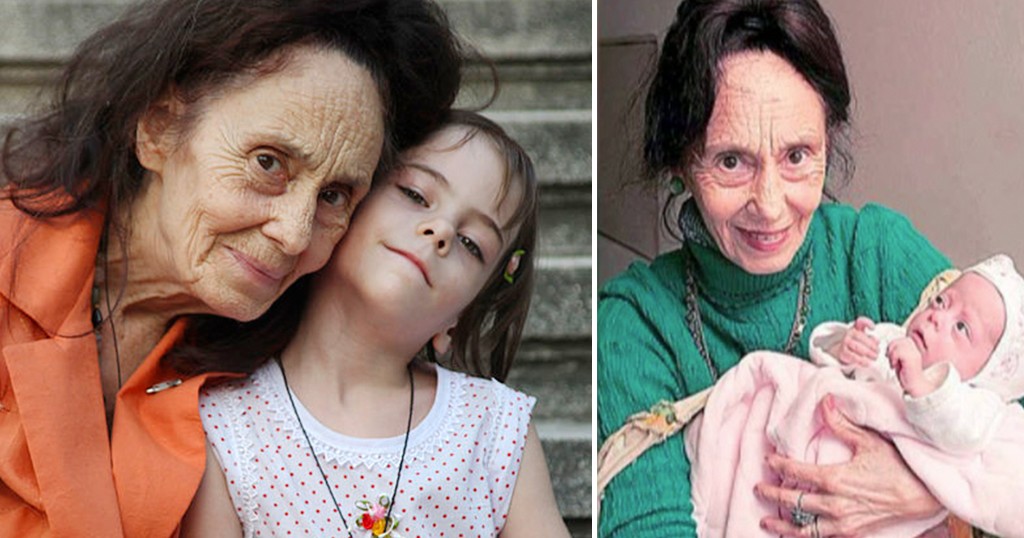
Adriana Iliescu: The World’s Oldest Mother and Her Daughter Eliza, 20 Years Later

Becoming a parent is a transformative milestone that defines the human experience. For many, welcoming a child represents an indescribable mix of joy, responsibility, and hope for the future. However, some parenthood stories stand out for their remarkable circumstances and broader impact. One such narrative is the story of Adriana Iliescu, who garnered international attention in 2005 when she became a mother at the age of 66, a feat that challenged societal norms and prompted ongoing discussions about age, medical science, and the evolving concept of family.
The Birth that Made History
In January 2005, Adriana Iliescu gave birth to her daughter, Eliza, in Romania, immediately securing a place in history as the world’s oldest documented mother at the time. Her decision—and the successful birth—prompted headlines globally and earned her a spot in the Guinness Book of World Records. The significance of the event was both personal and cultural: Eliza’s birth was a triumph after years of longing and obstacles, and it ignited a global conversation about reproductive medicine, ethics, and the possibilities for women later in life.
For Adriana, the joy was boundless and her sense of responsibility profound. “It’s my job to create the best conditions for her and help her fulfill her dreams,” she said, capturing the universal sentiment of parents everywhere. Yet her journey to motherhood was far from conventional, and required both resilience and the support of advances in medical technology.

Public Reaction and Personal Resilience
While Adriana’s story was inspiring to some, it was also met with controversy and criticism. Many questioned whether a woman of her age should pursue motherhood, citing concerns about health, longevity, and the child’s future. Adriana addressed these concerns in a candid interview with the Daily Mail in 2010, stating, “The mirror is unkind to women, but if we are talking about my energy then I feel like a young woman. I feel like I’m 27 and when I feel a bit more tired, I feel like I’m 37. I am healthier than women more than half my age.”
Adriana’s decision wasn’t motivated by vanity or a desire to appear younger. Instead, it was driven by a lifelong yearning for motherhood—a dream postponed by circumstances and finally realized with determination. During the interview, she even contemplated the possibility of a second child, citing ongoing medical trials and her own robust health, but she stressed that she was not in a rush, putting Eliza first.

A Family Bond That Defies Expectations
Over the years, Adriana and Eliza have cultivated a relationship characterized by warmth and mutual respect. Eliza grew into a lively, intelligent, and happy child, reflecting the care and stability her mother provided. Despite outside opinions about her age, Adriana remained confident in her parenting, noting, “I don’t smoke and I don’t drink. If I live as long as my parents did, Eliza will be 20 by the time I pass away. I think I still have a lot to give her.”
Adriana’s path to motherhood was complicated by personal loss and societal challenges. Early in her marriage, she was forced to make a difficult medical decision—aborting her first pregnancy—and soon after, her husband left. These hardships led her to focus on her academic career, working as a lecturer at a Romanian university for decades. Her desire to have a child remained strong, but technological limitations delayed her dream.

The Role of Medical Science in Adriana’s Journey
Advances in assisted reproductive technology, specifically in-vitro fertilization (IVF), opened new possibilities by the late 1990s. Adriana, by then aged 57, sought treatment when IVF was made available in Romania. Her first attempt in 2000 was unsuccessful, but she persisted despite skepticism and resistance from parts of her community. Many believed her pursuit of motherhood was immoral or impractical, but Adriana’s determination remained unwavering.
Ultimately, it was Dr. Bogdan Marinescu in Bucharest who helped fulfill Adriana’s dream. She became pregnant with triplets, but two did not survive, leaving Eliza as the sole surviving child. Born premature, Eliza spent significant time in the neonatal intensive care unit before growing into a healthy young girl. Adriana’s religious faith played a central role during these challenges, though not all religious organizations supported her decision. Even during Eliza’s baptism, Adriana faced judgement from some nuns, reflecting the ongoing debate over late motherhood.

Societal and Ethical Considerations
Adriana Iliescu’s story fueled global discussions about the boundaries of reproductive technology, ethics, and the rights of would-be parents. Key concerns raised by experts and society include:
- Health Risks: Pregnancy at such a late age involves considerable risks for both mother and child, including complications during pregnancy and delivery, developmental hurdles for the infant, and questions surrounding the mother’s ability to care long-term.
- Child Welfare: Critics worried about Eliza’s future, wondering about her emotional security, parental support as Adriana aged, and the implications of growing up under intense media scrutiny.
- Legal and Ethical Issues: Some countries have laws restricting the age of IVF candidates, attempting to balance medical possibility with parental responsibility.
Ethicists and medical experts emphasize the importance of balancing individual freedoms with social norms and the child’s best interests. According to the World Health Organization and reproductive specialists, successful IVF at an advanced age is rare but possible; it also requires careful counseling and support systems to address potential challenges. Adriana acted responsibly by arranging for her doctor, Dr. Marinescu, to become Eliza’s legal guardian in the event of her passing, ensuring the child’s well-being was prioritized.

Adriana Iliescu Today: Resilience and Legacy
As of 2025 — two decades after Eliza’s birth — Adriana and her daughter continue to share a close, supportive relationship. Adriana, now age 83, maintains an active lifestyle. She continues to write, having authored more than 25 children’s books and still lectures part-time at Bucharest’s university. Her intellectual engagement and love for Eliza remain central to her identity, and she regularly emphasizes the importance of nurturing her daughter’s academic and personal growth.
Though many initially assumed Adriana was Eliza’s grandmother, Adriana focused on creating an environment rich in love, education, and stability. She arranged legal protections for Eliza, ensuring her daughter’s future beyond her own lifetime. Balancing privacy with public interest, Adriana continues to advocate for her family’s right to live calmly and securely.

Eliza Iliescu: A New Generation
Now an adult, Eliza Iliescu is a celebrated academic achiever in Romania. She has demonstrated impressive talents and dedication, winning awards for her studies and excelling in literature and humanities. According to Brightside, Eliza’s ambitions include pursuing higher education, following in her mother’s footsteps as a scholar with a particular focus on philosophy and the Romanian language.
Recently, Eliza was recognized for her grace and intelligence when she appeared on stage alongside former Eurovision contestant Theodor Andrei. Her performance was widely praised, reinforcing her status as a role model among Romanian youth. Online reactions celebrate her accomplishments, maturity, and the supportive environment created by Adriana.
Eliza and Adriana’s story continues to inspire debates about family, resilience, and the role of science in overcoming biological limitations. It stands as evidence that parenthood is less about age than commitment and love, and their journey has shaped opinions in Romania and beyond, encouraging new perspectives on what it means to be a family.
International and Societal Impact
The story of Adriana and Eliza Iliescu is more than a tale of individual achievement; it is emblematic of broader international shifts. Reproductive technologies are expanding possibilities for parenthood and challenging traditional expectations. Their journey has prompted policy reviews in several countries, shaped attitudes toward assisted reproduction, and spurred increased dialogue among medical professionals, lawmakers, and families worldwide.
Although the conversation is ongoing and complex, experts emphasize the importance of considering each circumstance individually. Stories like Adriana’s are rare, but they highlight how science, ethical systems, and human tenacity converge to reshape the future of families. The Iliescus’ experience has contributed to a more nuanced understanding of what it means to nurture, educate, and support children, offering inspiration and reflection far beyond Romania.
Conclusion
Adriana Iliescu’s journey to motherhood and her bond with Eliza remain a powerful example of perseverance, love, and the evolving possibilities presented by medical science. Their story continues to captivate, instruct, and inspire, demonstrating that life’s milestones can come in unusual ways—and that every child and parent’s journey is unique. As society debates age, ethics, and technology, stories like theirs remind us of the importance of compassion, understanding, and support for families in all their forms.
Sources
- Reuters: Romanian Woman Gives Birth at 66
- BBC: Europe’s Oldest Mothers
- Daily Mail Interview with Adriana Iliescu
- The Guardian: Adriana Iliescu’s Story
- WHO: Fertility and Reproductive Health
- CDC: Assisted Reproductive Technology
Disclaimer: This content is intended for entertainment purposes only and is not based on real events.