
What Is the Tiny Hole Near Your Ear …Preauricular Pits Explained
Many people notice a small hole, dimple, or indentation situated near the front of the ear and wonder about its origin or significance. While it may resemble a piercing or scar, in most cases, this tiny feature is known as a preauricular pit. This article provides a detailed exploration of preauricular pits, including their causes, possible implications, inheritance patterns, and common misconceptions, helping you understand this unique anatomical feature from a scientific and educational perspective.
Understanding Preauricular Pits
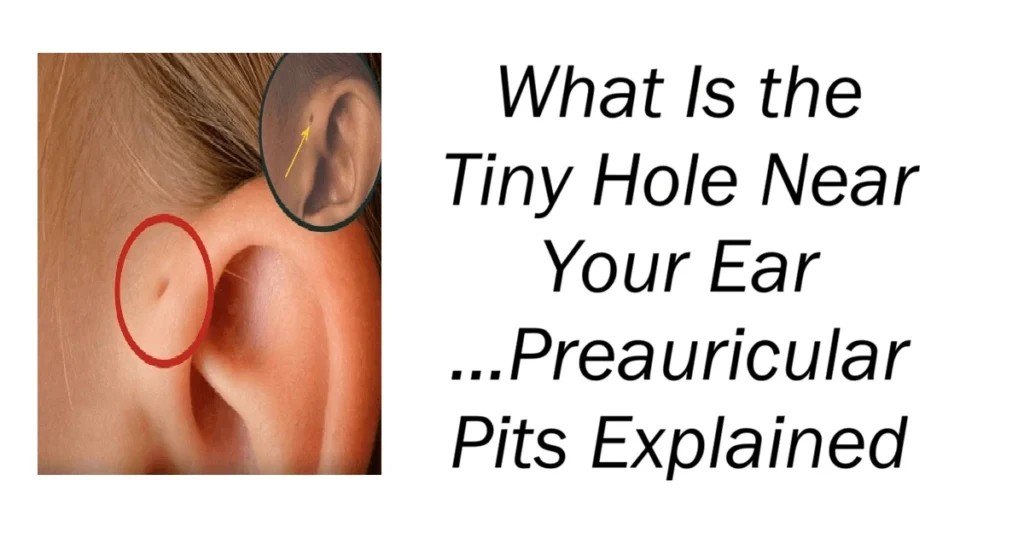
A preauricular pit, also referred to as a preauricular sinus or ear pit, is a small congenital opening or indentation found just in front of the ear. Typically, it is located at the point where the upper portion of the ear cartilage meets the facial skin. These minute features are present from birth and can occur on one or both sides of the head.
Preauricular pits are usually subtle and may go unnoticed unless someone is born with a particularly prominent example or if the pit becomes symptomatic. In most cases, however, these small indentations are entirely benign—they neither cause discomfort nor interfere with daily life for the majority of individuals.
The Embryological Origin of Preauricular Pits
To understand why preauricular pits develop, it helps to know a little about how the human ear forms during fetal development. The external ear, or pinna, is shaped from six small growth centers known as ‘hillocks’ that arise on the first and second branchial arches of the embryo. As the fetus grows, these hillocks fuse delicately to create the recognizable shape of the adult ear.
When this fusion process is incomplete or disrupted slightly, a residual tract beneath the skin may persist—resulting in the formation of a small pit and, occasionally, a sinus tract situated just in front of the ear. Thus, a preauricular pit is considered a minor congenital anomaly, meaning it is a structural difference present at birth. Importantly, its occurrence is unrelated to personal habits, hygiene, injury, or environmental factors.
Normal Variation or Medical Concern?
Preauricular pits are generally regarded as harmless congenital variations. Most individuals with a preauricular pit experience no symptoms throughout their lives, and medical treatment is usually unnecessary. The opening may remain a tiny, stable indentation on the skin, never attracting attention or causing issues.
However, a minority of cases can be complicated by infection. Bacteria may enter the small opening, particularly if the area is repeatedly touched, irritated, or exposed to dirt. When this happens, symptoms may develop and require attention from a healthcare professional.
Signs and Symptoms of an Infected Preauricular Pit
Although most preauricular pits are asymptomatic, infection is a well-recognized complication. When infection sets in, individuals may observe:
- Redness and swelling around the pit
- Pain or tenderness to the touch
- Warmth in the area
- Drainage of pus or clear fluid
- The development of a lump beneath the skin
Infections could cause the area to resemble an inflamed pimple or cyst. If redness, swelling, pain, or discharge are observed, especially if symptoms worsen, it is important to seek medical evaluation. Prompt treatment can prevent complications and recurrence.
Management and Treatment of Preauricular Pits
For most people, a preauricular pit requires no intervention. Healthcare providers commonly recommend monitoring the area and maintaining normal hygiene. Interventions become necessary if repeated infections develop.
When infection occurs, the primary treatments may involve:
- Antibiotics to address bacterial infection
- Incision and drainage if an abscess develops
If someone experiences ongoing infections, surgical removal of both the pit and its underlying tract might be considered. This approach can prevent future episodes, though surgery is only recommended in select circumstances due to the delicate anatomy in this region.
It is not advised to attempt expressing pus or manipulating the pit, as this may worsen irritation and infection risk.
Prevention: Is It Possible?
Because preauricular pits are congenital anomalies that develop during embryonic life, there is currently no known way to prevent them. Lifestyle, diet, hygiene, or prenatal behaviors do not influence the likelihood of a person developing a preauricular pit. Efforts to squeeze, pick, or probe the pit should be avoided, as these actions only increase the risk of infection or local trauma.
Genetics and Family Patterns
Genetic research on preauricular pits suggests a hereditary component in some families, although the inheritance pattern is not always straightforward. Having one or both parents with a preauricular pit may increase the likelihood of a child being born with the condition, though it frequently appears sporadically without prior family history.
The prevalence of preauricular pits varies among different populations and ethnic groups. For example, studies indicate somewhat higher rates among people of Asian and African descent compared to those of European ancestry. However, preauricular pits may occur in any person, regardless of heredity or background.
Preauricular Pits and Hearing: Is There a Connection?
Most isolated preauricular pits are not associated with hearing loss or ear function problems. The vast majority of individuals with this feature have completely normal hearing and no other related symptoms.
In rare situations, a preauricular pit may be one sign among several indicating a genetic syndrome or wider congenital issue, such as branchio-oto-renal (BOR) syndrome, which affects the development of the ears and kidneys. These cases are extremely uncommon. If there are additional ear anomalies, kidney problems, or hearing concerns, healthcare professionals may recommend further assessment.
Parents of children born with a preauricular pit typically do not need to worry about their child’s hearing unless there are other signs pointing to a broader syndrome.
When to See a Doctor
Most preauricular pits do not require medical attention. However, it is advisable to seek a healthcare provider’s input if the area:
- Becomes increasingly painful or swollen
- Produces pus or fluid
- Develops a new lump or bump
- Is involved in repeated infections
- Leads to any persistent discomfort
If you are uncertain whether a small opening near the ear is a preauricular pit, a physician can usually provide reassurance and guidance after a simple physical examination. When in doubt, medical consultation is always a safe choice.
How Common Are Preauricular Pits?
Preauricular pits are not exceedingly rare. Epidemiological studies suggest that in some populations, up to 1 in 250 people may have one. However, because these are frequently asymptomatic, unreported, or unnoticed, their overall prevalence may be underappreciated. Many people only discover their own preauricular pit due to infection, cosmetic scrutiny, or by happenstance when looking in the mirror or during a routine checkup.
This subtle but fascinating feature is a reminder of the diversity present in human anatomy. The minor differences among individuals—such as a preauricular pit—are usually harmless and contribute to the unique characteristics that shape our appearance.
Common Myths and Cultural Perspectives
Uncommon or unique physical features often attract superstition or myth. Preauricular pits have been subject to similar stories in various cultures, sometimes regarded as omens of luck, signs of spiritual significance, or indications of special abilities. However, from a scientific and medical viewpoint, there is no evidence supporting any mystical or supernatural interpretation. These are developmental features best understood in the context of embryology and genetics.
Cultural attitudes may influence whether individuals regard their preauricular pit with curiosity, pride, or concern. Nonetheless, healthcare professionals approach these features from a position of knowledge and evidence-based practice.
Frequently Asked Questions About Preauricular Pits
What is the tiny hole in front of my ear?
It is most likely a preauricular pit, a small congenital indentation situated at the front of the ear, present since birth and usually harmless.
Is a preauricular pit dangerous?
In most instances, no. The pit itself is benign unless it becomes repeatedly infected or associated with broader syndromic features. Infection can cause redness, swelling, and pain and should be treated by a medical professional.
Will a preauricular pit disappear on its own?
The opening itself generally persists for life but often remains unnoticeable and complication-free.
Can I squeeze or clean out a preauricular pit?
It is risky to squeeze or probe the pit, as this may induce infection or trauma. Normal cleansing around the area is sufficient; leave the pit itself undisturbed unless treating a medical issue under professional guidance.
Does a preauricular pit affect hearing?
No, not directly. Most individuals with a preauricular pit have normal hearing and no ear function issues. Medical advice is warranted only if other ear anomalies, hearing loss, or related symptoms are present.
Is surgery required for a preauricular pit?
Surgery can be considered if there are frequent infections or complications, but is usually unnecessary for asymptomatic, non-infected pits.
Is the condition inherited?
Preauricular pits do display hereditary patterns in some cases, but they can also occur spontaneously. Family history may increase risk but is not required for occurrence.
Conclusion: A Fascinating Feature of Human Anatomy
The tiny hole near the front of your ear—the preauricular pit—is an interesting variant of normal human physiology. While it draws curiosity and can rarely present medical challenges, most people with a preauricular pit will never need treatment or worry. Instead, it stands as a testament to the complexity and individual variation present in human development.
If you or your child discovers such a feature, remember: these pits are common, benign, and harmless in the vast majority of cases. Only if symptoms develop is medical advice truly necessary.
Sources
- Mayo Clinic – Preauricular Pit Overview
- CDC – Ear Health Genomics
- BBC – The Tiny Hole in Front of the Ear
- National Institutes of Health – Preauricular Pits: Epidemiology, Clinical Features, and Treatment
Disclaimer: This content is intended for entertainment purposes only and is not based on real events.