
Discover the Meaning of This Tiny Mark Near the Ear – It’s More Common Than You Think
For many people, noticing a tiny hole or dimple just in front of the ear can prompt curiosity or concern about its meaning and origins. This small feature is more common than most realize, and it has been the subject of scientific study, medical scrutiny, and even cultural folklore for decades. In this article, we’ll explore the nature of the preauricular pit—its developmental basis, genetic factors, health implications, and societal perceptions. We will also review expert advice and international reactions, giving you a thorough understanding of this intriguing anatomical phenomenon.
Understanding Preauricular Pits
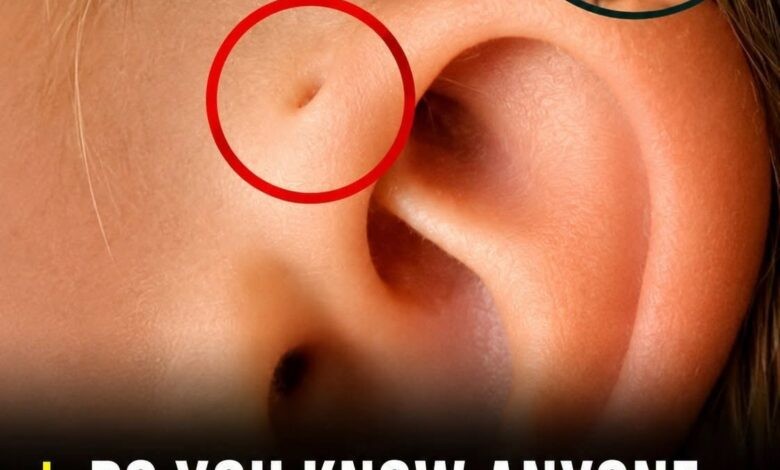
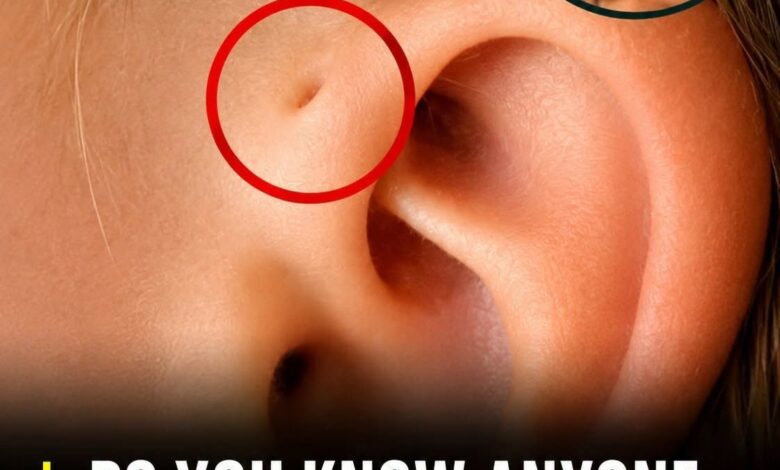
The tiny mark in question is officially known as a preauricular pit, a small, shallow opening or dimple situated right in front of the external ear. It is typically present from birth and persists throughout a person’s life. Medical literature categorizes preauricular pits as a kind of congenital anatomical variation, meaning they occur during fetal development and are not generally the result of later injury or disease.
Origins and Embryological Development
The formation of a preauricular pit happens very early—often between the fifth and seventh week of gestation. As the embryo develops, several tissue folds merge to create the external ear (also called the auricle). If this merging process is incomplete, a narrow channel or dimple may remain just in front of the ear’s base.
This developmental quirk is classified as a minor malformation. It does not usually affect ear function, hearing, or overall health. Most preauricular pits are harmless, but their embryological roots make them an interesting indicator of how complex human development can be.
How Common Are Preauricular Pits?
Contrary to popular belief, preauricular pits are not particularly rare. Estimates suggest that up to 0.1%–0.9% of the population in Western countries possess this congenital mark. Some studies report even higher rates in certain regions of Asia and Africa, with prevalence nearly reaching 4%–10% in some populations (notably among people of African descent).
Preauricular pits are typically unilateral—meaning they appear on just one ear—but bilateral occurrences are also well-documented. In some families, multiple members may share this feature, suggesting a heritable component.
Genetics and Family History
Scientific research has shown that preauricular pits can be inherited in an autosomal dominant manner, meaning that just one parent with the trait may pass it to their child. However, spontaneous presentations do occur: some individuals have no known family history, and genetic mutations are thought to play a role.
The presence of a preauricular pit does not usually correlate with other serious medical conditions. Occasionally, the mark might be associated with certain syndromes, such as branchio-oto-renal syndrome, where it accompanies other anomalies, but such cases are rare.
Medical Significance and Health Concerns
For the vast majority, preauricular pits are harmless and require no medical intervention. Nevertheless, health professionals urge parents and individuals to monitor these pits for signs of infection or inflammation.
Issues may arise if bacteria enter the narrow channel below the skin, causing recurring infections or abscesses. Symptoms can include redness, swelling, pain, and drainage. In these cases, a healthcare provider may recommend antibiotics or, in rare situations, surgical removal. According to expert guidelines from the Mayo Clinic and CDC, surgery is generally reserved for recurrent or severe infections, rather than cosmetic reasons.
Clinical Evaluation and Diagnosis
Doctors typically identify preauricular pits through simple visual inspection, sometimes using imaging technology if deeper tissues are suspected to be affected. Pediatricians often check for these marks during newborn assessments.
If associated symptoms arise, such as repeated swelling or drainage, a specialist may be consulted to rule out possible complications and to discuss appropriate management strategies. In rare cases, further screening may be performed for related syndromes, especially if other anomalies are found.
Cultural Perceptions and Societal Attitudes
Across the world, preauricular pits have inspired a variety of beliefs and interpretations. In some regions and cultures, the mark is considered lucky or is thought to signify unique personality traits, while in others, it’s simply viewed as a minor curiosity.
Despite occasional stigma, most societies now regard preauricular pits as a benign anatomical variant. Medical professionals emphasize that these features do not reflect health status, intelligence, or social worth.
Expert Views and International Research
Leading experts in otolaryngology and pediatric medicine highlight the importance of awareness and education about preauricular pits. A publication from the World Health Organization underscores that congenital anomalies—such as preauricular pits—are vastly diverse and require careful distinction between harmless variations and those needing medical attention.
Internationally, studies report similar findings. For example, a systematic review in the journal Pediatric Otorhinolaryngology found that preauricular pits are generally asymptomatic, with a low risk of complications. Worldwide, health authorities recommend simple monitoring and prompt treatment if infections, though rare, occur.
Care and Guidance for Patients and Families
For those who discover a preauricular pit on themselves or their child, the best course is to communicate openly with a healthcare provider. In most cases, no ongoing treatment is necessary. Maintaining good hygiene and watching for signs of irritation is prudent.
Education and reassurance are often sufficient. Expert guidelines suggest avoiding unnecessary interventions unless persistent problems develop.
Potential Complications
The most common complication is infection. This may develop when bacteria become trapped in the pit or its underlying tract. Children may be slightly more susceptible due to frequent touching or lack of awareness, but the risk remains low overall.
Recurring infections can lead to scarring, and in rare cases, may require surgical intervention. Families are encouraged to note any recurring redness, swelling, or drainage, and to seek professional advice promptly.
Public Awareness and Education
As awareness of preauricular pits increases, more people understand that these marks are normal variations rather than signs of illness or abnormality. Public health campaigns and pediatric outreach help spread accurate information, preventing unnecessary worry or stigma.
Organizations such as the Centers for Disease Control and Prevention and World Health Organization provide educational materials to help families and individuals recognize and understand benign congenital markers like preauricular pits.
Conclusion
The tiny mark near the ear, known as a preauricular pit, is a fascinating example of minor variation in human development. Both scientifically and socially, it is recognized as a harmless feature requiring little to no attention unless complications arise. With supportive care and informed guidance, individuals and families can confidently manage this aspect of their anatomy, free from undue concern.
Disclaimer: This content is intended for entertainment purposes only and is not based on real events.