

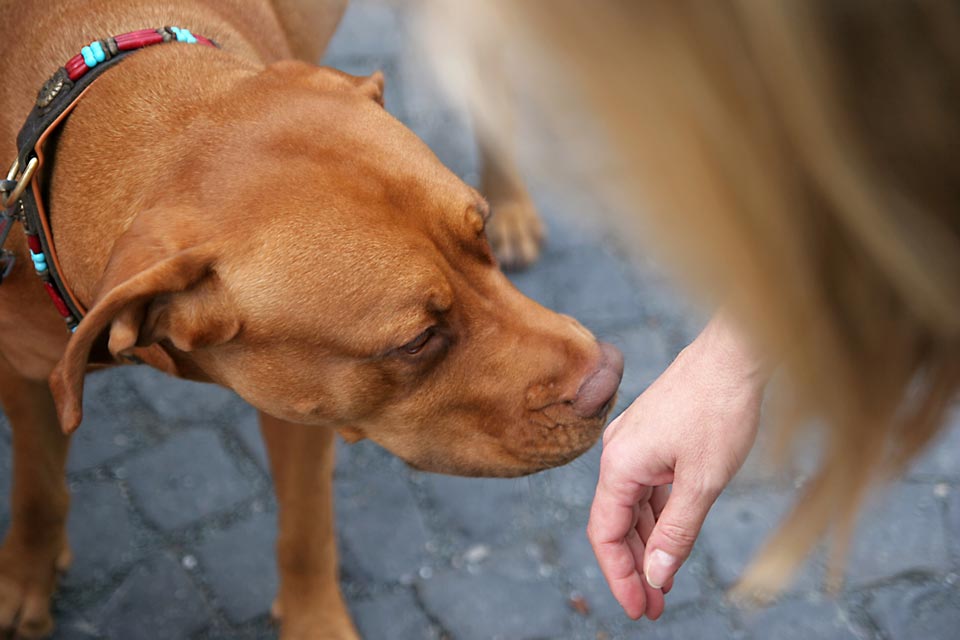
If you’ve ever met a friendly dog, you’ve probably experienced an enthusiastic sniff before receiving a wagging tail or playful greeting. While this behavior may feel awkward to people, it is one of the most natural ways dogs learn about the world around them.
Recently, social media posts have claimed that when a dog becomes especially interested in sniffing someone, it could reveal hidden information about that person’s health or body. These viral stories have sparked curiosity among pet owners, but what does science actually say?
Animal behavior experts explain that a dog’s powerful sense of smell allows it to gather an extraordinary amount of information. However, most intense sniffing is a normal part of canine communication rather than evidence of extraordinary abilities.
Understanding why dogs sniff can help owners better appreciate this fascinating behavior while separating well-supported science from online speculation.
Why Dogs Rely on Their Sense of Smell
Dogs experience the world very differently from humans.
While people depend heavily on vision, dogs rely primarily on their noses to understand their surroundings.
Researchers estimate that dogs possess hundreds of millions of scent receptors—far more than humans. In addition, the portion of a dog’s brain dedicated to processing smells is proportionally much larger than ours.
This remarkable ability allows dogs to detect and distinguish an enormous variety of scents that people cannot perceive.
For dogs, sniffing is similar to how humans read news headlines—it provides important information about their environment.
What Dogs Learn When They Sniff Someone
A brief sniff can tell a dog much more than simply who a person is.
Through scent, dogs may gather information about:
-
Individual body odor.
-
Familiarity or previous encounters.
-
Other animals a person has recently been around.
-
Recent outdoor activities.
-
Food scents.
-
Emotional changes that influence natural body odors.
Much of this information comes from naturally occurring scent molecules that people continuously release.
Why Some Dogs Sniff More Than Others
Not every dog greets people in exactly the same way.
Several factors influence sniffing behavior.
Breed
Breeds developed for tracking or scent work often show stronger interest in investigating smells.
Examples include Beagles, Bloodhounds, Basset Hounds, and many sporting breeds.
Personality
Some dogs are naturally curious and investigate nearly everything they encounter.
Others may be more reserved.
Age
Young puppies often explore their surroundings through frequent sniffing as they learn about the world.
Environment
New places, unfamiliar visitors, or unusual scents may encourage longer investigations.
Can Dogs Detect Medical Conditions?
One reason viral stories spread so easily is that there is genuine scientific research showing dogs can sometimes detect certain medical changes under carefully controlled conditions.
Researchers have studied specially trained dogs that can recognize scent changes associated with specific situations, including:
-
Low blood sugar in some people with diabetes.
-
Certain seizure-related changes.
-
Some infectious diseases.
-
Specific types of cancer in research settings.
These remarkable abilities rely on extensive professional training and controlled testing.
Importantly, experts caution that family pets should not be viewed as medical diagnostic tools.
An ordinary household dog sniffing someone enthusiastically does not automatically indicate the presence of any medical condition.
Anyone with health concerns should consult a qualified healthcare professional rather than relying on a pet’s behavior.
Why Dogs Often Sniff Certain Areas
People sometimes wonder why dogs seem especially interested in sniffing hands, legs, or other parts of the body.
Veterinary behavior specialists explain that scent-producing glands and naturally occurring body odors vary across different areas.
Dogs are simply gathering information in the most efficient way available to them.
Although the behavior may feel unusual from a human perspective, it is generally considered normal canine communication.
Reading Your Dog’s Body Language
Sniffing should always be interpreted alongside a dog’s overall body language.
Signs of a relaxed, curious dog may include:
-
Loose body posture.
-
Gentle tail wagging.
-
Soft facial expression.
-
Calm movements.
-
Willingness to disengage naturally.
If a dog appears tense, fearful, or overly excited, owners should provide space and monitor the situation carefully.
Understanding body language helps create safer and more comfortable interactions for both people and pets.
Helping Dogs Meet New People Politely
Positive introductions benefit everyone involved.
Animal behavior experts recommend:
Allow the Dog to Approach
Rather than reaching toward the dog immediately, allow it to investigate at its own pace.
Stay Calm
Relaxed movements help many dogs feel comfortable.
Avoid Forcing Interaction
Not every dog wants immediate physical contact.
Respecting the dog’s comfort level encourages positive experiences.
Reward Calm Behavior
Owners can reinforce polite greetings with praise or appropriate rewards during training.
The Science Behind Canine Smell
Scientists continue discovering new details about dogs’ extraordinary noses.
Research has shown that dogs can detect incredibly small concentrations of certain scent molecules.
This ability has led to valuable partnerships with humans in areas such as:
-
Search and rescue.
-
Conservation.
-
Wildlife monitoring.
-
Detection of agricultural pests.
-
Law enforcement.
-
Medical research.
These specialized working dogs undergo months or even years of structured training before performing professional detection tasks.
Their skills demonstrate the remarkable capabilities of the canine sense of smell while highlighting the importance of scientific training and validation.

Separating Facts From Viral Claims
Social media often simplifies complex scientific topics.
Although dogs possess impressive scent detection abilities, claims suggesting that any unusual sniffing automatically reveals hidden illnesses or secret information are not supported by scientific evidence.
Experts encourage people to appreciate dogs’ remarkable abilities while recognizing their limitations.
Curiosity should always be balanced with reliable scientific information.
Conclusion
When a dog enthusiastically sniffs someone, it is usually doing exactly what nature designed it to do—collecting information through one of the most advanced senses in the animal kingdom. What may seem unusual to people is simply a dog’s normal way of exploring its environment and learning about those around it.
Scientific research confirms that trained dogs can perform extraordinary scent-detection tasks under specific conditions. However, everyday sniffing should not be interpreted as a medical diagnosis or proof of extraordinary abilities.
Human curiosity naturally leads us to wonder what our canine companions know that we do not. By combining scientific research with a better understanding of animal behavior, we can appreciate just how remarkable dogs truly are while avoiding misconceptions that often spread online.
Sources
-
American Kennel Club (AKC). Understanding Your Dog’s Sense of Smell.
-
American Veterinary Medical Association (AVMA). Resources on canine behavior.
-
VCA Animal Hospitals. Why Dogs Sniff People.
-
National Institutes of Health (NIH). Research on canine scent detection.
-
DM News Feed. Experts Explain Why Dogs Sometimes Sniff People So Intensely — and What It Actually Means.