
There are few things more enjoyable than biting into a sweet, ripe strawberry on a warm afternoon. Whether sprinkled over cereal, blended into smoothies, or enjoyed fresh from the carton, strawberries are among the world’s favorite fruits.
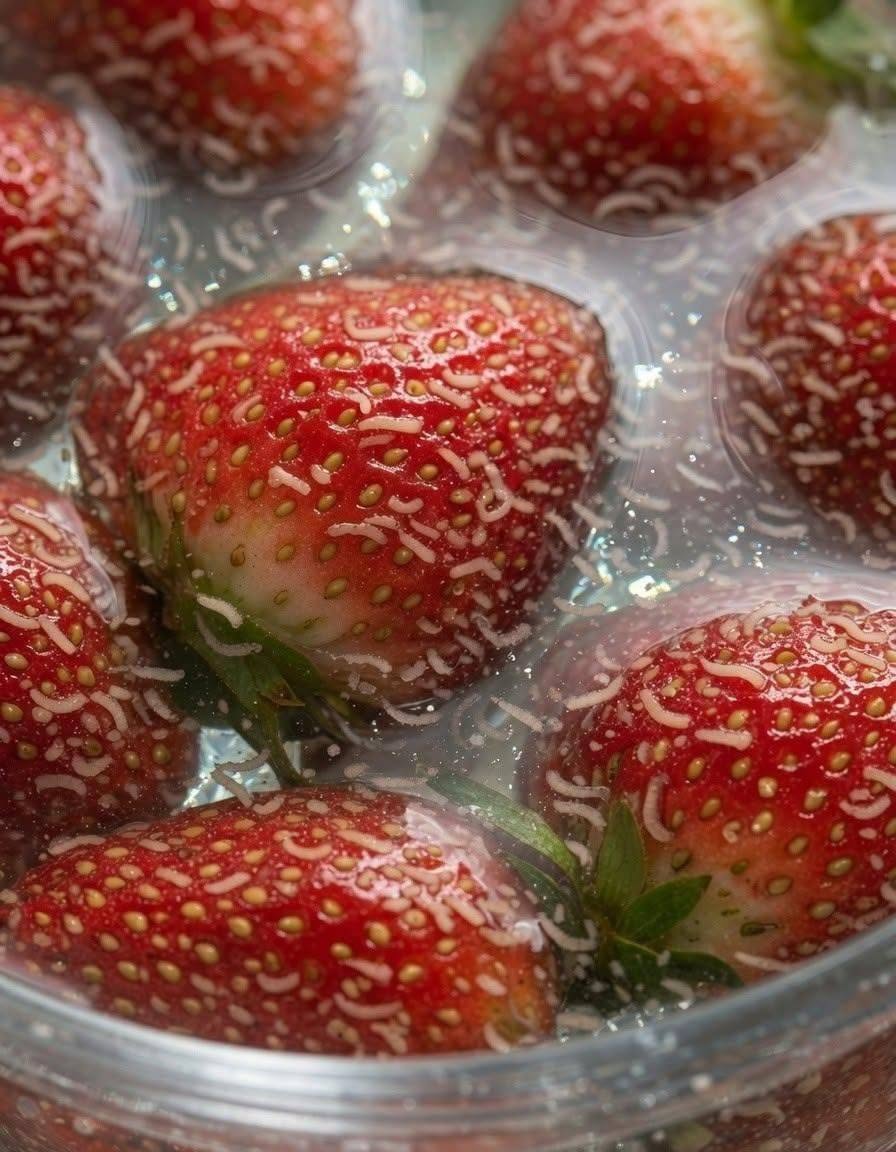
Imagine preparing a bowl of freshly washed berries when you notice tiny white specks moving in the water. It’s an unexpected discovery that has fueled countless viral social media videos and left many people wondering: Are strawberries really hiding tiny creatures? Should you stop eating them?
The answer is more reassuring than many online posts suggest. While small insect larvae can occasionally be found inside strawberries and other soft fruits, this is a natural agricultural issue rather than a reason for widespread concern. Understanding why it happens, how to inspect fruit properly, and the best ways to wash and store strawberries can help you enjoy them with confidence.
In this article, we’ll explore the science behind these tiny white larvae, separate internet myths from verified facts, and share practical food safety tips for keeping your berries fresh.
What Are the Tiny White Creatures Found in Strawberries?
The tiny pale creatures occasionally discovered inside strawberries are usually insect larvae, not parasitic worms.
They typically measure only 1 to 3 millimeters in length and may appear white, cream-colored, or nearly transparent. Because of their tiny size, they often remain unnoticed until the fruit is cut open or soaked in water.
One of the insects most commonly associated with these larvae is the spotted wing drosophila (Drosophila suzukii), a small fruit fly that affects many soft fruits.
Unlike insects that target damaged fruit, this species can lay eggs inside fruit while it is still ripening on the plant.
How Do Larvae Get Inside Strawberries?
The spotted wing drosophila has a unique egg-laying structure called an ovipositor.
This specialized feature allows female flies to gently pierce the skin of healthy, ripening fruit and place eggs just beneath the surface.
After the eggs hatch, the tiny larvae feed on the soft interior of the berry until they continue their natural life cycle.
Warm temperatures and humid weather can encourage faster insect development, making infestations more common during peak growing seasons.
Fruits That May Be Affected
Although strawberries receive the most attention online, the same insect may also affect:
- Strawberries
- Raspberries
- Blackberries
- Blueberries
- Cherries
- Grapes
- Some stone fruits
This is a well-known agricultural challenge for fruit growers around the world.
What Does the Spotted Wing Drosophila Look Like?
Adult spotted wing drosophila flies are very small, making them difficult to notice.
Some identifying characteristics include:
- Light brown body
- Bright red eyes
- Transparent wings
- Males usually have a dark spot near the tip of each wing
Because these flies are only a few millimeters long, shoppers rarely notice them while purchasing fruit.
Why Does Salt Water Make Larvae Appear?
One reason videos about strawberries have become so popular is the use of salt-water soaking.
When strawberries are placed into a mixture of cool water and salt, some hidden insects or larvae may move out of small openings in the fruit.
A commonly shared mixture uses approximately:
- 1 tablespoon of salt
- 1 cup of cool water
The salt changes the surrounding environment, which may encourage small organisms hiding in damaged areas to emerge.
However, it is important to understand that this method is not an official food safety test.
A salt-water soak cannot confirm whether fruit is completely free from:
- Insect eggs
- Microorganisms
- Pesticide residues
- Dirt
- Every hidden insect
It is simply one cleaning method that may reveal insects already present.
Are the Larvae Harmful?
For healthy individuals, accidentally swallowing a tiny fruit-fly larva is generally not expected to cause illness.
These larvae are not known to survive or reproduce inside the human body.
The greater concern is usually the condition of the fruit itself.
When insects damage berries, small openings may allow microorganisms such as yeasts or molds to develop more quickly, especially if the fruit becomes overly soft or is stored improperly.
For this reason, food quality matters more than whether a single larva is present.
When Should Strawberries Be Thrown Away?
Fresh strawberries naturally spoil within several days.
Discard berries if you notice:
- Visible mold
- Sour or fermented odor
- Slimy texture
- Leaking juice
- Large soft spots
- Extensive bruising
- Widespread insect damage
If only one berry appears spoiled, remove it promptly since mold can spread quickly to neighboring fruit.
Common Myths About Strawberry Larvae
Myth 1: Every Strawberry Contains Larvae
This is false.
Most strawberries sold in grocery stores do not contain visible larvae. Modern farming practices, monitoring, and quality control help reduce insect damage significantly.
Myth 2: Salt Water Removes Everything Harmful
Not entirely.
Salt water may encourage some insects to emerge, but it does not disinfect fruit or remove every possible contaminant.
Thorough rinsing under clean running water remains one of the best methods recommended for fresh produce.
Myth 3: Organic Strawberries Always Have More Larvae
There is no simple rule.
Both conventional and organic farms use different pest management strategies, and insect presence depends on many environmental factors including weather, season, and local growing conditions.
The Science Behind Fruit Flies
Fruit flies have evolved alongside flowering plants for millions of years.
Scientists study insects like Drosophila suzukii because they can significantly affect fruit production worldwide.
Researchers monitor these insects using:
- Traps
- Crop inspections
- Seasonal forecasting
- Integrated pest management programs
Farmers often combine multiple techniques to reduce crop damage while protecting beneficial insects and minimizing unnecessary pesticide use.
How Farmers Protect Strawberries
Growing strawberries requires careful monitoring throughout the season.
Common agricultural practices include:
- Regular field inspections
- Protective netting
- Monitoring insect populations
- Harvesting fruit promptly
- Removing damaged fruit
- Integrated pest management (IPM)
These methods help maintain fruit quality while reducing insect pressure in environmentally responsible ways.
Best Ways to Wash Strawberries
Food safety experts recommend a simple cleaning routine.
- Wash strawberries just before eating.
- Rinse thoroughly under cool running water.
- Gently rub the surface with clean hands.
- Dry with a clean paper towel or cloth.
- Remove the green tops after washing if preferred.
Avoid washing berries long before storage, as excess moisture can speed spoilage.
How to Store Strawberries Properly
Good storage helps strawberries stay fresh longer.
Store them:
- In the refrigerator
- In a breathable container
- Without washing first
- Away from overly moist environments
Check the container daily and remove any berries showing signs of spoilage.
Why Viral Videos Can Be Misleading
Social media videos often focus on unusual or surprising discoveries because they attract attention.
A bowl containing moving larvae may appear alarming without explaining the biological reasons behind what viewers are seeing.
In reality, agricultural scientists have long understood the relationship between insects and soft fruits.
Occasional insect activity is part of nature and does not necessarily indicate poor farming or unsafe food.
Looking beyond dramatic clips and consulting trusted food safety sources provides a clearer understanding of the situation.
Appreciating Nature’s Complexity
Fresh fruits grow outdoors, where they naturally interact with insects, birds, weather, and countless other organisms.
While modern agriculture works hard to reduce crop damage, completely eliminating every insect from outdoor farming is neither practical nor environmentally desirable.
Instead, growers focus on producing high-quality fruit while balancing sustainability, food safety, and ecosystem health.
Understanding these natural processes helps consumers make informed decisions rather than reacting to alarming online claims.
Conclusion
Discovering tiny white larvae inside a strawberry can certainly be surprising, but it is usually a reflection of natural insect activity rather than a widespread food safety concern. The spotted wing drosophila is a well-known agricultural pest that occasionally affects strawberries and other soft fruits by laying eggs beneath the fruit’s skin.
Scientific evidence indicates that accidentally consuming one of these tiny larvae is generally not expected to harm a healthy person. More importantly, consumers should inspect fruit for signs of spoilage such as mold, unusual odors, excessive softness, or leaking juice before eating.
Curiosity often begins with unexpected discoveries, and the internet has made these moments easier than ever to share. By combining curiosity with reliable scientific information, we can better appreciate both the remarkable complexity of nature and the careful work that brings fresh fruit from farms to our tables.
Sources
- United States Department of Agriculture (USDA) – Fresh Produce Safety
- U.S. Food and Drug Administration (FDA) – Safe Handling of Fresh Fruits and Vegetables
- University of California Agriculture and Natural Resources – Drosophila suzukii (Spotted Wing Drosophila)
- Cornell University Integrated Pest Management Program
- Oregon State University Extension Service – Spotted Wing Drosophila Resources
- North Carolina State University Extension – Managing Spotted Wing Drosophila
- Centre for Agriculture and Bioscience International (CABI) – Drosophila suzukii Datasheet