


For some women, the possibility of carrying a pregnancy can seem out of reach from the very beginning of adulthood. Medical conditions affecting reproductive development can change expectations about having children, sometimes long before a woman has even begun thinking seriously about motherhood.
Lauren Fowler’s story is one remarkable example of how advances in reproductive medicine are creating new possibilities.
Born with Mayer-Rokitansky-Küster-Hauser (MRKH) syndrome, Lauren was born without a uterus but had functioning ovaries. Years later, after learning about womb transplantation, she underwent a procedure using a donated uterus from her sister.
Today, that journey has led to a pregnancy.
A Diagnosis That Changed Her Plans
Lauren, from Kent, was diagnosed with MRKH syndrome at the age of 15 after seeking medical advice because she had not started menstruating.
MRKH is a rare congenital condition in which the uterus and upper part of the vagina do not develop normally. The ovaries are typically present and can function, meaning some women with the condition may still have the possibility of having a genetically related child through assisted reproductive technology if a uterus becomes available.
For Lauren, however, the diagnosis was emotionally difficult.
She had imagined becoming a mother one day and had even considered a career as a midwife. After learning that she did not have a uterus, she changed those plans because she found the prospect of helping deliver other people’s babies emotionally difficult.
At the time, womb transplantation was still a relatively new area of medicine.
Discovering the Possibility of Womb Transplantation
Lauren learned about womb transplantation around 2010.
The procedure involves transplanting a uterus from a donor into a recipient who does not have a functioning uterus. Unlike many other types of transplantation, the goal is generally temporary: the transplanted uterus is intended to support pregnancy and may later be removed.
For Lauren, the procedure offered something she had not previously considered possible.
Her sister Kelly initially offered to help by becoming a surrogate. But Lauren wanted the opportunity to experience pregnancy herself.
Then Kelly made another offer.
She volunteered to donate her uterus.
For the sisters, the decision represented an extraordinary act of support and a major medical undertaking.
An 11-Hour Operation
In May 2025, Lauren and Kelly underwent surgery in Oxford.
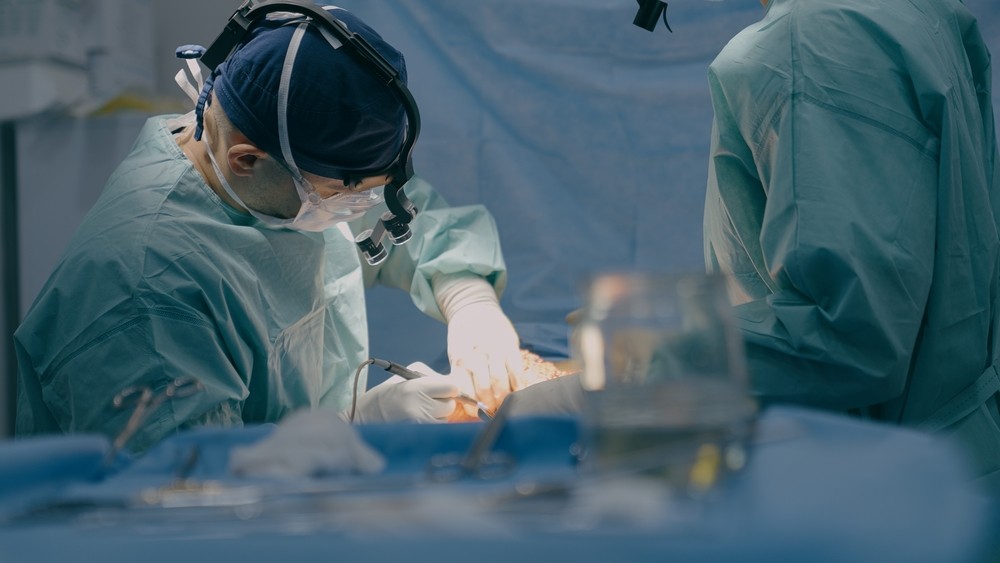
Kelly donated her uterus, which surgeons then transplanted into Lauren during an operation lasting approximately 11 hours.
The transplant itself was successful, but recovery proved challenging.
Lauren experienced very heavy periods after receiving the transplanted uterus, something she had never experienced before. She later developed a serious bowel obstruction related to scar tissue and required additional surgery.
According to the report, she spent more than two months in hospital and lost approximately 10 kilograms during the ordeal.
At one stage, her condition became so serious that she was uncertain whether she would survive.
Despite those complications, the transplanted uterus remained healthy and was not rejected.
The Journey Toward Pregnancy
After recovering from the complications, Lauren and her partner David began working toward pregnancy.
Because Lauren still had functioning ovaries, doctors were able to use assisted reproductive technology rather than relying on natural conception.
The process involved embryo transfer.
Their first attempt unfortunately ended in a miscarriage at five weeks.
For Lauren, it was another difficult moment after years of medical challenges.
But she decided to continue trying.
A second embryo transfer was successful.
A Pregnancy Made Possible by Transplantation
According to the source report, Lauren is now 26 weeks pregnant with a baby boy, with her due date in October.
Her pregnancy requires close medical monitoring because pregnancies following womb transplantation are considered high risk.
Regular scans and specialist care are therefore an important part of the process.
She is also expected to deliver by caesarean section at approximately 32 weeks, according to the report.
For someone who spent much of her life believing pregnancy was impossible, reaching this stage represents an extraordinary personal milestone.
Lauren has described still finding it difficult to believe that the pregnancy is happening.
After such a long medical journey, that feeling is understandable.
A Sister’s Extraordinary Gift
The story is also about the relationship between two sisters.
Kelly had already experienced motherhood herself, raising three children. Her decision to donate her uterus gave Lauren an opportunity that previously seemed unavailable to her.
The donation also means that Kelly’s children are now waiting to meet their cousin.
For the sisters, the transplant was much more than a medical procedure. It became a deeply personal journey involving family, hope, uncertainty, and significant physical challenges.
What Is MRKH Syndrome?
Mayer-Rokitansky-Küster-Hauser syndrome is a congenital condition affecting the development of the female reproductive system.
Estimates suggest it affects approximately 1 in 5,000 females, although exact prevalence figures can vary between sources.
People with MRKH typically have normally functioning ovaries but an absent or underdeveloped uterus and upper vaginal canal.
Because the ovaries can produce eggs, some women with MRKH may have the possibility of having a genetically related child through assisted reproductive treatment and a gestational carrier.
Womb transplantation introduces another possibility: allowing some recipients to carry a pregnancy themselves.
How Does a Womb Transplant Work?
Womb transplantation is considerably more complex than many common transplant procedures.
The donated uterus must be surgically connected to the recipient’s blood vessels and reproductive anatomy. After transplantation, the recipient needs medication to reduce the risk of organ rejection.
If pregnancy is pursued, embryos created through in-vitro fertilization can be transferred into the transplanted uterus.
Because of the risks associated with the procedure and pregnancy, recipients require specialized medical monitoring.
The transplanted uterus may eventually be removed so that long-term immunosuppressive medication is not necessary once childbearing is complete.
A Developing Area of Medicine
Womb transplantation remains a relatively new medical field.
Researchers and medical teams continue studying how to make the procedure safer, more reliable, and potentially more accessible.
The UK womb-transplant program is part of this broader effort to understand whether transplantation can offer another reproductive option for women who cannot carry pregnancies because they were born without a uterus or lost uterine function because of illness or surgery.
However, it is important to recognize that womb transplantation is not a routine fertility treatment.
It involves major surgery, potential complications, immunosuppressive medication, assisted reproductive treatment, and carefully managed pregnancies.
More Than One Medical Milestone
Lauren’s story highlights several developments in modern medicine at once.
It demonstrates the possibilities created by transplantation, advances in fertility treatment, and improvements in reproductive surgery.
But it also highlights the importance of recognizing the limits of medicine.
A successful transplant does not guarantee a successful pregnancy. Complications can occur, and each patient’s circumstances are different.
For that reason, womb transplantation should be viewed as an emerging medical option rather than a guaranteed solution.
Hope for Other Women
Perhaps the most meaningful part of Lauren’s experience is what it could represent for other women.
For someone born without a uterus, the possibility of carrying a pregnancy may once have been considered completely unrealistic.
Womb transplantation is changing that conversation.
Research is still developing, and access remains limited, but every carefully documented case can contribute to a better understanding of the procedure.
Lauren’s experience may therefore become part of a much larger medical story.
Final Thoughts
Lauren Fowler’s journey began with a diagnosis that dramatically changed the future she had imagined.
Years later, a donated uterus from her sister, an extraordinary surgical procedure, fertility treatment, and continued medical care have brought her to a moment she once believed might never happen.
Her story is not proof that womb transplantation is simple or risk-free. In fact, her difficult recovery demonstrates just how demanding the procedure can be.
But it is also a reminder of how quickly medical possibilities can evolve.
For Lauren and her family, the focus now is much simpler: continuing to care for her pregnancy and preparing to welcome a baby boy.
For other women facing similar reproductive challenges, her experience may offer something equally important—a reason to keep watching what medicine makes possible.