

Beach Family’s Photo Sparks Shark Sighting Debate in Melbourne
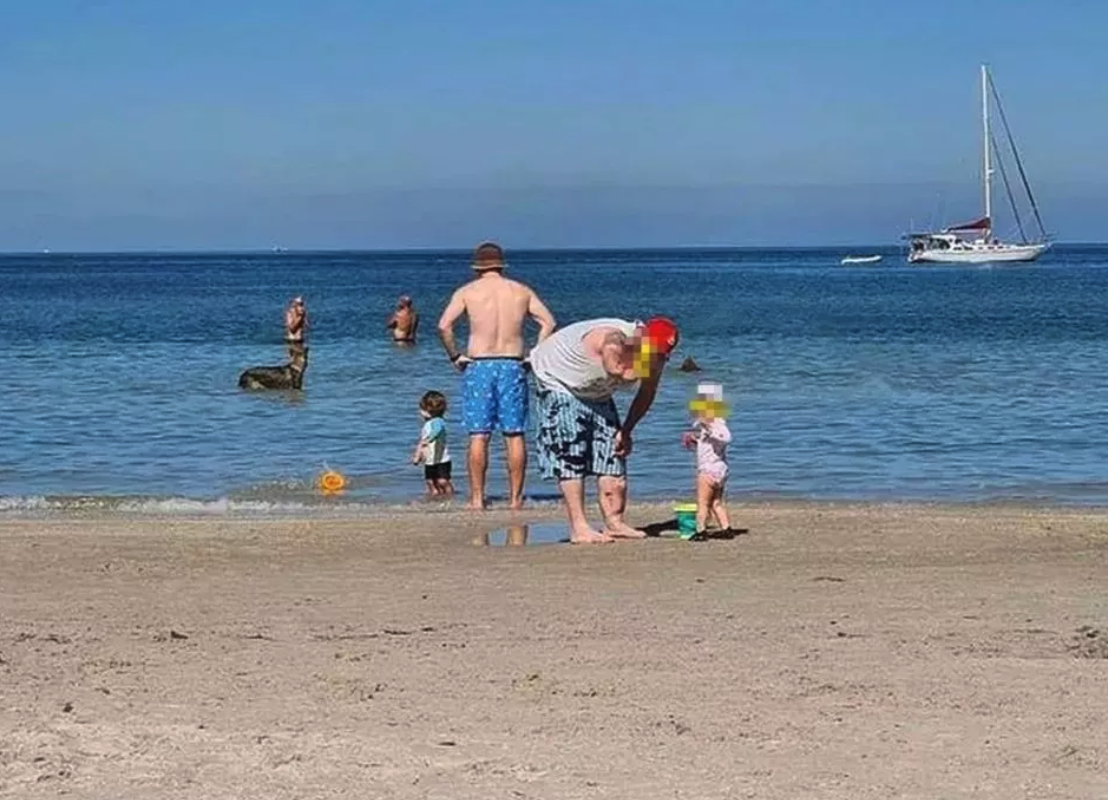
A family’s joyful outing at Carrum Beach, a picturesque spot in Melbourne, Australia, unexpectedly turned into an experience that captured both local and international attention. What began as a memorable day playing in the sand and sea transitioned into an online sensation after a photograph taken by the family appeared to reveal a mysterious shape lurking behind them in the water. This single image, captured in 2023, sparked widespread debate and rekindled discussions about marine life safety at Australia’s beaches.
A Memorable Family Outing Turns Eerie
On a sunny morning, a father and his young daughter were enjoying their visit to Carrum Beach, a location favored by Melbourne locals for its gentle surf and family-friendly atmosphere. Unaware of any danger, they smiled and waved at the camera, their day seemingly perfect. However, the full story only emerged later, after the family reviewed their photos at home and spotted something unusual rising from the shallows just a few feet behind them.
The image, which quickly found its way onto social media platforms, showed a shape that many interpreted as a marine animal. The immediate question on everyone’s mind: Was this a shark lurking dangerously close, or simply an illusion caused by the water and waves?
The Viral Spread and Initial Public Reaction
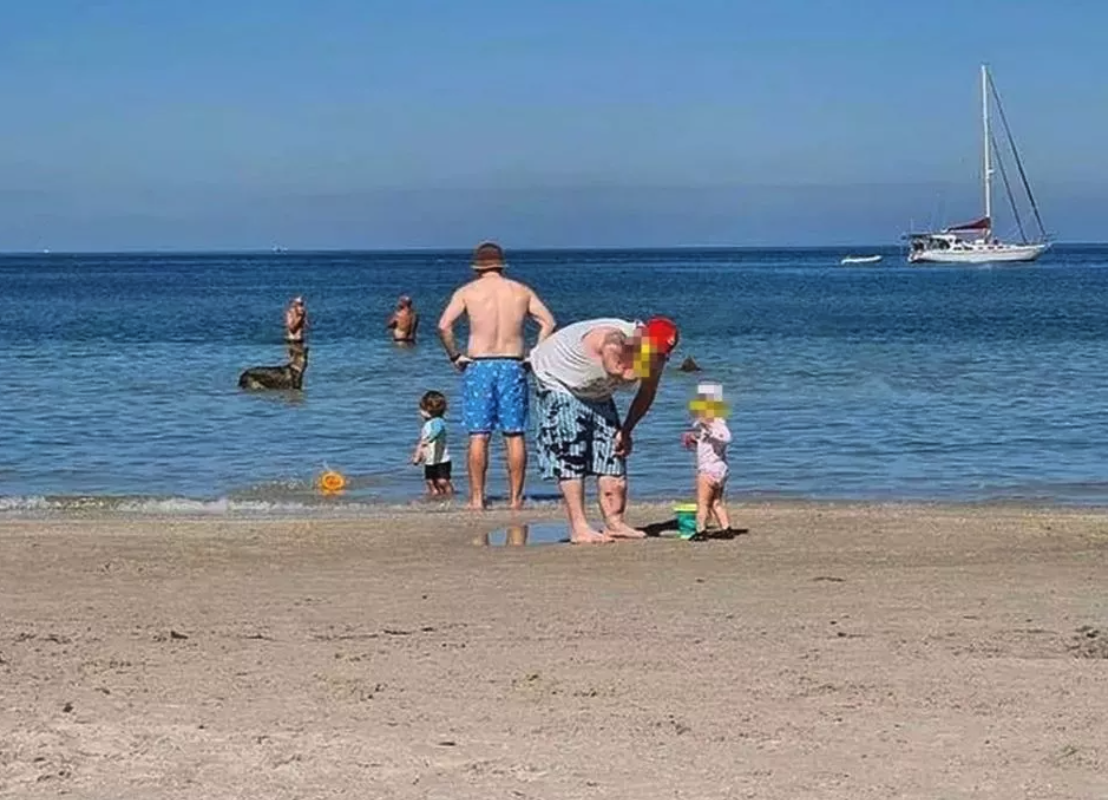
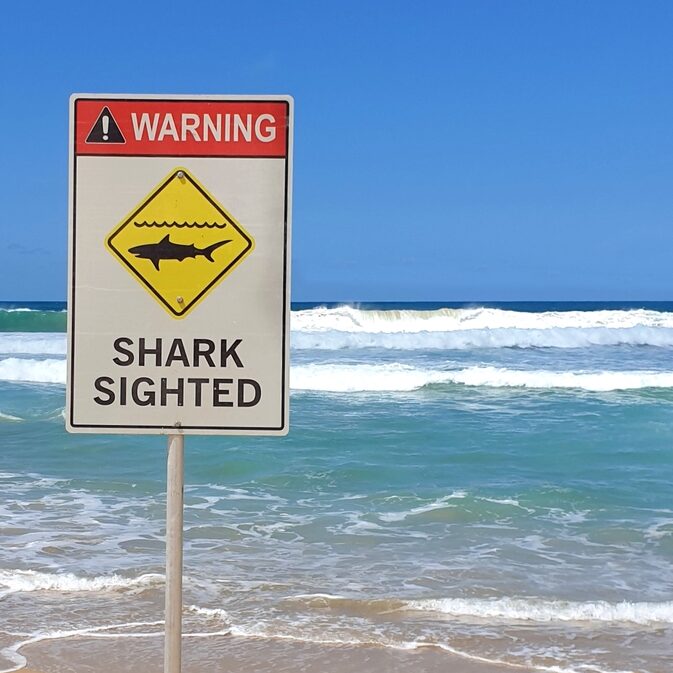
It did not take long for the photograph to spread across the internet. In a matter of days, the story was debated on popular forums, Facebook groups, and local news outlets. The incident received even more attention due to its timing; on that same day, SES Chelsea, the local State Emergency Service unit, had issued a public advisory about a confirmed shark sighting somewhere between Bonbeach and Chelsea—the very stretch of beach near where the photo was taken.
SES Chelsea shared the family’s story in a Facebook post, recounting how the family, after seeing their public warning, realized their photograph may have captured the animal in question. The page’s moderators stated, “We posted about a shark sighting, just off the beach, between Bonbeach and Chelsea. Well later, we received a message from a family, who follow our page, who were at Carrum Beach earlier in the morning. It was their little one’s first visit to the beach, and the gentleman’s partner grabbed a couple of snaps to record the day. Later, when they got home and looked at the pictures, they noticed something in the shallow water, just behind them. Was this our shark?”
This post rapidly gained traction, generating hundreds of reactions and comments. Some viewers insisted the object was definitely a shark, pointing to its dark outline and possible fin. Others remained skeptical, suggesting it could be a marine ray or simply a trick of the light and waves.
Among the online commentators, a variety of amateur analyses surfaced. A user noted, “Couldn’t be a very big one, given the size of the dog and the depth of the water.” Another countered, “Looks a bit shallow for a shark that would have a fin that size, judging by where the dog and guy to the left are standing. Wouldn’t the other guy behind them have noticed?” Yet another added, “It’s highly unlikely that a shark cruising in the shallows would not be seen and those in the photo not aware.” The debate underscored the strong emotional responses that potential shark sightings provoke, particularly in Australia where such news stirs memories of rare but headline-making attacks.
Expert Analysis and Alternative Explanations
Seeking clarity, several media outlets consulted both marine authorities and shark experts to determine if the object in the photograph was indeed a shark. The Victoria Fisheries Authority (VFA) confirmed that neither their office nor Life Saving Victoria could definitively identify the shape seen in the photo. The evidence was, at best, inconclusive.
- Water Depth and Shark Behavior: Experts noted that the shallow water depth around the photographed figures would be unusual for a large shark. Generally, most shark species spotted near Australian beaches prefer deeper waters beyond the immediate shore.
- Shape Analysis: Professor Charlie Huveneers, Research Leader of the Southern Shark Ecology Group, offered a detailed assessment: “The quality of the photo makes it hard to be certain, but judging by the shape, it doesn’t look like a shark’s dorsal fin. It’s more likely the wing of a Southern Eagle Ray, which are commonly seen in shallow waters and along beaches.”
Professor Huveneers’ insight points to a common confusion between marine rays and sharks. Southern Eagle Rays, scientifically known as Myliobatis australis, are frequently mistaken for sharks at a distance, especially when their large pectoral fins break the surface of the water. These rays are native to the coastal waters of southern Australia and are characterized by their broad, wing-like bodies. While not harmless, they are not aggressive unless provoked—offering a more reassuring explanation than a shark sighting.
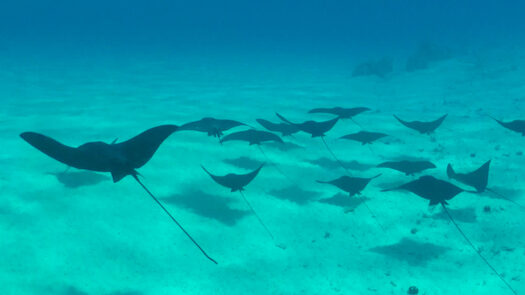
The Southern Eagle Ray is currently classified as “near threatened” due to pressure from habitat loss and fishing. They are occasionally observed in the shallow waters off both Australia and New Zealand, well adapted to sandy coastal environments. Encounters like these are a reminder of the rich marine biodiversity that surrounds Australia’s shores—yet they still often lead to moments of alarm for unsuspecting swimmers and families.
Context: Shark Sightings and Public Safety at Australian Beaches
Australia, with its extensive coastline and vibrant beachgoing culture, has a longstanding relationship with its local marine life. Shark sightings, while rare in heavily frequented swimming areas, do occur and are subject to close monitoring by authorities. At the time of the Carrum Beach incident, SES Chelsea had already issued public safety warnings and provided beachgoers with up-to-date information about risks in the water. Their swift communication ensured no one was hurt and reinforced the importance of heeding official advisories.
This particular episode unfolded just days after another high-profile incident further south in Adelaide, where fishermen captured video footage of a substantial great white shark—estimated at more than 4 meters (about 13 feet) long—circling their vessel near Aldinga Beach. Such events serve as timely reminders for heightened awareness but should be understood in context: unprovoked shark attacks in Australia remain exceedingly rare and authorities employ robust measures to minimize risk, including aerial patrols, netting programs, and monitoring shark movements using tracking technology.
Public Debate: Social Media, Curiosity, and Responsible Reporting
The viral spread of the Carrum Beach photo and the fierce debate it triggered online reflect a growing interface between public curiosity, social media dynamics, and science communication. While marine biologists and lifeguards urge calm and context, digital platforms often amplify fear or speculation. The scientific process for verifying animal sightings off beaches is rigorous; it involves reviewing evidence, consulting experts, and sometimes deploying drones or patrol boats to confirm reports in real time.
Experts and authorities alike remind the public that “shark panics” are often based on misidentification or optical illusions. Water, sunlight, waves, and underwater geography can combine to create deceptive images that our minds interpret as familiar—and sometimes frightening—shapes. This phenomenon is not unique to Australia and is a subject of ongoing research in fields as diverse as marine biology and visual perception.
Marine Life Conservation: Raising Awareness Without Spreading Fear
Beneath the excitement and speculation, stories like the Carrum Beach photo highlight the need for ongoing education about marine life. Australian authorities encourage respectful coexistence with ocean creatures—from whales to rays to the handful of shark species that occasionally stray near popular beaches. Real-life incidents, even those later explained as harmless, offer opportunities to teach the public about both marine biodiversity and ocean safety.
Educational outreach includes:
- Providing updated information on local marine species and how to distinguish them
- Reinforcing beach safety tips and how to respond to wildlife appearances
- Promoting conservation efforts for threatened species like the Southern Eagle Ray
By focusing on facts rather than fear, both officials and marine experts strive to ensure the Australian and international public can enjoy coastal environments safely and responsibly.
International and Societal Perspective: Marine Sightings Around the World
The Carrum Beach story is part of a broader global phenomenon. Reports of mysterious shapes or possible shark encounters routinely make headlines from South Africa to California. While some incidents do end tragically, the vast majority are resolved as false alarms or sightings of harmless marine animals. Around the world, lifeguard agencies, conservation groups, and researchers share a commitment to public education, transparency, and responsible reporting.
Australia’s approach—combining vigilant monitoring, honest communication, and public outreach—provides a model for other coastal nations managing similar challenges.
Conclusion: Balancing Caution and Curiosity on Australia’s Beaches
What began as a simple family photo at Melbourne’s Carrum Beach evolved into a significant public debate and case study in marine science communication. While the true identity of the creature in the photograph remains unconfirmed, the consensus among experts leans toward the explanation of a Southern Eagle Ray rather than a shark. The incident is a testament both to the enduring human fascination with the unknown and to the importance of rigorous expert analysis before drawing conclusions about wildlife sightings.
As beachgoers continue to share their experiences online, authorities and scientists will remain essential in providing context and reassurance, ensuring that curiosity and caution go hand in hand by the sea.
Sources
- BBC News
- Reuters
- The Guardian Australia
- News.com.au
- ABC News Australia
- Victoria Fisheries Authority
- SES Chelsea Facebook
Disclaimer: This content is intended for entertainment purposes only and is not based on real events.