

On Prom Night, My Mother Locked My Bedroom Door
On prom night, my mother locked my bedroom door.
Downstairs, Noah was waiting in the living room in a navy suit, surrounded by the gentle chaos of relatives, photographs, last-minute reminders, and the kind of excitement that makes an ordinary house feel suddenly unfamiliar. He was laughing with my aunt, smiling broadly whenever someone told him how good he looked, and checking the time as though the dance might begin without us if he did not keep watch.
I was upstairs, half-ready and confused. My dress was on. My shoes were in my hands. I had assumed my mother was delaying me because she wanted one more photo or because she had noticed something wrong with my hair. Instead, she stood between me and the bedroom door with a look I had rarely seen on her face: serious, tender, and a little afraid of saying the wrong thing.
She told me I could still go to prom with Noah. Of course I could. But before I went downstairs, she said, there was something I needed to understand about him, about our friendship, and about the years when she had been trying to hold our family together after my parents divorced.
A Friendship That Began in First Grade
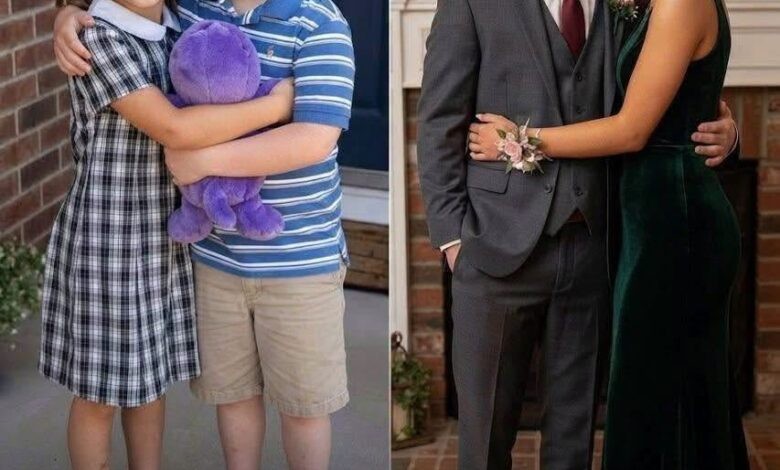
Noah and I had been best friends since we were six years old. We met in first grade over a shared dislike of raisins. It was not a dramatic beginning. Neither of us was trying to make a lifelong friend that day. We were simply two children complaining about snack time with the certainty that only children have.
From then on, we became inseparable in the way childhood friends often do. We traded stickers, argued about dinosaurs, made up games during recess, and spent weekends at each other’s houses. Noah loved facts about prehistoric animals and could name species I could barely pronounce. He also loved trivia, although he occasionally treated the rules as flexible when he thought a better answer was available.
Noah has Down syndrome, but that was never the whole story of who he was to me. He was my friend: the person who could make me laugh when I was in a bad mood, the person who remembered small details about things I cared about, and the person who would patiently wait beside me when I did not know what to say.
Down syndrome is a genetic condition associated with an extra copy of chromosome 21. People with Down syndrome have a wide range of personalities, strengths, health needs, communication styles, and levels of independence. No diagnosis can fully explain an individual person. Noah was never a lesson in inspiration or a symbol of anyone else’s goodness. He was Noah: funny, loyal, occasionally stubborn, and completely himself.
As we grew older, our friendship changed without disappearing. We did not spend every day together in high school, and our lives were not identical. We had different classes, different interests, and different worries. Still, we kept choosing each other. We showed up for birthdays, school events, hard days, and the quiet afternoons that rarely appear important until years later.
What It Means to Stay During Difficult Times
My parents’ divorce was one of those difficult times. I was young enough to feel the change deeply but not old enough to explain it well. Everything seemed unsettled. I felt embarrassed by my sadness, impatient with questions, and unsure of where to put all the anger and uncertainty that had entered my life.
Noah did not try to solve it. He did not give advice he had not been asked for, and he did not demand that I explain feelings I could not yet name. Instead, he stayed near me. Sometimes that meant sitting beside me after school. Sometimes it meant inviting me into a game when I clearly did not feel like talking. Sometimes it meant acting as if nothing needed to be fixed before we could still be friends.
At the time, I thought of those moments as ordinary. That is often how steady support feels when someone offers it without making a performance of it. I did not understand how much those small acts of presence mattered to me until my mother told me what she had learned during those years.
She said Noah had noticed that I was hurting. He had told her that he did not know how to fix people, but he knew how to stay. The sentence was simple, but it changed the way I remembered that period of my life. I thought about every afternoon when he had waited with me, every time he had redirected a conversation when I looked overwhelmed, and every time he had made room for me without asking me to become cheerful first.
My mother admitted that, in the midst of her own worry, she had once asked Noah to look after me. She had seen him as a source of comfort and believed he could help me feel less alone. But over time, she came to recognize something more important. Noah was not responsible for my wellbeing. Our friendship was not a job he had been assigned.
We were both there for each other. I listened to him when he was frustrated. I helped him prepare for school presentations when he wanted to rehearse. I knew when he wanted company and when he wanted to do something independently. We had built a friendship based on shared trust, not one person rescuing the other.
Why Mutual Friendship Matters
That distinction mattered. People with disabilities are too often described only in terms of what they need from others or, in a different but equally limiting way, as people whose role is to inspire everyone around them. Neither view allows for the complexity that belongs in a real friendship.
Friendship is not charity. It is not an obligation, and it is not a one-sided promise of care. Healthy friendships can include support, patience, disagreement, humor, independence, and changing needs over time. They work best when both people are recognized as complete individuals with agency, boundaries, and something meaningful to contribute.
My mother’s realization was not a rejection of Noah’s kindness. It was a deeper respect for him. She understood that his loyalty was a choice, not a duty. She also understood that I had chosen him, again and again, not because I needed someone to protect me but because he was the friend I trusted.
That conversation upstairs before prom gave new meaning to the ordinary years between first grade and senior year. I remembered how often Noah had been present when I was struggling to explain myself. I also remembered the times I had taken his steadiness for granted because it had become so familiar.
There is a particular kind of gratitude that arrives late. It does not erase the past, but it helps a person see it more clearly. Standing in my bedroom with my shoes still in my hands, I realized that the most important parts of our friendship had not happened at big milestones. They had happened in classrooms, kitchens, hallways, phone calls, and long silences.
Prom Night and a Childhood Promise
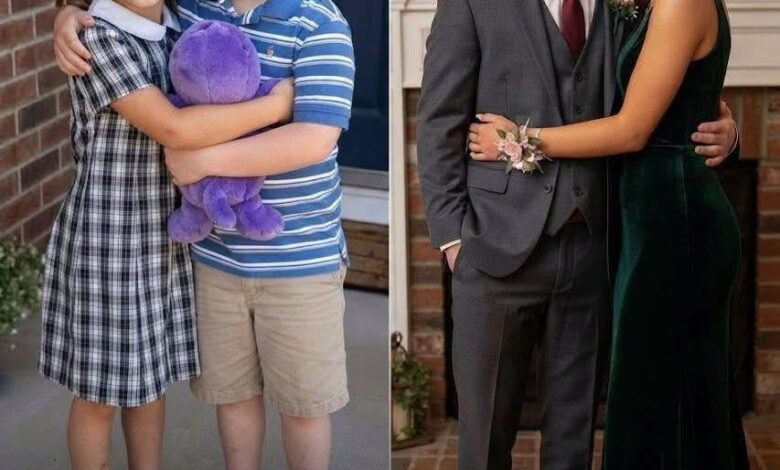
When we were younger, Noah and I had made a promise that we would go to prom together one day. At the time, it was a small private joke, the kind of plan children make because the future feels impossibly far away. We imagined formal clothes, awkward dancing, and the satisfaction of proving that we had kept a promise for no other reason than that it was ours.
By senior year, the promise had become real. We had talked about it for months. We chose the details, coordinated our plans, and prepared for the photographs our families were determined to take. Yet standing upstairs that night, I understood that prom was not the reason our friendship mattered. It was simply one visible moment in a much longer story.
When my mother finally unlocked the door, I walked downstairs with a different sense of the evening. Noah had no idea how much my perspective had shifted in those few minutes. He was still waiting with the same excitement, ready for the dance we had been discussing for years.
He looked up when he saw me and smiled.
Nothing dramatic happened. There was no speech, no perfect movie moment, and no sudden transformation in either of us. We took photographs. We climbed into the car. We arrived at prom. We danced badly, laughed too loudly, and spent part of the evening trying to decide whether the dessert table was worth another visit.
It was joyful because it was ordinary in the best possible way. We were two friends celebrating a milestone together. We did not need the night to prove anything about disability, friendship, or belonging. We only needed to be there, as we had been for each other in so many other moments.
Inclusion, Belonging, and Respectful Language
Stories about friendship and disability can help encourage inclusion when they are told with care. Inclusion is not simply inviting someone into a room. It means making sure people are welcomed, respected, listened to, and able to participate in meaningful ways within their schools, communities, workplaces, and relationships.
For families, educators, and peers, one of the most important lessons is to avoid assumptions. A person with Down syndrome may have goals, preferences, talents, relationships, and ambitions that are not visible at first glance. Like anyone else, they should have opportunities to make choices, develop independence, and be treated according to their individual needs and wishes.
Respectful language also matters. Terms and descriptions should focus on the person rather than reducing someone to a diagnosis. It is appropriate to say that a person has Down syndrome, while also recognizing that different people may express their identity in different ways. The central principle is simple: listen to the individual and treat them with dignity.
Prom night did not teach me that Noah was extraordinary because he had Down syndrome. I already knew he was important to me because he was my friend. What changed was my understanding of how much intention lived inside the small things he did, and how much care I wanted to bring to our friendship in return.
A Promise Kept Through Everyday Choices
By the end of the night, I was tired, happy, and more reflective than I expected to be. I had spent years counting the distance between a childhood promise and prom as if the promise itself were the point. But the promise lasted because of everything underneath it.
It lasted because we kept choosing friendship in ordinary moments. We chose it when school was difficult, when family life was complicated, when conversations were awkward, and when neither of us had the right words. We chose it when it would have been easier to drift apart.
My mother understood that too. She had once worried about who would take care of me during a painful period in our family’s life. On prom night, she saw that the answer was never as simple as one person protecting another. Noah and I had grown up alongside each other. We had learned that being present can be powerful, but that true friendship also requires mutual respect.
We had not stayed together because of obligation. We had stayed because, year after year, we chose to.
Sources
Disclaimer: This content is intended for entertainment purposes only and is not based on real events.