


Celebrating Differences: A Family’s Story of Congenital Melanocytic Nevi

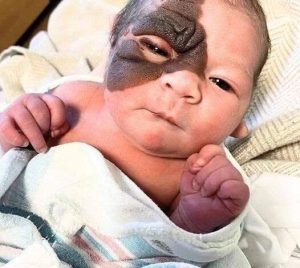
Nicole Lucas Hallson is raising her children, Asher and Winry, with a message centered on acceptance: the features that make people different are also part of what makes them unique. Her daughter Winry was born with a visible birthmark known as a congenital melanocytic nevus, or CMN, which affects part of her face. The family’s story has resonated with many people because it combines a parent’s understandable early concern with a positive, practical approach to raising a child with a noticeable difference.
For parents, the arrival of a baby often brings questions about every unfamiliar mark, feature, or health concern. A congenital melanocytic nevus can be especially striking because it is present at birth and may be located on a visible area of the body. Learning more about the condition can help families move from uncertainty toward informed care, while also ensuring that a child is never defined solely by an aspect of their appearance.
Winry’s story is ultimately about far more than a birthmark. It is about family relationships, childhood confidence, thoughtful medical guidance, and the role adults play in teaching children that kindness and inclusion matter. Her parents’ emphasis on love and affirmation reflects a wider conversation about how society responds to visible differences.
Understanding Congenital Melanocytic Nevi
Congenital melanocytic nevi are pigmented birthmarks that develop before birth and are visible at or soon after delivery. They are formed by melanocytes, the cells that produce melanin, the pigment that contributes to skin color. CMN can vary widely in color, texture, size, shape, and location. Some are relatively small and flat, while others may be raised, darker, or covered with hair as a child grows.
Medical specialists commonly classify congenital melanocytic nevi according to their projected adult size. Small and medium nevi are more common, while large or giant CMN are rare. The classification is important because medical monitoring recommendations may differ depending on the nevus’s size, location, appearance, and other individual factors. A dermatologist can assess a child’s skin and help parents understand what follow-up is appropriate.
It is important to avoid assumptions based on photographs or social media posts. A visible birthmark does not, by itself, reveal a child’s overall health, future needs, or medical plan. Every child should receive advice tailored to their individual circumstances from qualified healthcare professionals. Families may be referred to dermatologists, pediatric specialists, plastic surgeons, or other clinicians when appropriate.
Why Medical Monitoring Matters
Most birthmarks are benign, but congenital melanocytic nevi are associated with a potential risk of melanoma, a type of skin cancer. The level of risk is not the same for every person with CMN. Medical literature generally notes that risk can be influenced by factors including the size and number of nevi. This is why regular clinical assessment and parent awareness are valuable components of care.
Monitoring does not mean that families should live in constant fear. Instead, it offers a structured way to notice meaningful changes and discuss them with a clinician. Parents may be advised to observe changes in color, shape, surface texture, or symptoms such as bleeding, pain, itching, or the development of a new lump. These signs do not automatically indicate a serious problem, but they are appropriate reasons to seek professional medical advice.
Sun protection is also an important part of general skin health for children. The American Academy of Dermatology and other health organizations advise protecting children from excessive ultraviolet exposure through practical measures such as shade, protective clothing, hats, and sunscreen used according to age-appropriate guidance. Sun protection should be part of a broader routine for all children, whether or not they have a birthmark.
In some cases, clinicians may discuss surgical removal or other procedures. The decision can be complex. It may depend on medical considerations, the location and size of the nevus, the anticipated cosmetic result, the child’s wellbeing, and the potential need for more than one procedure. Removal is not automatically necessary for every CMN, and it may not eliminate all health considerations. Families should make decisions with specialists who can explain benefits, limitations, and alternatives clearly.
A Child Is More Than a Visible Difference
The central message in Nicole Lucas Hallson’s account is that Winry is a whole person: a daughter, a sister, and a young child with her own personality, interests, and everyday experiences. The description of Winry as joyful and energetic is meaningful because it shifts attention away from medical labels alone. A birthmark may be visible, but it does not determine a child’s character, abilities, friendships, or place within a family.
Children begin developing their self-image early in life. The language used by parents, relatives, teachers, and other adults can have a lasting effect. When adults speak respectfully and matter-of-factly about physical differences, they help create an environment in which children can ask questions without shame. When adults react with alarm, prolonged staring, or insensitive comments, children may absorb the idea that they are being judged for their appearance.
For families of children with CMN or other visible conditions, affirming language does not require ignoring medical realities. It means making room for both responsible health care and emotional support. A child can attend medical appointments, use sun protection, and still grow up hearing that they are loved exactly as they are.
The Role of Parents, Siblings, and Community
Families often set the tone for how children understand themselves. In the account shared by Hall, Winry’s brother Asher is part of an ordinary family story of play, affection, and growing up together. Siblings can become important sources of companionship and reassurance, particularly when parents encourage open, age-appropriate conversations about differences.
Parents may choose different approaches when strangers ask about a child’s appearance. Some families prefer a brief explanation, while others may not wish to discuss private health information at all. Both responses deserve respect. No child or parent is obligated to educate strangers, and a family’s boundaries should be honored.
For people who are curious, the most considerate response is often simple: treat the child as a person first. A warm greeting, normal conversation, and respectful behavior usually matter more than questions about appearance. If a conversation does occur, it should be guided by the family and appropriate to the setting.
Schools, childcare settings, and community groups also have a role to play. Inclusive environments help children feel safe when they know adults will respond promptly to teasing or exclusion. Teachers can model respectful language, discourage appearance-based comments, and make sure classroom discussions about bodies and differences are accurate and age-appropriate.
Social Media, Representation, and Respectful Visibility
Families who share their experiences online can help others feel less isolated. Images and stories featuring children with visible differences may challenge narrow ideas about what children are expected to look like. For parents who have recently received a diagnosis or are waiting for specialist advice, seeing another family speak openly and positively can provide reassurance that they are not alone.
At the same time, sharing a child’s story publicly requires care. Children have privacy interests, and parents may consider how much health information to share, who can view it, and how the child may feel about that information as they grow older. The most constructive stories are those that preserve a child’s dignity and avoid presenting them as an object of pity or inspiration.
Representation works best when it is balanced. A child with CMN can be seen as beautiful and confident without denying that medical monitoring may be needed. Likewise, a family can discuss genuine challenges without implying that a visible difference is a tragedy. This balanced approach supports public understanding while respecting the complexity of real life.
How to Talk to Children About Birthmarks and Differences
Parents and caregivers can help children develop empathy by answering questions calmly and honestly. Young children often notice differences without intending to be unkind. A simple response, such as “People’s skin can look different in many ways, and that is okay,” can be enough in many situations.
As children become older, adults can add more information. They may explain that some people are born with birthmarks, scars, or medical conditions, and that these are not reasons to stare, tease, or make assumptions. The goal is not to make differences seem mysterious. It is to teach respect, curiosity with consent, and consideration for another person’s feelings.
Children with a visible birthmark may also benefit from having an age-appropriate answer prepared for common questions. Families can practice a short response that feels comfortable, such as explaining that it is a birthmark they were born with. However, the child should always have the option not to discuss it. Confidence includes having control over one’s own story.
A Message of Acceptance Alongside Informed Care
Nicole Lucas Hallson’s story illustrates an approach that many families may recognize: concern can coexist with joy, and medical awareness can coexist with wholehearted acceptance. Receiving information about congenital melanocytic nevi gave the family a framework for understanding Winry’s birthmark and taking appropriate precautions. It did not change the fact that she was, first and foremost, their beloved child.
For parents navigating a similar experience, credible medical support is essential. A pediatrician or dermatologist can answer questions about diagnosis, monitoring, sun safety, and treatment options. Emotional support matters too. Connecting with patient organizations, trusted clinicians, and other families may help parents feel more prepared and less alone.
The wider lesson is simple but significant: children deserve to be seen with dignity. Their appearance may invite attention, but their value does not depend on other people’s approval. By combining responsible healthcare with patience, inclusive language, and everyday affection, families and communities can help children with visible differences build a strong sense of belonging.
Sources
Disclaimer: This content is intended for entertainment purposes only and is not based on real events.