


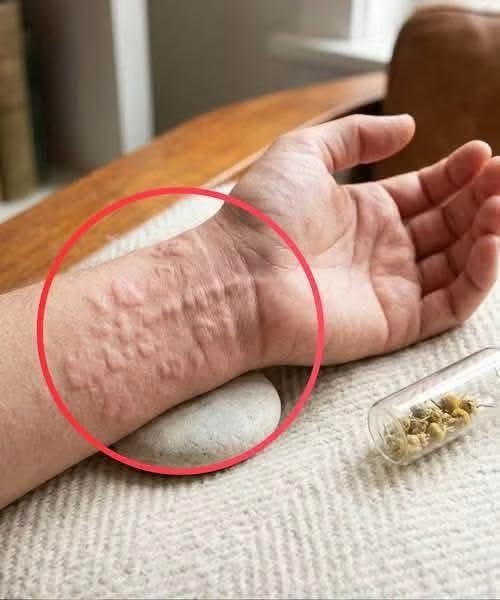
It started with a few itchy patches.
At first, they seemed easy to dismiss. Perhaps it was a reaction to something he had eaten, a new soap, a change in the weather, or simply one of those mysterious childhood rashes that disappears as quickly as it arrives.
But then the patches returned.
Days became weeks, and eventually the problem had continued for two months. Each new flare-up brought the same questions: What is causing it? Is it an allergy? Why does it keep coming back? And most importantly, when should a parent seek medical advice?
This pattern can occur with urticaria, commonly known as hives. Hives are raised, itchy areas of skin that can appear almost anywhere on the body. Individual welts often disappear within 24 hours, although new ones may develop elsewhere. When hives continue or recur for more than six weeks, they are generally described as chronic urticaria.
For parents, the appearance can be alarming. The good news is that hives are often manageable, and understanding how they behave can make the situation much less mysterious.
What Are Hives?
Hives are raised patches or welts that develop when certain cells in the skin release chemical mediators, including histamine.
The resulting reaction can cause temporary swelling, redness, itching, warmth, or a stinging sensation.
Hives can vary considerably in appearance. Some are small and round, while others join together to create larger irregular patches. They can appear on the face, arms, legs, torso, or other parts of the body.
One characteristic that can help distinguish hives from some other skin conditions is how quickly individual lesions change.
A particular welt may fade within several hours or less than a day, while another appears somewhere else. Healthier Together notes that individual wheals commonly disappear within 24 hours even when a flare continues.
This can make the rash seem as though it is constantly moving.
Why Can Hives Last for Months?
The word “chronic” can sound frightening, but in this context it describes the duration and pattern of the condition rather than automatically indicating a serious underlying illness.
When hives recur on most days for longer than six weeks, they are generally classified as chronic urticaria.
One of the most frustrating aspects for parents is that the precise trigger may not be obvious.
Acute hives can sometimes be linked to an infection, medication, food, insect sting, or another identifiable trigger. With recurrent or chronic urticaria, however, there may be no clear external cause.
This is why parents should avoid assuming that a particular food or household product is responsible without a recognizable pattern.
Is It Always a Food Allergy?
This is one of the first questions many parents ask.
A child develops an itchy rash, and the family immediately starts reviewing everything the child ate that day.
Food can sometimes trigger hives, but it is not the explanation for every case.
Healthier Together notes that food allergy is more likely when hives begin relatively soon after eating a particular food and occur consistently after that food is consumed. Random episodes that have no consistent relationship with meals are less suggestive of a food allergy.
In children, infections are also an important possible trigger. Viral illnesses such as common respiratory infections can be associated with urticaria.
This is one reason identifying the cause can be challenging.
Sometimes there simply is not enough evidence to identify a single trigger.

Common Triggers of Hives
Hives can have many possible triggers.
Some children develop them during or after viral infections. Others may react to medications, insect stings, certain foods, or environmental factors.
Physical factors can also trigger hives in some people.
Heat, cold, pressure, scratching, exercise, and sweating are examples of situations that may cause a form of inducible urticaria. The NHS lists several possible triggers, including cold, hot or sweaty skin, physical pressure, infections, certain medicines, insect bites or stings, and occasionally sunlight or water.
This does not mean that every child with hives needs to avoid all of these things.
The important question is whether there is a repeatable connection between a particular exposure and the appearance of symptoms.
What Is Chronic Spontaneous Urticaria?
Sometimes hives continue to recur even though no obvious trigger can be identified.
This pattern is often referred to as chronic spontaneous urticaria.
The word “spontaneous” is useful because it emphasizes that the episodes can occur without an obvious external cause.
That can be frustrating for families.
Parents may spend weeks changing foods, soaps, laundry products, clothing, and daily routines in an attempt to discover an explanation.
But when there is no consistent pattern, repeatedly eliminating foods or making major lifestyle changes may not solve the problem.
A healthcare professional can help determine whether further evaluation is appropriate.
What Is Angioedema?
Hives can sometimes occur alongside angioedema, which is deeper swelling beneath the skin.
Angioedema commonly affects areas such as the lips, eyelids, hands, feet, or face. It can also involve the mouth, tongue, or throat. Unlike hives, which are often itchy, deeper swelling may feel more uncomfortable or tender and can take longer to disappear.
Not every episode of swelling means an emergency.
However, swelling involving the tongue or throat can interfere with breathing or swallowing and requires urgent medical attention.
Parents should take sudden swelling of the mouth, tongue, or throat particularly seriously.
When Hives Require Urgent Attention
Most episodes of hives are not dangerous, but certain symptoms can indicate a serious allergic reaction.
Seek emergency medical help if a child with hives develops difficulty breathing, significant swelling of the lips, mouth, tongue, or throat, difficulty swallowing, sudden dizziness, unusual confusion, or becomes unresponsive. NHS guidance identifies these as warning signs requiring immediate emergency attention.
The important point is that the concern is not simply the appearance of the rash.
It is the combination of hives with symptoms affecting breathing, swallowing, circulation, or consciousness.
If those symptoms occur, do not wait to see whether the rash disappears.
What Can Parents Do at Home?
For a child who is otherwise well, simple measures may help make an episode more comfortable.
Keeping the skin cool can be useful because heat and sweating may aggravate symptoms in some people.
Loose-fitting clothing can also reduce friction and pressure against the skin.
A cool compress may provide temporary relief from itching.
Fragrance-free skincare products can be a reasonable choice for children whose skin is easily irritated.
Parents should also be cautious about giving medication based solely on information found online. Antihistamines are commonly used for hives, but the appropriate medicine and dose depend on factors such as the child’s age, other medicines, and medical history.
A pharmacist or healthcare professional can provide age-appropriate advice. NHS guidance specifically notes that some antihistamines are not suitable for young children and recommends checking with a pharmacist or clinician.
Keep a Symptom Diary
When hives continue for weeks, keeping a simple record can be surprisingly helpful.
Write down when the rash appears and how long individual patches remain visible.
Record recent illnesses, medicines, physical activity, unusual heat or cold exposure, new skincare products, and foods when relevant.
Also note what your child was doing immediately before an episode.
The purpose is not to create an enormous list of possible allergies.
Instead, look for repetition.
If the same situation consistently precedes the rash, that information can give a healthcare professional a useful starting point.
If no pattern emerges, that is useful information too.
Why Chronic Hives Can Be Difficult to Diagnose
Hives are often diagnosed from their appearance and behavior rather than from a single laboratory test.
A clinician may ask when the rash began, how long individual welts last, whether they move around, whether swelling occurs, and whether there are identifiable triggers.
In many children, additional testing is not necessary unless the medical history suggests another condition or a specific trigger needs investigation. Healthier Together notes that the appearance of typical urticaria is often enough for diagnosis.
This can be reassuring for parents who worry that a long list of tests is automatically required.
At the same time, persistent symptoms deserve appropriate medical evaluation, especially when they interfere with sleep, school, activities, or overall wellbeing.
When Should a Parent See a Doctor?
A child with recurrent hives should be discussed with a healthcare professional when symptoms continue beyond six weeks.
It is also sensible to seek medical advice if the episodes are difficult to control, repeatedly interfere with daily life, occur with significant swelling, or appear to have a consistent connection with a particular food, medicine, or insect sting.
Healthier Together specifically recommends medical review when symptoms last longer than six weeks or affect a child’s daily life and wellbeing.
Parents should also mention unusual features.
For example, typical hives generally fade without leaving lasting marks. If individual lesions remain in the same place for an unusually long period or leave bruising or other persistent changes, medical evaluation becomes particularly important.
What About Stress?
Stress is sometimes mentioned as a possible contributor to hives.
Emotional stress can influence certain types of urticaria, particularly when body temperature rises or sweating occurs.
However, telling a child that their rash is “just stress” is not a useful way to approach the problem.
Stress can be one possible factor, but it should not automatically be considered the explanation.
A better approach is to look at the entire pattern and discuss persistent symptoms with a qualified healthcare professional.
Living With Chronic Urticaria
Two months of recurring hives can be exhausting for a child and family.
The itching may interfere with sleep. Parents may become anxious about every new patch. Children may become frustrated by having to think about their skin repeatedly.
This emotional side of the condition should not be overlooked.
The good news is that chronic urticaria can often be managed with an individualized treatment plan.
The appropriate approach depends on the child’s age, symptoms, possible triggers, and medical history.
If standard measures do not adequately control symptoms, a healthcare professional can consider other options or referral to a specialist.
The goal is not simply to make the rash disappear for one afternoon.
It is to find a sustainable way to manage the condition and protect the child’s quality of life.
Frequently Asked Questions About Hives in Children
How long do individual hives usually last?
An individual hive often fades within 24 hours, although new welts may appear elsewhere. This can make the overall episode seem continuous.
When are hives considered chronic?
Hives that recur for more than six weeks are generally classified as chronic urticaria.
Does chronic urticaria always mean my child has an allergy?
No. Chronic hives often have no obvious trigger. Food allergy is more likely when symptoms repeatedly occur soon after eating a particular food.
Can children grow out of hives?
Many episodes of urticaria improve over time, but the course varies from child to child. A healthcare professional can provide more specific guidance based on the individual situation.
Should I change my child’s diet?
Do not make major dietary restrictions without a clear reason or professional guidance. If a particular food repeatedly appears to trigger symptoms, discuss the pattern with a healthcare professional.
When should hives be treated as an emergency?
Hives accompanied by difficulty breathing, throat tightness, difficulty swallowing, sudden swelling of the tongue or mouth, severe dizziness, or loss of responsiveness require immediate emergency medical attention.
Final Thoughts: Look for Patterns, Not Just Answers
When a child has hives for two months, it is understandable for parents to want a simple explanation.
Was it something he ate?
A new detergent?
The weather?
A medication?
An infection?
Sometimes the answer is identifiable. Sometimes it is not.
That uncertainty can be one of the hardest parts of chronic urticaria.
But a lack of an obvious trigger does not mean that nothing can be done. Careful observation, appropriate medical advice, and attention to symptoms can help families move from constant worry toward a clearer management plan.
Most importantly, parents should remember that the appearance of hives can look much more alarming than the condition actually is. At the same time, certain symptoms, particularly breathing difficulties or swelling of the tongue and throat, require urgent attention.
The best approach is neither panic nor dismissal.
It is observation, patience, and knowing when to ask for help.
A child’s skin can sometimes send confusing signals. Learning to read those signals can help parents respond calmly and appropriately while giving their child the comfort and care they need.
Sources
NHS, Hives (Urticaria), including common triggers, treatment guidance, and emergency warning signs.
NHS, Rashes in babies and children, including warning signs associated with serious allergic reactions.
NHS – Rashes in babies and children
Healthier Together, Hives (Urticaria) in Children, covering symptoms, causes, chronic urticaria, and when to seek medical advice.
Healthier Together – Hives in Children
Hull University Teaching Hospitals NHS Trust, Urticaria and Angioedema: Information for Parents and Carers.
Hull University Teaching Hospitals – Urticaria and Angioedema
The original source provided by the user was used as inspiration for the article’s storytelling premise. Medical information has been rewritten using reputable health sources, with claims that could be misleading or overly specific presented more cautiously. This article is for general education and does not replace an evaluation by a qualified healthcare professional.