
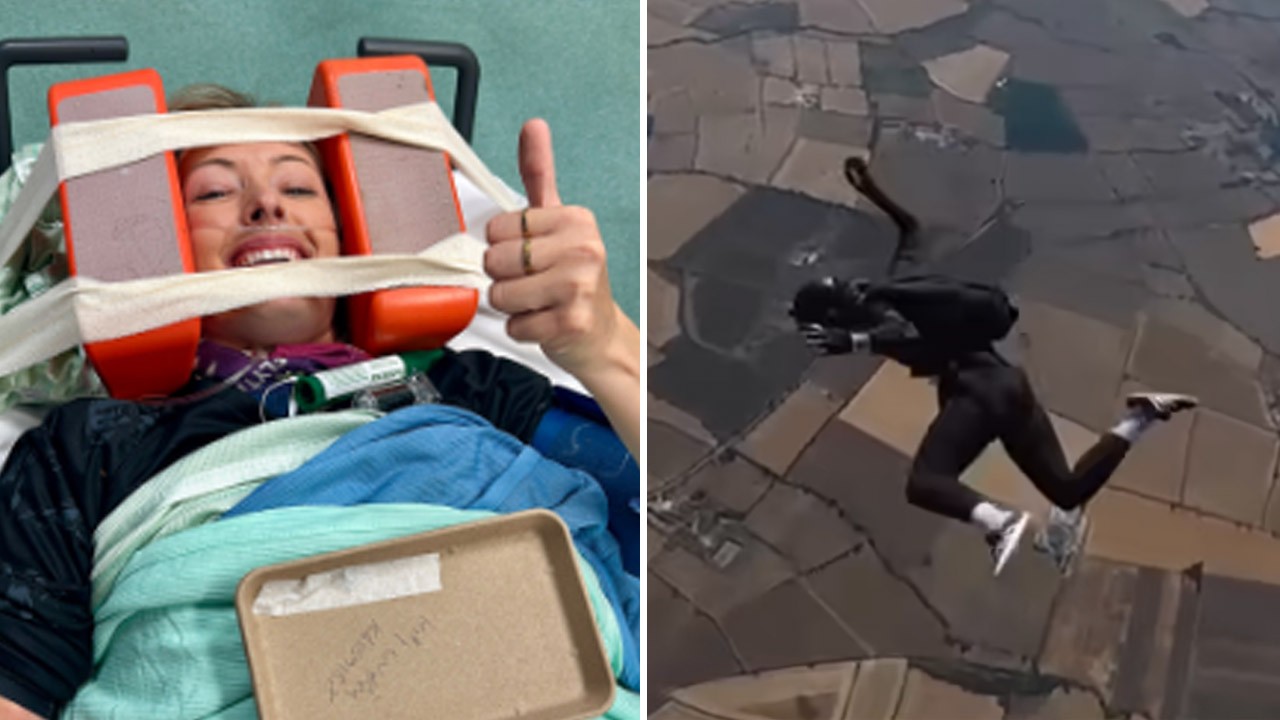
Holly Wiffen Survived a 10,000ft Skydiving Fall Without an Open Parachute
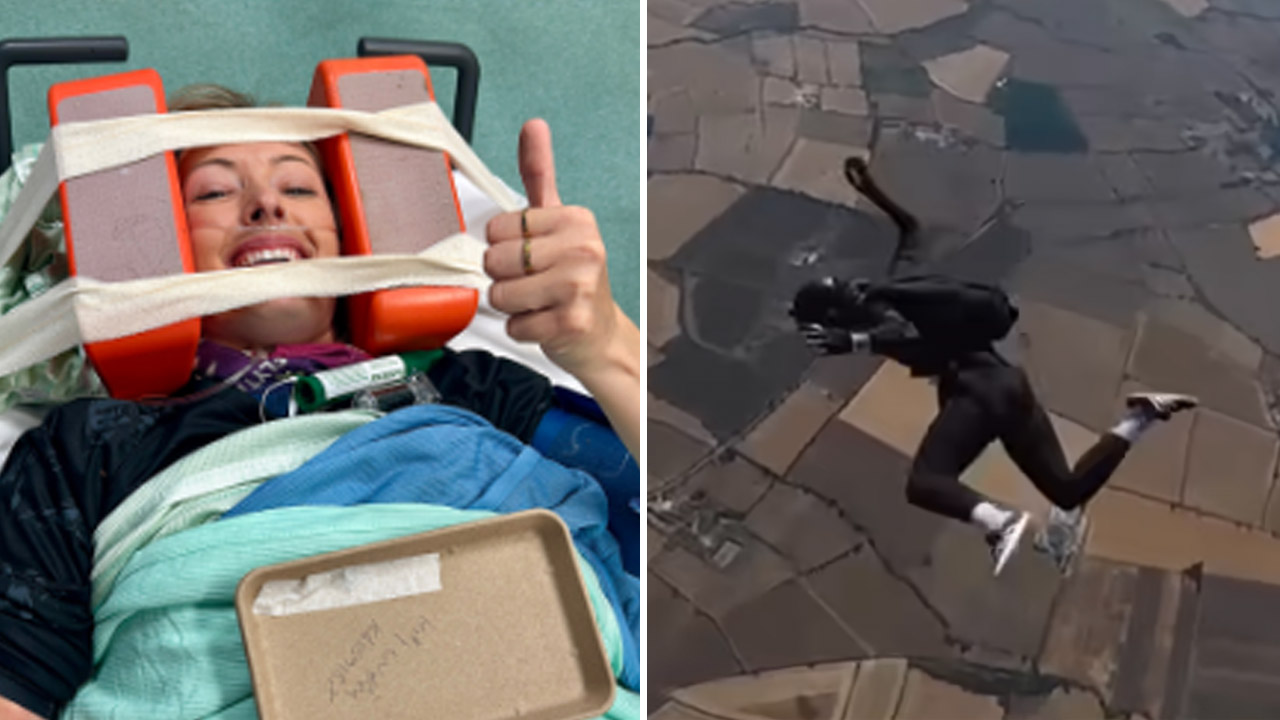
On August 7, Holly Wiffen, 35, defied all odds by surviving a harrowing skydiving accident over Langar airfield, near Nottingham. During the jump, she plummeted more than 10,000 feet without her main parachute deployed, enduring serious injuries but ultimately surviving the ordeal.
The Skydiving Accident: What Happened at Langar Airfield?
Holly Wiffen joined a group skydiving session involving “tracking jump” maneuvers—a form of skydiving where participants are positioned horizontally, increasing their rate of horizontal movement and speed during the freefall. Tracking jumps are popular among experienced skydivers as they build formation and improve aerodynamic control; however, they also carry higher risks due to the proximity of other jumpers.
While the activity began as an exciting adventure, it quickly turned perilous. In mid-air, another participant accidentally struck Wiffen in the head, causing her to lose consciousness at a critical altitude of 10,000 feet. With her main parachute untouched and no time to react, Wiffen was left vulnerable as she descended rapidly towards the ground.
This traumatic incident was witnessed by her fellow skydivers, and the aftermath led her sister to launch a GoFundMe campaign, outlining the severity of Holly’s injuries and the challenges she faces on her path to recovery. According to the campaign, “Holly was knocked unconscious by another skydiver during a tracking jump and woke up on the ground.”
Miraculous Survival and Critical Injuries
Despite the dramatic circumstances, Wiffen survived the accident. Her injuries included a broken leg and fractured vertebrae, but she was alive and able to eventually walk—albeit with difficulty. As her sister described, “The road to recovery is long and challenging… I have made this to help her cover the cost of her physio as well as covering some of her other costs whilst she cannot work as she is unfortunately self-employed.” This statement highlights both the physical and financial burdens faced by many accident survivors, especially those in freelance or self-employed roles.
Wiffen’s resilience has inspired widespread support within the skydiving community, known for its camaraderie and willingness to rally around members who have experienced setbacks.
Wiffen’s Account of the Accident
Holly Wiffen recently appeared on the UK television program “This Morning,” sharing her perspective on the moments leading up to and following the accident. She recalls, “It was instant—it just went black, I don’t even remember leaving the plane … I just was dreaming of falling, it was surreal and almost peaceful.”
Her account sheds light on how training and instinct can come into play even during unconsciousness. Holly continued, “If I’m falling and I’m unstable, I should be arching and trying to reach my parachute…you can see in the footage I was trying to do this even though I was unconscious.”
Safety Technology and the Role of the Automatic Activation Device (AAD)
The fact that Wiffen survived a 10,000ft fall without manually deploying her parachute is extraordinary, but not solely attributable to luck. Modern skydiving is governed by rigorous safety standards, and one critical device contributed to her survival: the Automatic Activation Device (AAD). This electronic system detects when a skydiver descends past a specific altitude at high speed and, if the parachute hasn’t been deployed manually, activates the reserve parachute.
The AAD is a compulsory safety feature for licensed skydivers in most jurisdictions. It is credited with saving numerous lives by intervening in situations where jumpers lose consciousness or are unable to deploy their parachutes due to injury or unforeseen complications. In Wiffen’s case, the AAD deployed her reserve parachute just seconds before impact, allowing her to land in a conifer tree rather than directly on the ground—a factor crucial to her survival.
Immediate Response and Medical Recovery
Upon regaining consciousness, Wiffen found herself suspended high in the branches of a conifer tree. She initially felt numb, unable to process the pain due to shock. The skydiving gear remained intact, prompting her practical instincts to assess her condition and protect her valuables. “Get my kit off because if I’ve done something bad the paramedics are going to cut my stuff off me and it’s very expensive,” she explained.
She performed a self-check, observing her displaced leg but feeling minimal pain—a common phenomenon following traumatic accidents as the body’s adrenaline response masks injury. Holly managed to remain composed, focusing on practical matters even in the aftermath of a life-threatening fall.
Emergency responders arrived quickly, and she was transported to a local hospital, where doctors confirmed her leg and vertebral fractures. Skydiving injuries often require specialized trauma care and extended rehabilitation, with physical therapy particularly important in regaining mobility and function. In Wiffen’s case, she faces extended recovery, compounded by NHS waiting lists for physiotherapy and the demands of self-employment.
Expert Views on Skydiving Safety
According to the British Parachute Association (BPA) and international skydiving organizations, skydiving is statistically one of the safer extreme sports, with most accidents occurring due to human error or unforeseen medical complications. Incidents like Wiffen’s are rare, especially given the existence of advanced safety equipment like the AAD and mandatory rigorous participant training.
“Every skydiver undergoes detailed training not only in deploying their parachute, but in emergency procedures, and how to respond to loss of consciousness or unusual mid-air events,” explains BPA spokesperson Mark Bayley. “Incidents involving mid-air collisions are unusual but can happen, especially in group jumps. Safety devices such as the AAD are designed to intervene and have saved many lives worldwide.”
The incident has prompted renewed awareness in the skydiving community on maintaining proper spacing during group maneuvers and continuing education on safety practices. Regulatory bodies periodically review safety practices to minimize risk and update requirements as new technology becomes available.
Skydiving Community Reaction and Societal Support
Wiffen’s accident elicited significant outpouring of support from the skydiving community and the wider public. Donations to the GoFundMe campaign have helped with rehabilitation costs and other financial needs during her recovery. Her sister remarked, “Holly isn’t one to ask for help but I know from what she has told me about the skydiving community, everyone will be eager to help out one of their own.”
Such solidarity illustrates the tight-knit nature of extreme sport communities, where shared risks and experiences foster empathy and collective responsibility. Social media and news coverage have also contributed to increased awareness about both the risks and the safety mechanisms involved in skydiving, educating the public and encouraging aspiring jumpers to undertake proper preparation and risk assessment.
Return to Skydiving: Wiffen’s Determination
Remarkably, Holly Wiffen has expressed her intention to return to the sport she loves. After surviving a fall that could have ended in tragedy, she maintains her passion for skydiving, embodying the resilience that characterizes many extreme sports participants. “After surviving such a fall, it only strengthened my commitment to return to skydiving, once doctors clear me for flight,” she shared in interviews.
Skydiving Risk in International Context
Globally, skydiving is regulated by various national authorities, and the safety standards applied in the UK are among the most stringent. According to the United States Parachute Association (USPA), the fatality rate has dropped significantly due to technology such as AADs and ongoing safety education. Skydiving accidents remain statistically rare compared to road transport or other adventure sports.
Wiffen’s miraculous survival has been reported internationally, serving as a case study for the efficacy of modern safety equipment and emergency protocols. Experts point to her case as evidence of the progress made in parachute technology and the importance of training, while also reminding enthusiasts that careful preparation and awareness remain essential.
Conclusion
Holly Wiffen’s experience is both an extraordinary example of survival and a powerful reminder of the safety measures that underpin modern skydiving. Her story highlights the effectiveness of technology such as AADs, the importance of rigorous training, community support, and the realities of recovery from serious injury. Wiffen’s determination to return to her sport inspires admiration and prompts ongoing dialogue about improving safety in extreme sports.
Read More
- What ‘wide neck guy’ looks like today, eight years after his viral mugshot
- Youngest woman on death row’s last words before being taken away as execution date nears
Sources
- BBC News
- Mirror
- British Parachute Association
- United States Parachute Association
- World Health Organization
- NHS
Disclaimer: This content is intended for entertainment purposes only and is not based on real events.