
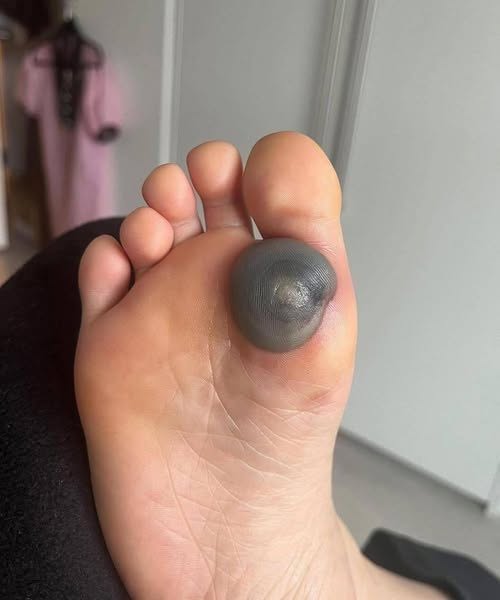
Parents often notice even the smallest changes in their children’s health. A dark spot appearing suddenly on a child’s foot can be especially concerning, particularly if it is swollen, tender, or makes walking uncomfortable.
Although a blood blister can look alarming because of its deep red, purple, or dark appearance, it is usually a minor skin injury that heals with proper care. In most cases, these blisters develop after pressure, friction, or a minor bump that damages tiny blood vessels beneath the skin while leaving the outer layer intact.
Understanding what a blood blister is, how it forms, and when medical attention is appropriate can help parents respond calmly and confidently.
What Is a Blood Blister?
A blood blister is a small pocket of fluid that forms beneath the skin after tiny blood vessels, called capillaries, are damaged.
Unlike a regular blister, which is filled primarily with clear fluid, a blood blister contains blood that has collected under the skin.
Because the skin remains unbroken, the blister acts as a natural protective covering while the body repairs the damaged tissue underneath.
The color may range from dark red to purple or almost black, depending on how much blood has collected and how long the blister has been present.
What Causes Blood Blisters?
Blood blisters usually develop after an injury or repeated pressure on the skin.
Common causes include:
Friction From Shoes
Shoes that are too tight or do not fit properly can repeatedly rub against the foot, especially during sports or long periods of walking.
Minor Injuries
Accidentally bumping the foot, dropping an object on it, or pinching the skin can damage small blood vessels beneath the surface.
Sports and Physical Activity
Running, jumping, hiking, or participating in other active play can place repeated pressure on certain parts of the foot.
Repetitive Pressure
Activities that place continuous stress on the same area may gradually lead to blister formation.

Common Symptoms
A blood blister may include:
-
A raised area filled with dark red or purple fluid.
-
Mild to moderate tenderness.
-
Swelling around the affected area.
-
Discomfort when walking or wearing shoes.
-
Sensitivity to touch.
Many blood blisters gradually become less painful as healing progresses.
Should You Pop a Blood Blister?
Healthcare professionals generally recommend leaving a blood blister intact whenever possible.
The outer layer of skin serves as a natural barrier that helps protect the injured area from bacteria and supports healing.
Opening or puncturing the blister unnecessarily may increase the chance of infection and slow recovery.
If a blister breaks naturally, keeping the area clean and protected is usually the best approach.

How to Care for a Blood Blister at Home
Most uncomplicated blood blisters improve with simple home care.
Reduce Pressure
Avoid shoes or activities that continue to rub against the affected area.
Comfortable, well-fitting footwear allows healing to progress more easily.
Apply a Cool Compress
A cool compress may help reduce discomfort and swelling during the first day after the injury.
Avoid placing ice directly on the skin.
Keep the Area Clean
Wash gently with mild soap and water, then dry the area carefully.
Protect the Blister
If the blister is in a location where it may rub against socks or shoes, a loose protective bandage can help reduce additional irritation.
Allow Time to Heal
Many blood blisters gradually improve within one to two weeks as the body naturally absorbs the trapped blood.
When Should Parents Contact a Doctor?
Although most blood blisters heal without complications, medical evaluation is recommended if certain warning signs develop.
Seek medical advice if:
-
The pain becomes severe or continues to worsen.
-
The child has difficulty walking for an extended period.
-
Redness spreads around the blister.
-
Swelling increases instead of improving.
-
The area produces unusual drainage.
-
The child develops a fever.
-
The blister appears after a significant injury.
-
The blister develops without an obvious cause.
-
The child has diabetes or another medical condition that may affect healing.
A healthcare professional can determine whether additional treatment or testing is necessary.
Conditions That Can Resemble a Blood Blister
Several skin conditions may appear similar to a blood blister.
These include:
Friction Blisters
Usually filled with clear fluid rather than blood.
Bruises
Bruises develop beneath the skin but generally do not create a raised pocket of fluid.
Insect Bites
Some bites may become swollen and discolored, although they usually have different characteristics.
Skin Infections
Certain infections can produce redness, swelling, or fluid-filled areas that require medical evaluation.
Because these conditions may look similar, professional assessment is appropriate whenever parents are uncertain.
Preventing Blood Blisters
Simple preventive measures can reduce the likelihood of blood blisters.
Helpful strategies include:
-
Choosing properly fitted shoes.
-
Wearing moisture-wicking socks during sports.
-
Replacing worn footwear when necessary.
-
Gradually increasing physical activity.
-
Checking children’s feet after long periods of walking or sports participation.
Early attention to areas of rubbing may prevent larger blisters from developing.
Helping Children Feel Comfortable
Young children may become anxious when they notice a dark spot or swelling on their foot.
Parents can help by explaining that many minor skin injuries improve naturally with time and proper care.
Providing reassurance, encouraging rest when needed, and keeping the child comfortable often make the healing process less stressful.
If symptoms change or parents have concerns, contacting a healthcare provider offers additional peace of mind.
The Importance of Professional Medical Advice
Online health information can provide useful general guidance, but it cannot replace an examination by a qualified healthcare professional.
Every child is different, and symptoms that appear similar may have different causes.
If parents are uncertain about what they are seeing, or if the injury does not improve as expected, seeking medical advice is always a reasonable decision.
Early evaluation can help identify conditions that require treatment while also reassuring families when the injury is minor.
Conclusion
A blood blister on a child’s foot may appear dramatic, but it is often a normal response to minor pressure or injury beneath the skin. With gentle care, reduced friction, and patience, most blood blisters heal naturally over the course of several days or weeks.
The most important step is monitoring the area for signs of improvement while remaining alert for symptoms that suggest medical evaluation is needed. By understanding the causes, practicing good foot care, and seeking professional advice when appropriate, parents can support their child’s recovery with confidence.
Human curiosity naturally leads us to ask questions whenever we notice unexpected changes in health. When that curiosity is guided by reliable medical information and thoughtful care, it becomes one of the most valuable tools for protecting the well-being of our families.
Sources
-
American Academy of Dermatology (AAD). Blisters: Causes and Treatment.
-
Mayo Clinic. Blisters: Symptoms and First Aid.
-
Cleveland Clinic. Blood Blisters: Causes, Care, and Prevention.
-
MedlinePlus (U.S. National Library of Medicine). Blisters.
-
Kadim Ansiklopedi. Terrifying Dark Spot on Your Child’s Foot Might Be a Medical Nightmare You Are Ignoring.