

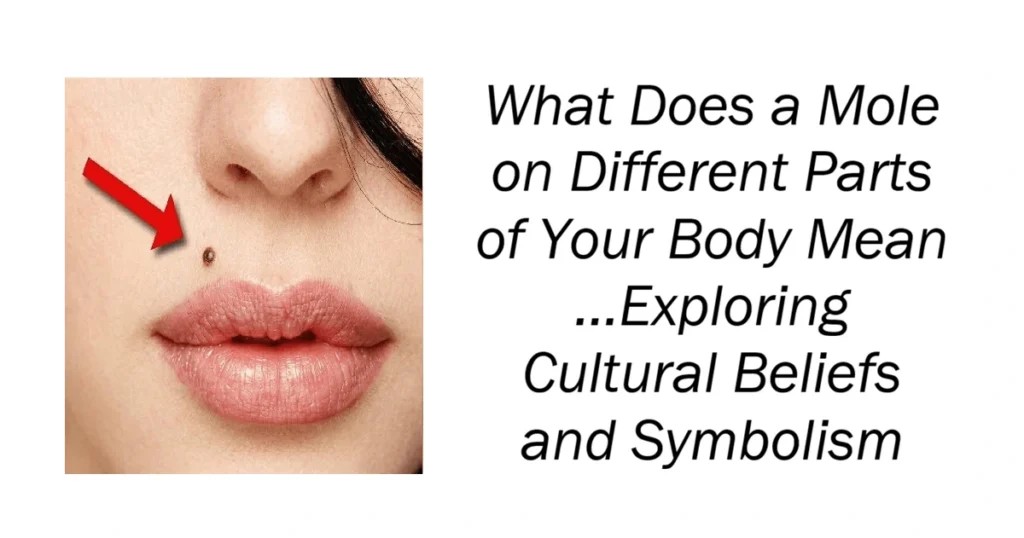
What Does a Mole on Different Parts of Your Body Mean …Exploring Cultural Beliefs and Symbolism
Moles are among the most common features of human skin, yet they have inspired curiosity, folklore, and symbolic interpretations for centuries. Across different cultures, a mole on the forehead, cheek, chin, or neck has sometimes been associated with personality traits, emotional characteristics, prosperity, and future opportunities.
For generations, traditional face-reading practices and popular beliefs have attempted to connect physical appearance with a person’s character and destiny. Some interpretations describe forehead moles as symbols of intelligence and leadership, while cheek moles are sometimes linked to compassion and emotional sensitivity. Other traditions associate chin moles with determination and neck moles with personal transformation or good fortune.
However, it is important to distinguish cultural symbolism from scientific evidence. From a medical perspective, a mole is a common skin growth that develops when pigment-producing cells called melanocytes grow in clusters. Its position on the body does not reveal a person’s intelligence, personality, financial circumstances, or future.
Nevertheless, exploring traditional interpretations can provide an interesting perspective on how societies have used physical features to express ideas about identity, relationships, ambition, and personal development. These interpretations should be understood as folklore rather than reliable predictions.
In this article, we explore the traditional meanings associated with four common mole locations, examine why these beliefs have remained popular, and explain what modern dermatology says about identifying and monitoring moles.
1. A Mole on the Forehead: Intelligence and Leadership
In some traditional face-reading interpretations, a mole on the forehead is associated with intelligence, ambition, confidence, and leadership. The forehead has historically been used as a symbolic representation of thought, knowledge, and decision-making.
Within these cultural interpretations, people with a forehead mole may be described as ambitious individuals who are comfortable taking responsibility and pursuing challenging goals. Some versions of this folklore also associate the placement with independence, strategic thinking, and the ability to make important decisions.
These associations are symbolic rather than scientific. There is no established medical or psychological evidence that the location of a mole determines someone’s intellectual abilities or leadership potential.
What Does a Mole in the Middle of the Forehead Mean?
A mole positioned in the centre of the forehead is sometimes interpreted as a symbol of wisdom, intuition, and balanced judgment.
According to certain popular traditions, this placement represents someone who prefers to consider different possibilities before making important decisions. It may also be associated with self-awareness, careful planning, and an interest in personal development.
Some interpretations connect the central forehead with ambition and the ability to overcome obstacles. In this context, the mole becomes a symbolic reminder of determination and confidence rather than a literal indication of future success.
Does a Forehead Mole Indicate Future Success?
Traditional beliefs sometimes associate forehead moles with professional opportunities, influence, and achievement. However, there is no scientific basis for using a person’s physical features to predict their career prospects.
In real life, professional success is influenced by education, experience, practical skills, access to opportunities, relationships, economic circumstances, and individual decisions. Leadership is also developed through communication, responsibility, experience, and the ability to work effectively with others.
2. A Mole on the Cheek: Emotional Depth and Compassion
A mole on the cheek is sometimes associated with sensitivity, compassion, emotional depth, and strong personal relationships.
In certain traditional interpretations, the cheeks are symbolically connected with social interaction and the way individuals relate to people around them. A cheek mole may therefore be described as representing someone who values friendship, family connections, and emotional understanding.
Some popular face-reading traditions also distinguish between the left and right cheeks. For example, a mole on the left cheek is sometimes associated with loyalty, sensitivity, and close personal relationships. Other interpretations may connect cheek moles with confidence, social awareness, or a strong personality.
It is important to remember that these meanings are not consistent across cultures. There is no universally accepted system for interpreting cheek moles, and different sources may assign entirely different meanings to the same location.
What Does This Belief Suggest About Relationships?
Traditional symbolism sometimes connects cheek moles with loyalty, affection, and emotional understanding. People with this mole placement may be described in folklore as individuals who appreciate meaningful relationships and make an effort to support those they care about.
These interpretations reflect broader cultural ideas about human connection. Across many societies, facial features have been used in stories, literature, and traditional practices to represent qualities such as kindness, courage, attractiveness, and wisdom.
Modern psychology, however, does not establish a relationship between mole location and emotional intelligence. Empathy is better understood through a person’s ability to recognize emotions, consider different perspectives, communicate respectfully, and respond appropriately to other people’s needs.
Why Are Cheek Moles Often Considered Distinctive?
Cheek moles are also noticeable because they form part of a person’s facial appearance. Depending on their size, colour, and position, they may become distinctive features that contribute to individual appearance.
Throughout history, beauty standards have varied considerably between societies and generations. Features considered attractive or memorable in one cultural setting may be interpreted differently elsewhere.
As a result, the symbolic meanings attached to cheek moles can tell us more about changing cultural attitudes toward appearance and personality than about the people who have them.
3. A Mole on the Chin: Stability and Determination
In some traditional interpretations, a mole on the chin represents determination, stability, perseverance, and adaptability.
The chin is sometimes used symbolically to represent strength of character and the ability to remain committed to long-term goals. Based on these beliefs, a person with a chin mole may be described as practical, persistent, and willing to work steadily toward personal ambitions.
Other interpretations associate this placement with independence and the ability to adjust when circumstances change. Rather than representing immediate success or sudden good fortune, the symbolism often focuses on patience and consistent effort.
Is a Chin Mole Associated With Career Success?
Some traditional face-reading interpretations connect chin moles with professional progress, financial stability, and long-term achievement.
According to these symbolic beliefs, individuals with a mole on the chin may be viewed as people who prefer to build their success through careful planning and persistence. The placement is sometimes associated with practical thinking, responsibility, and an interest in creating a stable future.
However, a mole cannot predict employment opportunities, income, promotions, or financial security. Career development depends on a combination of personal abilities and external circumstances.
Relevant factors include professional qualifications, industry conditions, workplace relationships, experience, economic opportunities, and the willingness to develop new skills.
Stability and Adaptability in Everyday Life
The traditional association between chin moles and stability also provides an opportunity to consider what resilience means in everyday life.
Resilience involves responding constructively to challenges, learning from difficult experiences, and adjusting plans when circumstances change. These qualities are developed through experience, supportive relationships, and deliberate personal effort.
Whether someone has a mole on their chin or not, determination and adaptability are demonstrated through their actions rather than their physical appearance.
4. A Mole on the Neck: Spirituality and New Opportunities
A mole on the neck has acquired several symbolic meanings in different popular cultural traditions. Depending on the interpretation, it may be associated with spirituality, personal transformation, adaptability, or unexpected opportunities.
The neck occupies an interesting symbolic position because it connects the head and the body. In some forms of traditional symbolism, this connection has been interpreted as representing the relationship between thoughts, emotions, and everyday actions.
Some folklore traditions also associate neck moles with changes in circumstances, new experiences, and important turning points. Other interpretations describe them as possible symbols of good fortune or personal growth.
What Does a Neck Mole Symbolise?
Traditional interpretations vary according to cultural background and the particular system of face reading being used. A neck mole may be associated with independence, adaptability, spiritual reflection, or the possibility of encountering new opportunities.
Some popular interpretations also suggest that the location of a neck mole matters. However, there is no universal agreement about whether a mole on the front, side, or back of the neck carries a particular meaning.
These variations demonstrate why traditional mole interpretations should not be treated as established facts. Folklore evolves over time, and meanings may change as stories and cultural practices are passed between generations.
Personal Growth and the Meaning of Symbolism
The association between neck moles and transformation can be viewed as a metaphor for personal growth. People regularly encounter changes in their careers, relationships, responsibilities, and personal circumstances.
Adapting to these changes often requires patience, self-reflection, and a willingness to learn. Rather than treating a mole as a prediction of future events, its traditional symbolism can be appreciated as one example of how people use physical features to reflect on life’s possibilities.
Why Have Mole Meanings Remained Popular Across Cultures?
Beliefs about the symbolic meaning of physical features have existed in many societies. Traditional face reading, folklore, storytelling, and historical beauty practices have all contributed to the ways people interpret facial characteristics.
One reason these beliefs remain popular is that people naturally look for patterns and meaning in the world around them. A distinctive physical feature can become a convenient starting point for stories about personality, identity, and destiny.
Traditional interpretations can also provide entertainment and encourage conversations about cultural history. In some settings, they are shared as part of family traditions or popular lifestyle discussions.
However, cultural beliefs should not be confused with scientific conclusions. A person’s physical appearance cannot reliably establish their personality, intelligence, emotional abilities, or future circumstances.
What Does Modern Science Say About Moles?
From a dermatological perspective, moles are common skin growths that usually develop when melanocytes, the cells responsible for producing the pigment melanin, grow in clusters rather than spreading evenly throughout the skin.
Moles can appear anywhere on the body, including the face, scalp, neck, arms, legs, and torso. They may be present at birth or develop during childhood and adulthood.
Most ordinary moles are harmless. Their appearance varies, and they can be flat or raised, small or relatively large, and different shades of brown, tan, pink, or skin colour.
Genetics and exposure to ultraviolet radiation are among the factors associated with the development and appearance of moles. Having multiple moles does not automatically mean someone has skin cancer, but certain characteristics and changes deserve medical attention.
How to Recognise Potentially Concerning Changes in a Mole
Although traditional mole symbolism is an interesting cultural subject, understanding skin health is much more important from a practical perspective.
Dermatologists commonly recommend becoming familiar with the appearance of your skin so that new or changing spots can be identified. The ABCDE guide is a widely used educational tool for recognising features that may require professional assessment.
The ABCDE Guide to Checking Moles
- A – Asymmetry: One half of the mole looks different from the other half.
- B – Border: The edges appear irregular, uneven, blurred, or poorly defined.
- C – Colour: The mole contains different colours or uneven shades rather than a consistent appearance.
- D – Diameter: The spot is larger than approximately 6 millimetres, although melanomas can also be smaller.
- E – Evolving: The mole changes in size, shape, colour, or appearance over time.
These characteristics do not automatically mean that a mole is cancerous. However, they are reasons to seek advice from a qualified healthcare professional, particularly if a spot is changing or looks different from other moles.
Other warning signs can include persistent itching, tenderness, bleeding, or a sore that does not heal. A new or unusual skin growth should also be assessed if it causes concern.
It is important not to rely exclusively on the ABCDE guide. Some melanomas do not display every typical warning sign, and a professional examination is necessary to assess suspicious skin changes accurately.
When Should You Consult a Dermatologist?
Consider arranging a medical assessment if you notice a mole that is changing, looks unusual, bleeds without an obvious explanation, or develops persistent symptoms.
People with numerous moles, a personal or family history of melanoma, or other recognised skin cancer risk factors may benefit from discussing an appropriate skin examination schedule with a healthcare professional.
Sun protection is another important part of skin health. Helpful measures include seeking shade, wearing protective clothing, using broad-spectrum sunscreen with an SPF of 30 or higher, and avoiding indoor tanning devices.
Regular awareness of skin changes does not need to become a source of unnecessary worry. The purpose is simply to recognise unusual developments and obtain appropriate medical advice when needed.
What Should You Remember About Mole Meanings?
The traditional meanings associated with moles offer an interesting look at cultural beliefs about human appearance and identity.
In popular folklore, a forehead mole may symbolise intelligence and leadership, a cheek mole may represent compassion and emotional depth, a chin mole may be associated with determination, and a neck mole may suggest spirituality or new opportunities.
However, these interpretations are not universal and have not been scientifically established. A mole cannot reliably reveal someone’s character, determine their wealth, predict their relationships, or establish what their future will hold.
Personality and achievement are influenced by a complex combination of genetics, experiences, education, environment, relationships, personal decisions, and opportunities. No single physical characteristic can adequately explain these qualities.
It is perfectly reasonable to enjoy traditional stories and symbolic interpretations as part of cultural history. The important distinction is to appreciate them as folklore while relying on credible medical information when making decisions about skin health.
Final Thoughts
The traditional meanings of moles reveal how different cultures have connected visible physical features with ideas about personality, ambition, relationships, and destiny.
From the forehead’s association with leadership to the cheek’s symbolism of emotional depth, these interpretations offer an interesting perspective on the stories people have told about human appearance throughout history.
Ultimately, your personality, achievements, relationships, and future are not written in your skin. They develop through your experiences, choices, circumstances, and interactions with the world around you.
Enjoy exploring the cultural symbolism of moles, but remember that their medical significance matters more than their traditional interpretations. Pay attention to changes in your skin, practise sensible sun protection, and seek professional advice whenever a mole looks unusual or begins to change.
You’ve just read What Does a Mole on Different Parts of Your Body Mean …Exploring Cultural Beliefs and Symbolism. Why not read Eat These 7 Seeds for Better Eye Health?
Sources
The following medical and public health organisations provide reliable information about moles, melanoma warning signs, and skin protection:
Disclaimer: This content is intended for entertainment purposes only and is not based on real events.