
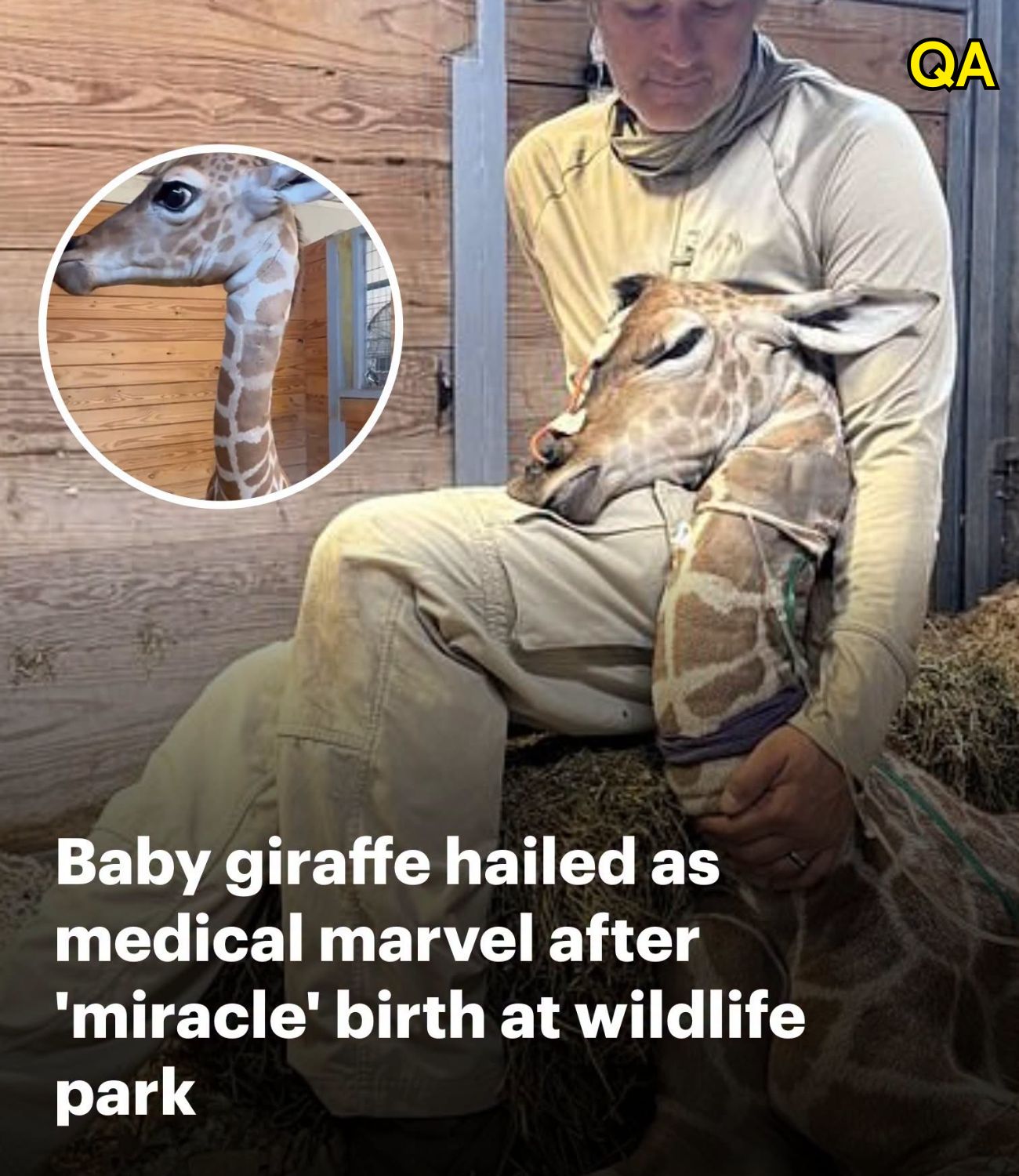
Every birth in the animal kingdom is unique, but some capture global attention because they highlight the extraordinary dedication of veterinarians and wildlife caregivers. At a wildlife park in Kansas, a newborn giraffe named Milani has become the focus of an inspiring conservation story after surviving an exceptionally challenging birth.
Milani’s arrival followed a series of difficult medical decisions made by the veterinary team when her mother, Virtue, developed severe health complications during pregnancy. Through careful planning, around-the-clock care, and advanced veterinary medicine, the calf has continued reaching encouraging milestones.
While some have described her survival as remarkable, wildlife experts emphasize that her progress reflects both specialized medical care and the resilience of newborn animals. Her story also offers insight into modern zoo and wildlife medicine, where science, compassion, and teamwork often work hand in hand.
Who Is Milani?
Milani is a female giraffe calf born at Tanganyika Wildlife Park in Wichita, Kansas.
According to the park, her name means “new birth” or “new era.” It also honors another giraffe named Mili, whose donated plasma played an important role in Milani’s early medical care.
The wildlife park has welcomed more than 90 giraffe calves over the past three decades, making Milani’s birth unlike any they had previously experienced.

Why an Emergency Delivery Was Necessary
During the final stages of pregnancy, caregivers noticed significant changes in Virtue’s appetite and behavior.
Veterinarians conducted additional examinations that revealed rapidly worsening health concerns.
According to the park, laboratory testing indicated severe organ dysfunction and other medical complications that were considered irreversible.
Faced with these findings, the veterinary team carefully evaluated how to give the unborn calf the greatest possible opportunity for survival while prioritizing animal welfare.
After consulting giraffe specialists, they proceeded with an emergency cesarean delivery.
What Makes Giraffe Births Unique?
Giraffes have one of the most distinctive birth processes among mammals.
Unlike many animals, female giraffes usually give birth while standing.
As the calf enters the world, it naturally drops approximately six feet to the ground.
Although this sounds dramatic, wildlife experts explain that the brief fall is a normal part of giraffe birth and helps stimulate the newborn’s first breath while naturally separating the umbilical cord.
Healthy calves typically:
Stand within about 20 to 30 minutes.
Begin nursing within the first hour.
Receive antibody-rich colostrum from their mother.
These early milestones are important for healthy development.

Why Milani Needed Intensive Care
Because of the unusual circumstances surrounding her birth, Milani required immediate veterinary support.
According to Tanganyika Wildlife Park, caregivers:
Cleared her airway immediately after delivery.
Provided oxygen support.
Closely monitored heart and lung function.
Assisted her with standing.
Carefully managed scheduled feedings.
Provided donated plasma to help supply antibodies normally obtained through colostrum.
Without those antibodies, newborn mammals can be more susceptible to illness during the first weeks of life.
The veterinary team’s intensive monitoring helped support Milani during this especially vulnerable period.
The Role of Plasma in Newborn Animal Care
One fascinating aspect of Milani’s treatment involved plasma donated by another giraffe.
Plasma contains important proteins, including antibodies that help support immune function.
When newborn animals cannot receive enough colostrum from their mothers, veterinarians sometimes administer plasma as part of supportive medical care.
This practice is used in several veterinary specialties and may help improve immune protection during the critical early stages of life.
Milani’s Encouraging Progress
Since her birth, Tanganyika Wildlife Park has shared regular updates documenting Milani’s development.
According to the park, she has reached several encouraging milestones, including:
Standing independently.
Sitting comfortably without assistance.
Walking confidently.
Running and exploring her habitat.
Eventually no longer requiring intravenous support.
Although veterinarians continue monitoring her health, these achievements demonstrate steady progress.
Why Veterinary Teamwork Matters
Stories like Milani’s highlight the collaboration required in modern wildlife medicine.
Her care involved professionals from multiple disciplines, including:
Veterinarians.
Animal care specialists.
Nutrition experts.
Wildlife keepers.
Laboratory personnel.
Support staff.
Each team member contributed to different aspects of her treatment, illustrating how successful wildlife care often depends on coordinated expertise rather than individual efforts.
What Can We Learn About Giraffe Conservation?
Although giraffes remain familiar to many people through zoos and wildlife documentaries, several wild giraffe populations have declined in recent decades due to habitat loss, environmental pressures, and other conservation challenges.
Organizations around the world continue working to:
Monitor wild populations.
Protect natural habitats.
Support breeding programs.
Advance veterinary medicine.
Increase public education about wildlife conservation.
Facilities accredited for conservation and education often contribute valuable knowledge about giraffe biology, reproduction, nutrition, and healthcare.

The Importance of Neonatal Veterinary Medicine
Caring for newborn animals requires specialized expertise.
Veterinary neonatology focuses on supporting young animals during their earliest stages of life.
Professionals in this field monitor:
Body temperature.
Hydration.
Nutrition.
Respiration.
Growth.
Immune development.
Every species has unique developmental needs, making careful observation especially important during the first days and weeks after birth.
Milani’s story demonstrates how advances in neonatal veterinary care continue expanding what experts can accomplish when treating vulnerable wildlife.
Why Stories Like Milani’s Inspire People
People have long been fascinated by stories of resilience in both humans and animals.
Young animals overcoming early challenges often remind us of the dedication shown by caregivers working behind the scenes.
At the same time, experts encourage viewing these stories through a scientific lens.
Rather than relying solely on dramatic descriptions, understanding the veterinary techniques, medical planning, and careful monitoring involved provides a deeper appreciation for the work performed by wildlife professionals.
This balance between emotional storytelling and scientific understanding helps audiences better appreciate both the animals and the people who care for them.
A Celebration of Wildlife Care
Milani’s progress also shines a light on the often unseen efforts of zoo and wildlife staff.
Daily responsibilities extend far beyond feeding animals.
Care teams routinely perform health assessments, prepare specialized diets, monitor behavior, administer treatments, maintain habitats, and respond quickly when medical emergencies arise.
These behind-the-scenes efforts help support the health and welfare of countless animals every year.
Conclusion
Milani’s journey represents an encouraging example of what dedicated veterinary care and wildlife expertise can achieve. While her birth presented extraordinary medical challenges, her steady progress reflects the careful planning, scientific knowledge, and compassion of the professionals who supported her from her very first moments.
Her story also serves as a reminder that wildlife conservation extends beyond protecting habitats. It includes advancing veterinary medicine, improving neonatal care, and continually expanding our understanding of the animals that share our planet.
As Milani continues to grow, her experience offers hope and inspiration while highlighting humanity’s enduring curiosity about the natural world. By combining scientific innovation with thoughtful animal care, wildlife professionals continue to deepen our appreciation for some of Earth’s most remarkable species.

Sources
- Daily Mail. Baby giraffe hailed as medical marvel after birth at Kansas wildlife park.
- Tanganyika Wildlife Park. Official updates on Milani’s care and development.
- Association of Zoos and Aquariums. Resources on accredited wildlife care and conservation.
- International Union for Conservation of Nature (IUCN). Information on giraffe conservation and species status.
- American Association of Zoo Veterinarians. Educational resources on zoo and wildlife veterinary medicine.