

Every July, thousands of visitors gather in the historic streets of Pamplona, Spain, to witness one of the world’s most famous cultural festivals. The San Fermín Festival is celebrated for its vibrant atmosphere, traditional ceremonies, music, and the internationally recognized Running of the Bulls.
This year’s event attracted even greater interest as it coincided with the 100th anniversary of the publication of Ernest Hemingway’s The Sun Also Rises, the novel widely credited with introducing the festival to a global audience.
During one of the festival’s morning runs, however, the excitement was overshadowed by a chaotic sequence of events that resulted in multiple injuries. While the incident quickly became international news, it also renewed discussions about the balance between cultural tradition, public safety, and responsible tourism.
What Happened During the Bull Run?
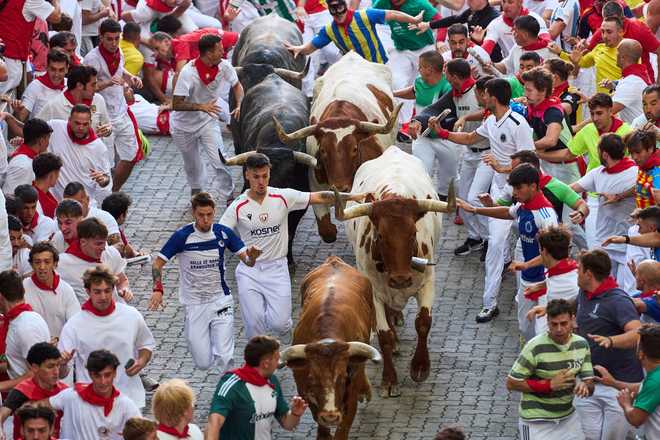
According to reports, six fighting bulls accompanied by steers raced through Pamplona’s narrow streets during the fifth morning run of the annual festival.
The approximately 875-meter route, which typically takes only a few minutes to complete, became increasingly congested as hundreds of participants attempted to run alongside the animals.
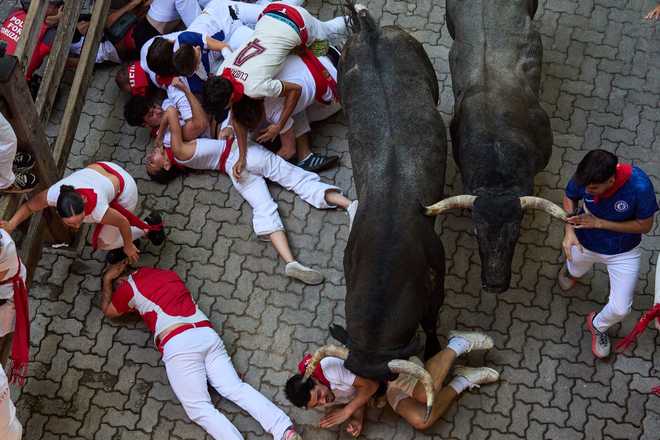
During the event, one runner sustained a serious facial injury after coming into contact with a bull’s horn. Medical officials also reported that twelve additional participants required treatment for various injuries resulting from falls and collisions.
Witnesses described several moments when runners stumbled, creating pileups that made it difficult for those behind them to avoid the congestion.

A Bull Separates From the Group
One of the most dramatic moments occurred when a black bull briefly moved away from the main group early in the course.
As it entered a crowded section of the route, the animal pushed through a cluster of runners, creating confusion among participants attempting to move out of its path.
Although reports indicate one participant suffered a horn injury, officials did not immediately confirm the exact moment when the injury occurred.
Video footage shared by news organizations showed that many runners were caught by surprise as the animals approached from behind, leaving little time to react.
Medical Response
Emergency medical teams stationed throughout the course responded quickly following the incident.
According to local hospital officials, one participant received treatment for a facial horn injury, while twelve others were evaluated for injuries related to falls and impacts sustained during the run.
Medical personnel are positioned at multiple points along the route each year to provide immediate assistance whenever participants require care.
Rapid response planning has become an important part of festival organization due to the physically demanding nature of the event.
Understanding the Running of the Bulls
The Running of the Bulls, known locally as Encierro, is one of the signature events of the San Fermín Festival.
Each morning during the festival, fighting bulls are guided through Pamplona’s historic streets from holding pens to the city’s bullring.
The run covers less than one kilometer and typically lasts between two and three minutes.
Participants voluntarily choose to run ahead of the animals while attempting to avoid direct contact.
Although the event is carefully organized with barriers, medical teams, and safety personnel, organizers acknowledge that participation carries inherent risks.
Why the Festival Is Famous Worldwide
The San Fermín Festival has been celebrated for centuries and combines religious traditions with community celebrations, concerts, parades, and cultural activities.
Its international reputation grew significantly after Ernest Hemingway featured the festival prominently in his 1926 novel The Sun Also Rises.
Since then, visitors from around the world have traveled to Pamplona each July to experience the unique atmosphere firsthand.
For many travelers, the event represents both cultural heritage and an opportunity to witness one of Spain’s most recognizable traditions.
Safety Challenges During the Event
Despite extensive planning, the Running of the Bulls presents several challenges.
Large crowds can reduce runners’ ability to move freely.
Participants often have varying levels of experience.
Some visitors may underestimate how quickly the animals move.
When runners stumble, those following behind may have limited opportunities to avoid obstacles.
These factors can increase the likelihood of falls and collisions even without direct contact with the bulls.
Festival organizers regularly encourage participants to understand the route, follow official guidance, and avoid unnecessary risks.
Tradition and Modern Perspectives
The Running of the Bulls remains one of Spain’s most recognized cultural events.
Supporters often describe it as an important historical tradition that reflects local identity and centuries of community celebration.
Others emphasize the need for continual improvements in participant safety and responsible event management.
These differing perspectives illustrate how long-standing cultural traditions continue to evolve alongside changing public expectations regarding safety and tourism.
Why People Continue to Participate
From a psychological perspective, researchers suggest that high-adrenaline activities appeal to many individuals because they provide excitement, challenge, and memorable shared experiences.
Major cultural festivals also offer opportunities to connect with local history and traditions.
For some participants, completing the run represents a personal achievement.
For others, simply observing the event from designated viewing areas provides an equally meaningful experience without taking part directly.
Tourism and Economic Importance
The San Fermín Festival contributes significantly to Pamplona’s tourism industry.
Hotels, restaurants, shops, and local businesses welcome visitors from across Europe, the Americas, Asia, and many other regions.
Beyond the famous bull runs, the festival includes music performances, traditional costumes, cultural exhibitions, community gatherings, and family-friendly celebrations.
These activities make the event much broader than its most internationally recognized tradition.

The Role of Responsible Reporting
Incidents during major public events often receive widespread media attention because they involve dramatic visuals and large audiences.
Responsible reporting places such events within their broader context, acknowledging both the excitement of the festival and the importance of accurate information.
While injuries during the Running of the Bulls receive significant coverage, they represent only one aspect of a festival that includes numerous cultural and community activities throughout its eight-day celebration.
Balanced reporting helps readers better understand both the traditions and the realities associated with the event.
Looking Ahead
Festival organizers continue to review safety procedures each year while preserving traditions that have defined San Fermín for generations.
Medical planning, route management, crowd control, and public education remain central components of organizing the event.
Visitors considering participation are encouraged to familiarize themselves with official guidance and carefully assess their own experience and comfort level before joining the run.
Conclusion
The recent bull run at Spain’s San Fermín Festival once again highlighted both the excitement and the challenges associated with one of the world’s most recognizable cultural traditions. Reports of multiple injuries during the event have renewed conversations about participant safety, crowd management, and responsible tourism while also reminding visitors of the physical demands involved in the annual run.
From a cultural perspective, the festival remains a symbol of local heritage that has fascinated international audiences for more than a century. From a scientific perspective, studies of human behavior suggest that challenging experiences and shared traditions continue to attract participants seeking memorable moments and cultural connection.
Ultimately, the San Fermín Festival reflects humanity’s enduring interest in tradition, celebration, and adventure. Approaching such events with respect for local customs, awareness of safety guidance, and thoughtful curiosity allows visitors to better appreciate both the history and the cultural significance behind this remarkable annual celebration.

Sources
- Associated Press (AP)
- Reuters
- BBC News
- Encyclopaedia Britannica
- Official San Fermín Festival Information
- Pamplona City Council
- Ernest Hemingway Collection
- UNESCO (Intangible Cultural Heritage resources)
- American Psychological Association
- National Geographic