


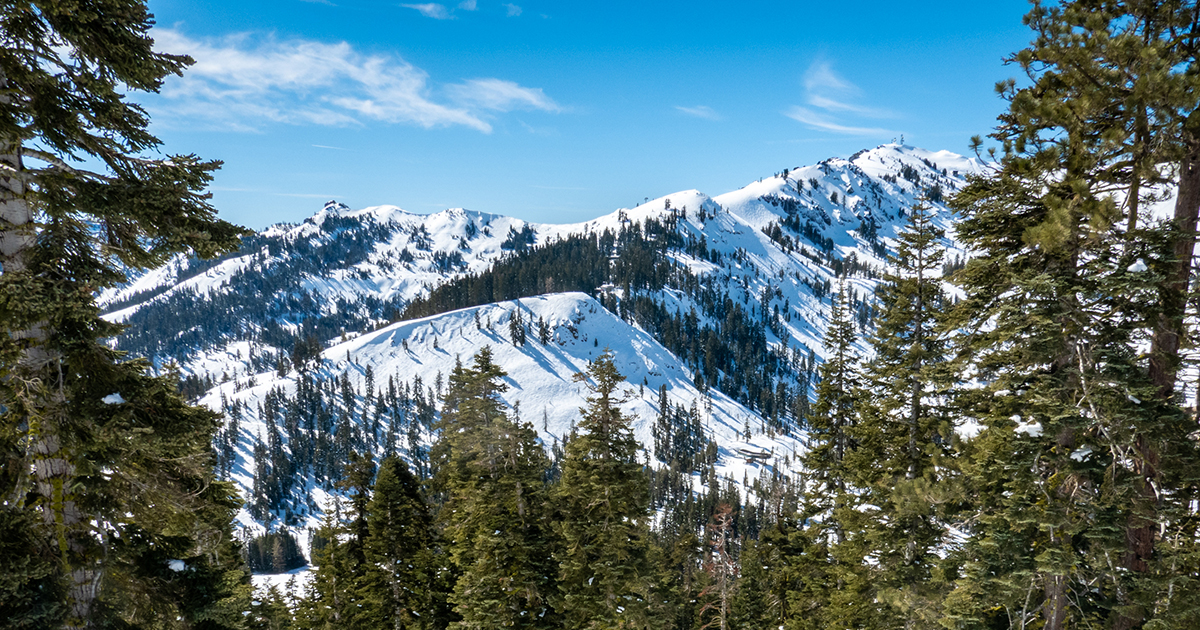
The mountains around Lake Tahoe are famous for their breathtaking winter landscapes. Fresh snow covers the slopes, pine forests stretch toward the horizon, and backcountry skiers can experience a sense of freedom that is difficult to find anywhere else.
But beneath that beautiful surface is a constantly changing environment.
Snow is never completely still. Wind moves it from one slope to another. New snowfall can add weight to existing layers. Temperature changes can alter the structure of the snowpack. A route that looks calm and inviting from a distance can therefore contain hazards that are difficult to recognize without specialized knowledge.
That reality came into sharp focus on February 17, 2026, when a large avalanche occurred near Castle Peak in California’s Sierra Nevada. A group of backcountry skiers and guides was caught in the event, and nine people ultimately lost their lives. Five others survived. Recent reports from the Nevada County Coroner’s Office confirmed that all nine victims died from asphyxia associated with snow burial.
Months later, the incident continues to raise important questions about mountain safety, decision-making, weather conditions, and the challenges of traveling through avalanche terrain.
Rather than focusing only on the tragedy itself, the event offers an opportunity to understand why avalanche awareness matters and how outdoor enthusiasts can make more informed decisions in winter environments.
What Happened Near Castle Peak?
The February avalanche occurred during a major winter storm in the Castle Peak area near Lake Tahoe.
According to reporting on the incident, a group of 15 people, including professional guides and clients, was traveling through the backcountry when the avalanche occurred. The slide was described as approximately 100 feet wide and traveled roughly 400 feet downslope.
The Sierra Avalanche Center had issued a high avalanche danger rating during the period, while significant snowfall and worsening winter conditions were affecting the region.
A preliminary report commissioned by Blackbird Mountain Guides later examined the group’s route, weather information, GPS tracks, guide records, and other available evidence. According to the report, the group left nearby huts during what the guides believed was a temporary break in the storm. Their intended route through relatively flat, forested terrain became more complicated when natural obstacles affected their planned path.
The preliminary report does not establish whether the avalanche was naturally triggered or caused by the group’s movement. That distinction remains important because mountain incidents can involve many interacting factors.
The Nevada County Sheriff’s Office has also continued investigating the circumstances surrounding the event. As of the latest reporting, no final determination regarding criminal responsibility had been announced.
Why Can Avalanches Be Difficult to Predict?
An avalanche is a mass of snow moving down a mountain slope. Although the basic concept sounds simple, predicting when and where one will occur can be extremely complicated.
Snow develops in layers. Each storm may create a different layer with its own characteristics. Wind can redistribute snow and create thicker deposits in certain areas. Temperature can influence how individual layers bond together.
The result is a constantly changing snowpack.
According to the National Park Service, avalanche risk can vary with factors such as precipitation, temperature, wind, slope, and terrain orientation. Importantly, avalanche hazards may not always be obvious from the surface.
This is one reason experienced backcountry travelers pay close attention to avalanche forecasts rather than relying solely on what they can see.
A mountain may look peaceful while the snowpack contains weaknesses that are difficult to identify without appropriate training and equipment.
The Importance of Avalanche Forecasts
One of the most important lessons from winter mountain safety is the value of checking current conditions before leaving a developed ski area.
Avalanche forecasts provide information about the likelihood and characteristics of avalanche activity across different terrain. They can help travelers understand where conditions may be more unstable and which slopes should be avoided.
The National Park Service repeatedly recommends checking local avalanche information before entering winter backcountry terrain. It also emphasizes that changing weather can significantly alter conditions during a trip.
For skiers, this means a forecast should not be treated as a simple formality.
It should influence the route itself.
If conditions become more dangerous than expected, changing the plan or turning around can be the most responsible decision.

Why Fresh Snow Can Change Mountain Conditions
Fresh snow is one of the reasons winter landscapes look so beautiful, but large amounts of new snow can also change the stability of a snowpack.
When substantial snowfall accumulates quickly, the new layer can place additional stress on layers underneath it. Wind can make the situation more complicated by transporting snow and depositing it unevenly.
The National Park Service notes that new heavy snow can make winter travel more difficult and increase avalanche hazard.
This creates an important principle for backcountry recreation:
Beautiful conditions are not necessarily safe conditions.
A day with deep, fresh snow may be appealing to experienced skiers, but it can also require more conservative decision-making.
Terrain Matters More Than Many People Realize
Avalanche awareness is not only about watching the weather.
Understanding terrain is equally important.
Avalanches are associated with slopes, and the relationship between slope angle, snow conditions, wind, terrain shape, and surrounding features can influence risk.
The National Park Service advises people who are not trained in avalanche avoidance and rescue to stay out of avalanche terrain.
This is particularly important for backcountry travelers because terrain can look deceptively gentle.
Trees, ridges, valleys, and changes in elevation can make it difficult to recognize how one area connects to another. A route that appears relatively flat may still pass beneath or beside steeper terrain.
In winter, familiar landscapes can also become visually transformed by snow.
That makes navigation and terrain awareness essential.
Group Size and Decision-Making
The Tahoe incident has also renewed discussion about how groups move through avalanche terrain.
A preliminary National Avalanche Center analysis reported that larger groups can face greater exposure when traveling through avalanche terrain. One widely used principle is to minimize the number of people exposed to a potentially hazardous slope at one time.
This does not mean that traveling with other people is inherently unsafe.
In fact, having companions can be extremely valuable in remote environments.
The important distinction is how a group manages exposure.
Experienced teams may divide movement through certain areas, maintain appropriate spacing, communicate continuously, and establish clear turnaround points.
Good group management is therefore less about moving quickly and more about controlling exposure to changing conditions.
Why Equipment Is Only One Part of Avalanche Safety
Modern avalanche equipment can provide important assistance, but equipment cannot replace training and good decisions.
Common avalanche safety equipment includes an avalanche transceiver, probe, and shovel. Some backcountry skiers also use specialized airbag packs.
The National Park Service recommends that people entering avalanche terrain have appropriate rescue equipment, education, and experience.
However, carrying equipment is not enough.
Travelers need to know how to use it before an emergency occurs.
A transceiver needs to be understood and practiced with. A probe needs to be used correctly. A shovel needs to be accessible and familiar.
This is why avalanche education and practical training are such important parts of responsible winter recreation.
Weather Can Change the Plan
One of the most important lessons from the Castle Peak incident is that mountain conditions can evolve quickly.
A weather window that appears to provide an opportunity for travel can change. Visibility can decrease. Snowfall can intensify. Wind can alter the snowpack. Routes can become difficult to recognize.
The National Park Service recommends planning conservatively and preparing for sudden changes in winter weather. It also advises travelers to know their route, understand their limitations, and have alternatives when conditions deteriorate.
This leads to one of the simplest rules in mountain recreation:
A plan should include a plan to turn back.
Turning around is not necessarily a failure.
Sometimes it is the clearest sign that someone understands the mountain.
The Psychology of Outdoor Decision-Making
There is also a human element to avalanche safety.
People naturally want to continue when they have invested time, money, preparation, and effort into an adventure.
A skier may have traveled a long distance to reach a particular location. A group may have planned the trip for months. A beautiful weather window may appear after hours of difficult travel.
These factors can make changing plans emotionally difficult.
Yet responsible outdoor decision-making requires the ability to separate the original goal from the current conditions.
The question should not simply be, “Can we complete the route?”
A better question is, “Are the current conditions appropriate for completing the route safely?”
That small change in perspective can influence many decisions.
What Can Backcountry Skiers Learn From Tahoe?
The Castle Peak avalanche cannot be reduced to a single lesson.
Mountain incidents are complex, and investigations may take months to establish what happened. The latest preliminary reporting also shows that some important questions surrounding the event remain unresolved.
Nevertheless, several practical lessons stand out.
First, check the current avalanche forecast before entering the backcountry.
Second, understand the terrain rather than relying on visual impressions.
Third, recognize that fresh snowfall, wind, and changing temperatures can alter conditions.
Fourth, make sure everyone in the group has appropriate training and knows how to use rescue equipment.
Fifth, establish clear limits before beginning the trip.
Finally, be willing to change the plan when conditions no longer support it.
These principles apply far beyond Lake Tahoe.
Mountain environments around the world can change rapidly, and the same basic ideas of preparation, awareness, communication, and conservative decision-making can help winter travelers make better choices.
Respecting the Mountain
There is something deeply appealing about winter mountains.
They are beautiful precisely because they are powerful, unpredictable, and largely beyond human control.
For generations, people have been drawn toward high peaks, snowy forests, and remote landscapes. That attraction is part of what makes skiing and winter exploration so meaningful.
But enjoying the mountains also means respecting their limits.
Technology has made outdoor recreation more accessible than ever. Weather apps provide information within seconds. GPS devices can track routes. Specialized equipment can improve preparedness.
Yet none of these tools changes the fundamental nature of a mountain.
Snow still moves.
Weather still changes.
Visibility can still disappear.
And conditions can still become unsuitable for travel.
The best outdoor experience is therefore not necessarily the most ambitious one. Sometimes it is the trip where everyone returns with memories, photographs, and stories to share.
Final Thoughts: What the Mountains Can Teach Us
The Tahoe avalanche was a heartbreaking event that affected families, friends, guides, survivors, and an entire outdoor community.
As investigations continue and additional information becomes available, it is important to distinguish confirmed facts from speculation and avoid assigning responsibility before authorities reach their conclusions.
At the same time, the incident provides an opportunity to think more deeply about the relationship between people and nature.
Mountains invite curiosity. They challenge experienced athletes and beginners alike. They encourage people to explore places that can be both beautiful and unpredictable.
That curiosity is valuable, but it should be accompanied by humility.
The goal of avalanche awareness is not to eliminate the adventure of winter recreation. It is to help people understand the environment well enough to make thoughtful choices within it.
Perhaps that is one of the most enduring lessons of the mountains: knowledge does not take away from adventure. It makes responsible adventure possible.
When people understand snow, weather, terrain, equipment, and their own limitations, they are better prepared to appreciate the mountains with both confidence and respect.
And sometimes, the wisest decision on a snowy mountain is simply knowing when to turn around.
Sources
San Francisco Chronicle. “Causes of death released for nine victims in Tahoe avalanche.”
San Francisco Chronicle. “Deadly Sierra avalanche: Report explains skiers’ route but leaves key questions unanswered.”
National Park Service. “Be Avalanche Aware.”
National Park Service. “Avalanche Safety.” Lassen Volcanic National Park.
National Park Service. “Winter Wilderness Safety.” Yosemite National Park.
National Park Service. “Avalanche Safety.” Olympic National Park.
National Park Service. “Winter Safety at Lassen.”