


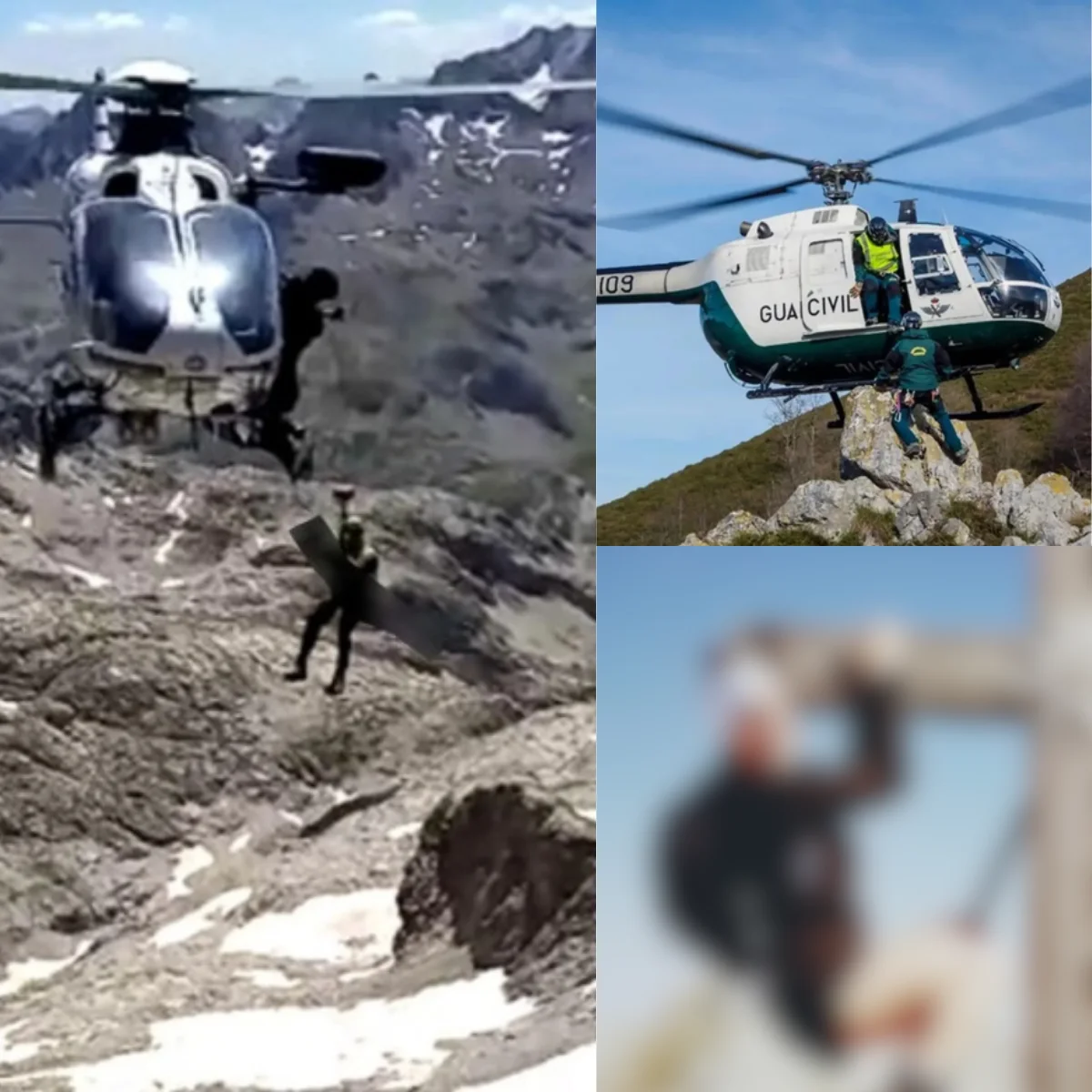
42-year-old British woman dies after 1,650ft fall on Spain’s Balaitus Peak
A 42-year-old British woman has died after falling more than 1,650 feet during a mountaineering expedition on Balaitus Peak in Spain’s Pyrenees, in an incident that has renewed attention on safety in Europe’s high mountain ranges. The fall occurred while she was descending a popular but technically demanding route, with her partner witnessing the accident from close by.

Accident on Balaitus Peak in the Pyrenees
The incident took place on Balaitus Peak, a 10,277-foot (3,133-metre) mountain that straddles the border between Spain and France in the central Pyrenees. The woman was descending the well-known Great Diagonal route, located in Spain’s Huesca province, when she reportedly slipped and fell a long distance down a steep slope.
Her partner, a 53-year-old man who was accompanying her on the descent, was not physically injured but saw the fall unfold. Spanish authorities described the event as a tragic accident during an otherwise routine descent, underlining how quickly conditions in the mountains can become life-threatening even for experienced hikers.
Local emergency services received an alert at around 7:30 p.m. on Saturday. A rescue helicopter operated by Spanish mountain rescue teams was deployed to the remote, high-altitude area. Despite the rapid response, the woman could not be revived and was pronounced dead at the scene by medical personnel who reached the location by air.
Response by Spanish authorities
Spanish Civil Guard officials confirmed that the victim was a British national who had been born in the United Kingdom and was residing in Finland at the time of the incident. After the rescue operation, her body was airlifted from the mountainside and transferred to the Forensic Medicine Institute in Zaragoza for a post-mortem examination, following standard procedures in fatal mountaineering cases.
A spokesperson for the Civil Guard characterised the event as a “tragic accident resulting from a fall” and confirmed that an investigation is underway. The inquiry will seek to clarify the exact sequence of events, including the condition of the terrain, the route taken, and any contributing factors, such as remaining snow patches on the descent route.
Preliminary information from local sources suggested that, although weather conditions were generally favourable, the woman may have slipped on snow while descending. Late-season or residual snowfields on steep slopes can be particularly hazardous, as they often become compact and slippery, making footing less secure even for experienced climbers with good equipment.
Investigators are expected to compile a report that will include the findings of the post-mortem examination, witness statements, and technical assessments from the mountain rescue specialists. The report will then be submitted to the relevant investigating court in the region, as is standard practice in Spain when dealing with sudden deaths in remote or high-risk environments.
Balaitus Peak: a demanding high-mountain destination
Balaitus Peak, known in French as Balaïtous, is a prominent summit in the central Pyrenees and a popular objective for experienced mountaineers. It forms a natural barrier between Spain’s Tena Valley in Aragon and France’s Val d’Azun in the Occitanie region. The mountain is renowned for its impressive granite faces, steep ridges, and varied ascent routes, some of which require scrambling or basic climbing skills.
The Great Diagonal route, where the accident occurred, is a classic line on the mountain that involves exposed sections, loose rock in some areas, and potential snowfields depending on the time of year. While it is well known among hikers familiar with the Pyrenees, it is not considered a simple or casual walk. Many mountaineering guides and local clubs classify it as a route suitable only for experienced parties who are comfortable in steep, high-mountain terrain.
Even during periods of fine weather, such as late spring and summer, conditions on Balaitus and neighbouring peaks can change quickly. Sudden temperature drops, afternoon storms, fog, and remaining snow or ice can increase risks on both ascent and descent. Experts often note that descents can be particularly dangerous because climbers may be more tired, less focused, and more likely to misjudge footing or route-finding after several hours of exertion.

Recent mountaineering incidents in northern Spain
The death on Balaitus Peak is the latest in a series of fatal accidents highlighting the risks of high-altitude activities in northern Spain’s mountain ranges, which attract large numbers of domestic and international visitors every year.
In a separate incident last month, a 61-year-old British mountaineer was found dead in the Picos de Europa, a dramatic limestone range that spans parts of Asturias, Cantabria, and Castile and León. Before losing contact, he reportedly made an SOS call indicating that he was lost and exhausted. Spanish rescue teams later located his body after an extensive search operation in difficult terrain.
Earlier in the year, in April, two climbers were killed by falling rocks in the Montserrat massif near Barcelona. Montserrat is a well-known climbing and hiking destination with distinctive rock formations, but it is also prone to rockfall in some areas, particularly on popular routes. That incident underlined the dangers posed not only by falls from height but also by objective hazards such as unstable rock and natural erosion.
These events, while statistically rare compared with the total number of people who visit the mountains every year, have contributed to growing concern among local authorities, search and rescue organisations, and mountaineering clubs about safety awareness, preparation, and risk management in Spain’s high mountain areas.
Official and diplomatic reactions
The United Kingdom’s Foreign, Commonwealth & Development Office (FCDO) has acknowledged the death of the British woman on Balaitus Peak and stated that it is in contact with local authorities. In similar cases, the FCDO typically offers consular assistance to families, which may include help with documentation, liaison with local officials, and practical information about repatriation and legal procedures.
Spanish emergency services and mountain rescue units in regions such as Aragon, Catalonia, and Asturias routinely issue seasonal advisories, especially during peak hiking months. These advisories emphasise route planning, weather checks, proper equipment, and realistic assessment of personal experience and fitness. In some areas, local mountaineering federations also publish detailed route information and risk assessments to help visitors make informed decisions.
While individual accidents are investigated on a case-by-case basis, broader policy responses often focus on improving information at trailheads, encouraging the use of registered mountain guides for demanding routes, and promoting training courses on navigation, avalanche awareness, and safe movement on snow and rock.
Understanding risks in high-altitude hiking and mountaineering
Hiking and mountaineering are widely regarded as rewarding ways to experience natural landscapes, build physical fitness, and develop outdoor skills. However, experts stress that these activities inherently involve risk, particularly in alpine or high-mountain environments where altitude, weather, and terrain can combine to create dangerous situations.
Common risk factors identified by mountain rescue organisations and safety researchers include:
- Steep or exposed terrain: Slopes where a slip can quickly turn into an uncontrolled fall, especially on rock, ice, or hardened snow.
- Residual snow and ice: Snowfields and icy patches can remain on north-facing slopes or in shaded gullies even when surrounding terrain appears dry.
- Fatigue and dehydration: Tired hikers may make poorer decisions, move less carefully, or underestimate hazards during the descent.
- Rapid weather changes: Sudden storms, fog, or strong winds can reduce visibility, obscure route markers, and lower temperatures.
- Navigation errors: Losing the intended route can lead into more technical ground or unstable terrain.
Mountain safety organisations in Europe and beyond consistently highlight the descent as a critical phase of any climb. Many accidents occur after the main summit objective has been reached, when concentration may drop and physical reserves are low. Awareness of this pattern has led guides and experienced climbers to emphasise careful time planning, energy management, and the option of turning back early if conditions or fatigue levels raise concerns.
Guidance and safety recommendations for visitors
Following incidents such as the one on Balaitus Peak, authorities and experts often reiterate key safety principles for those planning trips to mountainous areas. While no measures can completely eliminate risk, the following widely endorsed practices can significantly reduce the likelihood of serious accidents:
- Accurate route planning: Research the route in advance using up-to-date guidebooks, official park websites, and recent trip reports. Understand the technical difficulty, elevation gain, length, and any sections requiring scrambling or use of hands.
- Check weather and conditions: Consult reliable mountain weather forecasts and avalanche or snow reports when applicable. Be aware that conditions at altitude can differ dramatically from those in nearby valleys or towns.
- Use appropriate equipment: For routes with snow or ice, equipment such as crampons and an ice axe, along with knowledge of how to use them, may be essential. Helmets are recommended in areas with rockfall risk. Sturdy footwear, layered clothing, and adequate food and water are basic requirements.
- Honest assessment of experience: Choose objectives that match your technical ability and physical fitness. If a route description or local advice indicates that a climb is suitable only for experienced mountaineers, consider hiring a qualified guide or selecting a less demanding option.
- Early start and time margins: Begin long routes early to avoid being on steep or complex terrain late in the day. Allow extra time for route-finding, rests, and unexpected delays.
- Group communication: Stay within visual or voice contact of partners, agree in advance on turnaround times, and discuss how to respond if someone becomes tired, unwell, or uncomfortable with the conditions.
- Emergency preparedness: Carry a fully charged mobile phone, and where possible, a backup power source. In remote regions, some mountaineers also use satellite communication devices. Know local emergency numbers and how to describe your location.
National and regional mountaineering federations, as well as international organisations such as the International Commission for Alpine Rescue (ICAR), provide educational materials, training programmes, and technical advice aimed at reducing accidents. Many European rescue services also publish anonymised accident reports that can help climbers learn from previous incidents.
A reminder of the fine line between adventure and danger
The death of the British woman on Balaitus Peak has been met with sympathy and concern among the mountaineering community in Spain, the United Kingdom, and Finland. For many who regularly venture into the mountains, such events serve as a solemn reminder that even well-known routes in apparently stable conditions demand constant attention, preparation, and respect.
High-altitude environments offer extraordinary experiences, from expansive views and encounters with unique ecosystems to personal challenges that many find deeply meaningful. At the same time, they present objective hazards that cannot be completely controlled. The balance between adventure and safety lies in informed decision-making, continual learning, and an understanding that turning back or adjusting plans is often the most responsible choice.
As investigations into the Balaitus accident continue, authorities and safety organisations are expected to review any lessons that could further improve guidance for visitors. While individual tragedies cannot be undone, they frequently lead to renewed efforts in education, route information, and public awareness, with the aim of preventing future losses in the world’s mountain regions.
Sources
Disclaimer: This content is intended for entertainment purposes only and is not based on real events.